



On July 12, 2025, while attending the annual ASEAN Plus foreign ministers' meetings held in Kuala Lumpur, Chinese Foreign Minister Wang Yi proposed that "a new narrative should be built for the South China Sea." That means "We should not always associate the South China Sea with friction, conflict, or confrontation, but with peace, stability, and cooperation. This should become the mainstream narrative in the future, stated the Chinese foreign minister."
The narrative of the South China Sea should be a true reflection of the situation in the region, yet for a long time, it has not objectively portrayed the reality. Instead, it has served as a tool for geopolitical maneuvering by countries outside the region. Minister Wang's proposal seeks to restore the narrative of the South China Sea to its authentic roots, transforming it from a distortive "funhouse mirror" into a clear mirror that guides the region towards peace, stability, and cooperation.
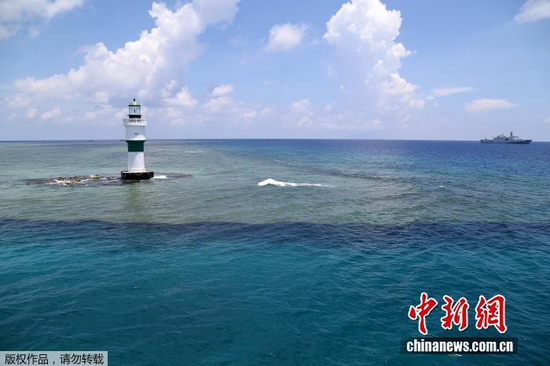
The old narrative fails to capture the full picture of the South China Sea situation.
It is undeniable that the South China Sea involves some of the world’s most complex disputes over territorial sovereignty and maritime rights. History and common experience show that, if not properly managed, such disputes often become destabilizing factors for regional peace and stability. Due to their shared interest in maintaining regional peace and a longstanding tradition of peaceful coexistence, China and ASEAN countries have avoided repeating past mistakes.
Faced with the illegal occupation of some islands and reefs of the Nansha Qundao (the Nansha Islands) by disputing parties, China has remained committed to the peaceful settlement of disputes while firmly safeguarding its territorial sovereignty and maritime rights and interests. Until the disputes are properly resolved, China has faithfully fulfilled its commitments under the Declaration on the Conduct of Parties in the South China Sea (DOC), exercised restraint, and worked with neighboring countries to safeguard peace and security in the South China Sea, advance practical cooperation, and promote stability and prosperity in the region. Thanks to the long-term joint efforts of China and ASEAN countries, the South China Sea has remained generally peaceful and stable. Taking the South China Sea as a bond, China and ASEAN have cooperated in economy and trade, investment, security, marine environmental protection, and people-to-people exchanges, continuously generating strong momentum for shared prosperity.
Disputes over territorial sovereignty and maritime rights and interests in the South China Sea represent only a small part of relations among regional countries. Over-hyping conflicts between China and its neighbors, while overlooking the broader peace and stability of the region, could mislead the international community’s judgement on China-ASEAN relations and the overall regional situation, potentially resulting in dire consequences.
The old narrative exaggerates frictions for sensationalism.
Overall, when handling disputes over territorial sovereignty and maritime rights and interests, China and ASEAN countries generally manage disagreements and actively establish regional rules, with maritime frictions occurring only occasionally.
In 2002, China and ASEAN countries jointly signed the Conduct of Parties in the South China Sea (DOC), formally pledging to resolve territorial and jurisdictional disputes through direct negotiations and consultations between the parties concerned, exercise restraint, avoid actions that could escalate conflicts, build mutual trust, and advance practical maritime cooperation.
For over two decades, China and ASEAN countries have made persistent efforts to fully implement the DOC. China, together with other parties such as Vietnam, the Philippines, and Malaysia, has established mechanisms for bilateral maritime consultations and dialogue, achieving comprehensive coverage of maritime dialogues with all parties involved in the South China Sea issue. Currently, China and ASEAN countries are actively negotiating the “Code of Conduct in the South China Sea” (COC), based on the full implementation of the DOC. With China’s push forward, consultations are gaining momentum, with the draft text having undergone three readings, and all parties remain confident in reaching an agreement on the COC.
In recent years, frequent frictions have occurred between China and the Philippines in the South China Sea, triggered by the Philippines’ repeated deliberate provocations aimed at illegally occupying islands and reefs of the South China Sea and attempting to seize the uninhabited islands and reefs of the Nansha Islands in violation of the DOC. To safeguard its territorial sovereignty and uphold the authority of the DOC, China has taken necessary measures in accordance with the law. Overall, China has exercised considerable restraint, keeping the situation largely under control. At the bilateral level, China, while protecting its territorial sovereignty and maritime rights and interests, has promoted temporary arrangements to manage the situation at Ren’ai Jiao. None of these facts, however, has been accurately reflected in the narrative of the South China Sea dominated by Western media.
Foreign Minister Wang Yi once used the metaphor of a “shadow play” to describe the narrative of “friction and conflict” about the South China Sea created by the Philippines and the West. He noted, “For every move on the sea by the Philippines, there is a screenplay written by external forces, the show is livestreamed by Western media, and the plot is invariably to smear China. People are not interested in watching the same performance again and again.”
Overhyping frictions for sensationalism and distorting basic facts to “skew the perspective” not only fail to help resolve the South China Sea issue or manage hotspot tensions, but also fuel conflict, undermine mutual trust among regional countries, and damage the conducive environment for dispute resolution.
The old narrative hinders the deepening of practical regional cooperation by selectively framing issues.
Freedoms of navigation and overflight are common topics in the narrative of the South China Sea. However, unlike portrayals by the U.S. and Western media, the South China Sea is among the world’s most free, open, and safe maritime regions for navigation and overflight.
According to statistics, more than 500,000 commercial vessels pass through the South China Sea annually, with around 40% of global trade in goods passing through the South China Sea and its surrounding straits. Additionally, over 1,000,000 civilian aircraft operate over the South China Sea, making it one of the busiest maritime and aerial corridors in the world. In terms of military activity, both regional and extra-regional countries conduct over 20,000 ship-days and more than 30,000 military aircraft sorties in the South China Sea each year, along with hundreds of large-scale military exercises and various trainings.
While there are disputes over territorial sovereignty and maritime rights and interests in the South China Sea, these disputes are generally manageable, and the disputed areas do not involve the region’s major shipping lanes. Yet, the old narrative, in an attempt to link disputes over territorial sovereignty and maritime rights and interests with the issue of freedom of navigation, deliberately portrays the necessary measures taken by disputing parties to safeguard their territorial sovereignty and maritime rights and interests as navigation-related problems.
With selectively framed issues and exaggerated impact of disputes over territorial sovereignty and maritime rights and interests on so-called freedom of navigation in the South China Sea, the factors that genuinely affect navigation safety in the region have long been neglected as a result.
The South China Sea features numerous islands, reefs, and sandbanks, with submerged reefs, shoals, and shallows spread across the region. Adverse weather conditions, including typhoons, sea fog, and tsunamis, occur frequently. Development among countries and territories along the South China Sea shipping routes is uneven, with no unified framework for navigational safety. Overall capabilities in communication, navigation, and search-and-rescue remain limited. Moreover, countries in the region face common challenges and issues such as marine infrastructure development, marine environmental governance, climate change, and sustainable development.
China and its neighboring countries are actively engaging in relevant cooperation. However, overstating sovereignty, rights and interests disputes has impeded regional efforts to further advance practical cooperation.
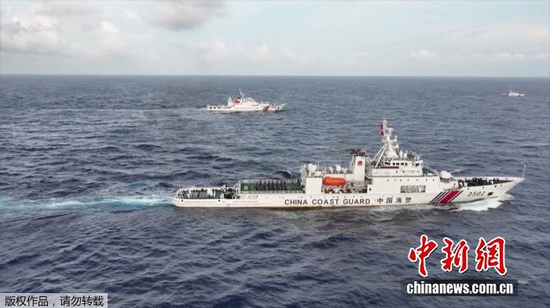
Building a new narrative for the South China Sea is an inevitable trend.
The old narrative of the South China Sea, which one-sidedly emphasizes frictions and conflicts while highlighting geopolitical competition, is neither transparent nor objective. Such a narrative deviates from the basic understanding of the South China Sea issue held by people in the region.
According to surveys, over 80% of Southeast Asian people believe that their country maintains good relations with China; over 60% are concerned about outside countries' involvement undermining stability in the South China Sea; and over 60% are looking forward to advancing diverse cooperation in maritime affairs. It is evident that peace, stability, and prosperity are the visions and expectations of people in the region. Building a new narrative of the South China Sea centered on "peace, stability, and cooperation" is therefore both an inevitable trend and the will of the people.
The new narrative of the South China Sea aligns with the shared interests of regional countries in maintaining peace and security and in promoting stability and prosperity together.
China and ASEAN countries share close geographical ties. In recent years, their cooperation in political, economic, and cultural fields has been strengthened continuously.
In 2021, China and ASEAN officially announced the establishment of a comprehensive strategic partnership, marking a new milestone in their relationship and injecting fresh momentum into regional peace, stability, prosperity, and development. In trade and economy, China and ASEAN have developed numerous cooperation highlights in emerging areas like e-commerce and digital technology, and have achieved fruitful results in advancing regional economic integration and facilitating personnel exchanges. Economic and trade prosperity, better livelihoods, and social progress all rely on a peaceful and stable regional environment. Safeguarding regional peace and stability is a necessary condition for fostering prosperity and development, a shared interest of China and its neighboring countries, and a mainstream view among ASEAN countries.
In June 2024, at the 21st Shangri-La Dialogue, Indonesian President-Elect Prabowo Subianto stated that true security is built through friendly relations among neighboring countries, noting that "cooperation is the only path to prosperity and harmony."
The new narrative of the South China Sea reflects regional countries’ shared cultural tradition and values of seeking common ground while preserving differences and valuing harmony.
Since ancient times, China has peacefully coexisted with its neighboring countries, with many stories of friendly exchanges. The historical interactions between China and its neighbors embody core concepts of peace, harmony, and cooperation, along with a shared aspiration to build a better homeland.
Since modern times, China and Southeast Asian countries have shared similar historical experiences. After achieving national independence, these shared experiences and common values coalesced into the Five Principles of Peaceful Coexistence and the Bandung Spirit. Today, with the South China Sea serving as a connecting link, China and its neighboring countries uphold peaceful coexistence, pursue mutually beneficial cooperation, and move forward hand in hand harmoniously. This continues those traditions and principles and embodies the practice of the concept of a maritime community with a shared future in the South China Sea region.
The new narrative of the South China Sea objectively reflects the joint efforts of regional countries over the past two decades. Its essence is consistent with the principles and rules of international laws, including the Charter of the United Nations and the United Nations Convention on the Law of the Sea (UNCLOS).
Peace and cooperation are not only shared values between China and its neighboring countries but also requirements under general international law and regional rules. For example, Article 123 of UNCLOS emphasizes that states bordering an enclosed or semi-enclosed sea should cooperate on the management, conservation, exploration, and exploitation of the living resources of the sea, the protection and preservation of the marine environment, and marine scientific research.
Meanwhile, Article 6 of the DOC calls on all parties to cooperate in areas such as marine environmental protection, marine scientific research, safety of navigation and communication at sea, search and rescue operations, and combating transnational crime. Over the past two decades, China and its neighboring countries have actively collaborated on maritime search and rescue, disaster prevention and relief, marine environmental protection, and sustainable marine development, achieving numerous substantive results.
Promoting practical maritime cooperation is also a key part of the COC consultations. Advocating a new narrative of the South China Sea centered on "peace, stability, and cooperation" not only fully recognizes the joint efforts of China and ASEAN countries in the past, but also underscores the commitment and confidence to continue acting in good faith under international law in the future.
What's the path to building a new narrative for the South China Sea?
Currently, the situation in the South China Sea remains generally stable. Yet, there are still few countries in the region engaging in unilateral infringements, and some countries outside the region have stepped up their military activities in the South China Sea, undermining peace and stability in the region. For China and ASEAN countries, a pressing challenge lies in shifting the South China Sea narrative away from "frictions, conflicts, and even confrontation" toward one defined by "peace, stability, and cooperation." Yet the lingering impact of the South China Sea Arbitration poses a major obstacle, making such a transition difficult to realize.
Hence, it is an essential path to alter the narrative of the South China Sea by overcoming the adverse effects of the "award" and exploring flexible, cooperative, and enduring dispute resolutions with an open mindset to exclude external interference and deepen mutual trust.

First, it is essential to objectively assess the impact of the "South China Sea Arbitration", as eliminating the award's negative influence is fundamental to reshaping the South China Sea narrative.
Different countries hold differing positions on the "South China Sea Arbitration." The Philippines regards the arbitration as a benchmark and demands that China execute the arbitration award, seemingly assuming that executing the arbitration award would resolve all disputes in the South China Sea.
Out of geopolitical considerations, outside countries, including the U.S., have urged China to execute the arbitration award, emphasizing its legal effect among the parties involved. In reality, however, the U.S. has never explicitly endorsed all of the conclusions in the arbitration, such as the tribunal's interpretation and application of Article 121 of the UNCLOS.
Some ASEAN countries believe that the reasoning and conclusions in the South China Sea Arbitration could turn into universally applicable principles of international law, helping clarify the rights claims of various countries in the South China Sea. China holds that the arbitration tribunal made its ruling without proper jurisdiction, exceeded its authority, and seriously deviated from state practice and the original intention of the UNCLOS in key legal interpretations and applications, rendering the award illegal and invalid.
The "South China Sea Arbitration Award" has had little positive impact on resolving regional disputes. The Philippines has increasingly taken provocative measures in an attempt to illegally occupy the uninhabited islands and reefs of the Nansha Islands. Meanwhile, unilateral actions by neighboring countries have increased, while countries outside the region have strengthened their military presence in the South China Sea. Consequently, practical cooperation in the region has been hampered, and efforts to establish regional rules face additional obstacles. Some attribute these negative effects to China's refusal to accept, participate in, recognize, or execute the arbitration award. However, the reality tells a different story.
In essence, the "South China Sea Arbitration" represents the Philippines' attempt to package its sovereignty disputes over certain islands and reefs in the Nansha Islands and the resulting disputes over maritime rights and interests as those over the legal status of islands and reefs and maritime rights unrelated to territorial sovereignty and maritime delimitation. It is well known that "land dominates the sea" is a fundamental principle of the law of the sea, and the preamble of UNCLOS explicitly calls for "the establishment of a legal order for the seas and oceans with due regard for the sovereignty of all States." Many of the issues raised by the Philippines are essentially matters of territorial sovereignty or questions that can only be resolved after the underlying sovereignty issues are settled.
For example, the Philippines has requested a ruling declaring that Meiji Jiao and Ren'ai Jiao fall within its exclusive economic zone. In fact, this involves China's sovereignty claims over the Nansha Islands as a whole, including both Meiji Jiao and Ren'ai Jiao. Should the arbitral tribunal rule separately on the legal status of these islands and reefs and recognize them as part of the Philippines' exclusive economic zone and continental shelf, it would undermine China's sovereignty over the Nansha Islands.
Furthermore, the Philippines has requested a ruling on its so-called "traditional fishing rights" in the waters around the Huangyan Island. However, without first determining the sovereignty of Huangyan Island, it is impossible to clarify the legal status of these waters, let alone establish the rights of any country in the area. The arbitral tribunal proceeded on the basis of "assuming Huangyan Island belongs to China," which in itself indicates that it cannot address the maritime law issues raised by the Philippines without first determining sovereignty.
Addressing maritime rights separately from sovereignty may seem to "cleverly" define the scope of maritime rights between China and the Philippines in the South China Sea, but in reality, it does not.
The Philippines' claims reveal the true motive behind its proposal of the socalled "South China Sea Arbitration": to assert control over certain islands and reefs in the Nansha Islands that it has illegally occupied. Its repeated incursions into the waters around Huangyan Island, after the arbitration, underscore the fundamental reason why the "South China Sea Arbitration Award" cannot resolve the disputes in the region. For all parties involved, the primary concern remains territorial sovereignty, and there is no shortcut to settling the South China Sea issue. Attempting to define maritime rights in the South China Sea without addressing territorial sovereignty issues can only result in a complete mess.
Objectively assessing the impact and implications of the "South China Sea Arbitration Award" does not require ASEAN countries to fully accept China's claims and viewpoints. Instead, only when all parties clearly recognize the fact that the "South China Sea Arbitration" cannot fundamentally resolve the South China Sea issue so can the psychological obstacles to the narrative shift in the South China Sea be addressed.
Second, continuously sending out positive signals that highlight common ground while resolving differences serves as the key driver for shifting the narrative of the South China Sea.
On issues such as regional rule-making, dispute resolution, and practical maritime cooperation, all parties should take a pragmatic approach to address challenges, actively pursue innovative solutions, strengthen dialogue, and consistently send positive signals of peace and cooperation, thereby guiding the South China Sea narrative in a constructive direction.
In the COC consultations, all parties shall be in the direction of managing disputes and preventing conflicts in developing regional rules, and keep an open and tolerant mindset in approaching the negotiation process. The challenges facing the COC consultations mainly arise from a lack of consensus among parties on key issues, including the applicable maritime areas and the legal effect of the COC. On the broader issue of regional rule-making, all parties share common ground in their commitment to maintaining peace and stability in the South China Sea and effectively managing disputes.
Therefore, all parties should focus on this shared consensus and conduct consultations to manage disputes, ensuring that the content of the COC is more focused while not undermining any party's claims or positions on territorial sovereignty and maritime rights. This approach would send a more positive signal of collective commitment to peace and stability in the South China Sea, helping to shift the old narrative that highlights divisions in the region.
External observers should approach the consultation process with openness and tolerance, maintaining a rational and positive attitude toward the COC consultations. The COC cannot resolve all issues in the South China Sea, and the development of regional rules is an ongoing, dynamic process that requires patience and tolerance.
In resolving disputes, all parties should remain open and patient, pursuing solutions that are inclusive and cooperative.
Article 33 of the Charter of the United Nations sets out a range of methods for the peaceful settlement of disputes, including political measures such as negotiation, consultation, mediation, enquiry, and conciliation, as well as judicial and quasi-judicial approaches like arbitration and international adjudication. Likewise, UNCLOS recognizes the parties' right to choose their preferred means for resolving disputes peacefully.
Based on the traditions and practices of South China Sea countries, international adjudication and arbitral mechanisms may not always be the most effective option. While they take longer time, negotiation and consultation remain the preferred approach for the international community in addressing maritime issues. Accordingly, all parties should exercise patience in resolving disputes appropriately.
Meanwhile, all parties should keep an open mind towards the choice of dispute resolution methods, actively exploring approaches that align with the traditions of regional countries and are flexible, inclusive, and cooperative.
On May 30, 2025, the signing ceremony for the Convention on the Establishment of the International Organization for Mediation was held in Hong Kong, China. The International Organization for Mediation is an intergovernmental legal organization jointly initiated by China and 18 other countries, dedicated to resolving international disputes through mediation. Unlike adversarial judicial and quasi-judicial means, mediation, as a friendly, flexible, cost-effective, and convenient solution, is increasingly being adopted by the international community.
In promoting practical maritime cooperation, all parties should expand the areas of cooperation and promote win-win results. There is still room for China and ASEAN countries to deepen cooperation in areas such as maritime search and rescue, marine environmental protection, disaster prevention and relief, marine infrastructure development, climate change, and sustainable development.
When advancing practical cooperation, all parties should fully stick to the premise of "not impeding or obstructing the rights claims and positions of the parties concerning territorial sovereignty and maritime rights," alleviating the impact of territorial sovereignty and maritime rights disputes on practical cooperation. On this basis, countries can adopt a more open attitude towards sensitive cooperations like oil and gas resource development.
On November 9, 2024, China and Indonesia jointly issued the Joint Statement Between the People's Republic of China and the Republic of Indonesia on Advancing the Comprehensive Strategic Partnership and the China-Indonesia Community with a Shared Future, announcing that the two sides had reached important common understanding on joint development in areas of overlapping claims, and agreed to establish an Inter-governmental Joint Steering Committee to explore and advance relevant cooperation, pursuant to their respective prevailing laws and regulations.
Third, maintaining confidence in the capacity in jointly managing disputes and properly resolving controversies while eliminating external interference is essential for breaking free from the narrative of geopolitical competition in the South China Sea.
Over the years, China and ASEAN countries have managed the South China Sea issue through bilateral and multilateral channels, working together to maintain peace and stability in the region. Throughout this process, they have continuously put forward creative ideas to build consensus.
As early as the 1980s, China proposed the approach of “pursuing joint development while shelving disputes” regarding the South China Sea issue. In 2014, China and ASEAN countries creatively put forward the “dual-track approach” for resolving disputes in the region. These practices clearly demonstrate that China and ASEAN countries possess both the capability and the wisdom to address their disputes properly, and they should remain confident in this regard.
Confidence is the foundation for enhancing mutual trust and eliminating external interference. Only by trusting their own capabilities can China and ASEAN countries build up mutual trust; only by strengthening this trust can they effectively remove external interference; and only by removing such interference can they independently set the agenda for the South China Sea and steer the South China Sea narrative in a healthy and positive direction.
The South China Sea closely connects China and the ASEAN countries. With a sense of ownership, China and ASEAN should work together to uphold peace and stability in the South China Sea and properly resolve disputes. By focusing on seeking common ground, narrowing differences, and removing external interference, China and ASEAN can break free from the U.S. and Western-dominated narrative of geopolitical competition and build a new narrative of peace, stability, and cooperation, truly making the South China Sea a sea of peace, friendship, and collaboration.
(The article is first published and authorized by the South China Sea Strategic Situation Probing Initiative (SCSPI). The author, Lei Xiaolu, is a professor in China Institute of Boundary and Ocean Studies (CIBOS), Wuhan University and also vice director of SCSPI. The opinions presented in this article are exclusively the author's own and do not represent any official stance or viewpoint of Ecns.)
























 京公网安备 11010202009201号