



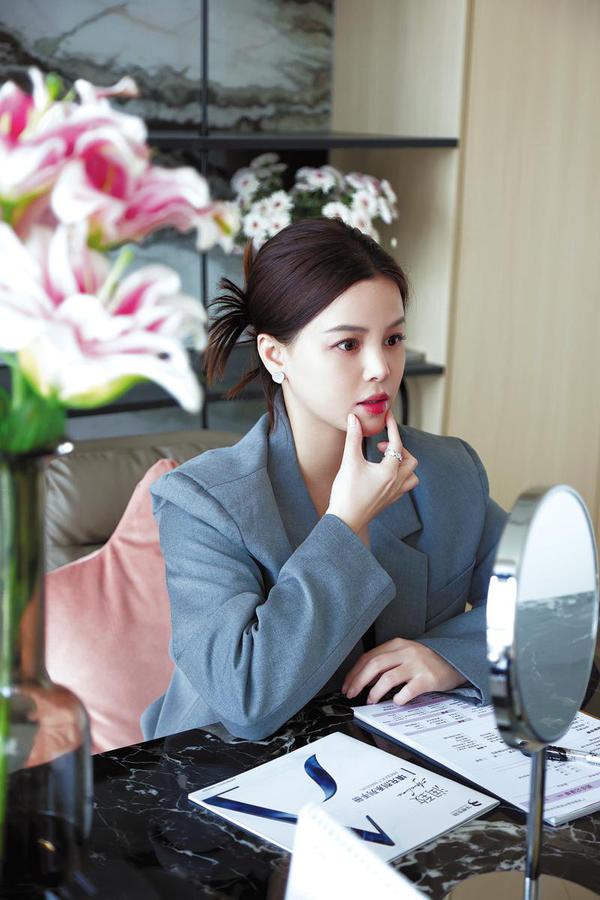
Peng Yun, principal of LC Medical Spa, spends her days providing one-on-one medical aesthetics consultations to help clients find the treatments that suit them best. (Photo provided to CHINA DAILY)
Natural appeal
Peng Yun — principal of LC Medical Spa and a consultant at Yuansong Medical Aesthetics — has witnessed the transformation of the beauty industry.
With over 5,000 members at LC alone, she has seen the focus shift from customers wanting dramatic change in their appearance to long-term management.
"In the past, people came in asking how to become more beautiful. Now, the conversation is about staying youthful, keeping good skin, and aging slowly — but naturally," said Peng.
Younger clients of LC seek subtle enhancements to lips, while those aged over 35 often pursue full-face rejuvenation through layered micro interventions. "They want refined results — nothing overdone. Our job is to bring harmony, not to erase character," said Peng.
While celebrities and influencers have quietly passed through Yuansong's doors, Peng insists their presence is not the focus. "They come not for visibility but for expertise. Our growth comes from word-of-mouth and trust in the aesthetic," said Peng.
She sees the future of medical aesthetics being closely tied to preventive wellness and anti-aging medicine. "This isn't just about looks anymore. It's about long-term health, confidence, and sustainable care for yourself," said Peng.
Wang Tso-hsuan, CEO of Taiwan Nice Clinique, said clients today favor subtle beauty enhancements.
"Consumers today are more informed and nuanced than they were a decade ago, as they're not just chasing dramatic changes. Many now want treatments that are barely noticeable — but that make them feel refreshed, more refined," said Wang, a veteran practitioner with 20 years in the field.
This shift is reflected in both procedure preferences and the motivation of consumers.
Regenerative injectables, which stimulate collagen production rather than simply fill space, have become go-to choices for those seeking long-term anti-aging benefits. Thermage and Ultherapy — which offer skin tightening with minimal downtime — continue to dominate the laser treatment category.
The real turning point in the industry was around 2020, when regulatory approvals in China opened the door for a new generation of aesthetic materials, Wang said.
"We went from a market dominated by Botox and hyaluronic acid to one where there are now dozens of regenerative options. That diversity has fundamentally changed how clinics operate and how consumers choose," said Wang.
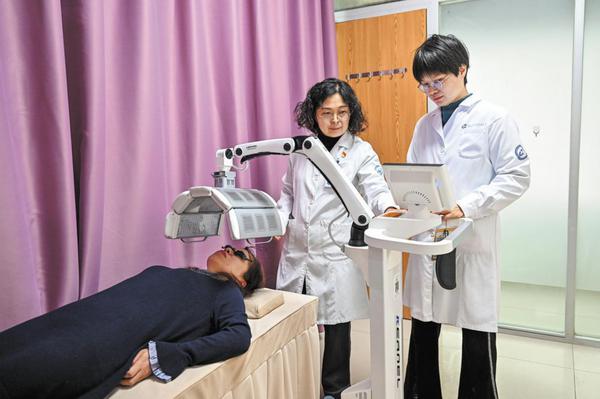
Practitioners of the department of medical aesthetics at Kunshan Second People's Hospital use advanced cosmetic equipment to examine a patient. (ZHANG CONGYU/FOR CHINA DAILY)
Maturing sector
Beauty industry demand has surged beyond the core customer base of urban, middle-class women. Consumers in Tier-3 and Tier-4 cities are catching up — though their aesthetic preferences sometimes reflect earlier trends, Wang said.
Meanwhile, male clients and younger Gen Z consumers are reshaping the conversation, often pursuing aesthetic tweaks that maintain "naturalness" rather than emphasize transformation.
"Ten years ago, people wanted to spend money and make sure others noticed. Today, a growing number of clients want to look better — without anyone knowing why as they see treatments as a filter, like a soft-focus lens in real life," said Wang.
The rise of social media-driven knowledge — through lifestyle platform Xiaohongshu, or RedNote, and popular shortvideo platform Douyin — has had a double-edged impact. While some patients arrive well-informed, others fall victim to overhyped trends or misleading advice.
"As consumers become more research-driven and discerning, professionals are adapting to meet higher expectations. It's forced doctors to become better communicators and educators — not just technicians," said Wang.
Still, challenges remain. While the devices and materials available to doctors have improved dramatically, technical expertise hasn't always kept pace — especially as new practitioners flood the market in recent years.
"Aesthetic medicine looks easy from the outside, but it takes years to develop the kind of clinical judgment needed to personalize treatments effectively," said Wang.
In the future, Wang sees a clear trajectory toward customized, multi-modal treatment plans, rather than stand-alone procedures. The future of aesthetic care will likely combine injection therapy, energy devices, and even surgical options in integrated protocols tailored to each patient's goals and biology.
"The future of aesthetics isn't about brand names or trendy machines. It's about how well a doctor understands the client and brings out their natural strengths. Everyone has something unique — our job is to find it and make it shine," said Wang.
Meanwhile, AI-powered tools — from skin analysis to remote diagnostics — are already changing the consultation process. For experienced doctors, these are helpful tools; for newcomers, they represent both a learning curve and a competitive threat.
"As the industry matures, the bar is getting higher. Consumers are not just looking for results — they're looking for expertise, transparency, and trust. Clinics that deliver all three will define the next era of growth," said Wang.































 京公网安备 11010202009201号