



China will step up macroeconomic policy support next year, intensifying efforts to expand domestic demand, deepen market reforms and stabilize the property sector, officials and experts said.
A senior official with the Office of the Central Committee for Financial and Economic Affairs said the policy mix for the upcoming year will be "proactive and effective", combining stronger fiscal support with an appropriately accommodative monetary stance, alongside a greater focus on efficiency, expectation management and early implementation.
China will continue a more proactive fiscal policy, keeping fiscal deficits, government debt and spending at necessary levels to support growth, while leaving sufficient room to respond to potential risks.
"Spending efficiency will be a priority," the official said, adding that fiscal resources will be better aligned with major national strategies and people-oriented investment, echoing the Central Economic Work Conference's call to channel funds toward areas that both support development and improve livelihoods. While tighter budgetary discipline will remain in place, faster fund allocation will be encouraged to translate policy support into tangible investment and physical workload.
Monetary policy will remain appropriately accommodative. For the first time, promoting steady economic growth alongside a "reasonable rebound in prices" was listed as a key consideration, the official said.
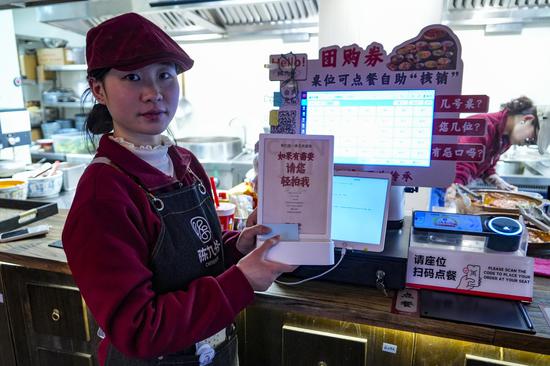
Expanding domestic demand will be the top task for the coming year. Official data show that domestic demand contributed 71 percent of economic growth in the first three quarters. While demand for some goods has eased, service consumption, including tourism, eldercare and childcare, remains resilient, the official said. Efforts will be focused on raising incomes, promoting high-quality employment and improving the social security system so as to strengthen household spending capacity and stabilize consumption expectations.
Luo Zhiheng, chief economist and head of the research institute at Yuekai Securities, said boosting consumption during the upcoming 15th Five-Year Plan period (2026-30) should be viewed as a long-term strategic task rather than a short-term stimulus measure.
Luo said consumption is an outcome of broader structural improvements rather than a policy tool in itself, adding that sustained demand growth depends on coordinated efforts by the government, businesses and households, supported by a better consumption environment and higher-quality goods and services.
Measures will also include better enforcement of paid leave policies and steps to tap inbound spending under the "Shopping in China" brand, as authorities seek to further unlock consumption potential and cultivate new growth drivers.
Market-oriented reforms will be advanced in tandem with demand-side efforts. The official said China will accelerate the construction of a unified national market, with targeted measures to address "involution-style" competition, dismantle local protectionism and remove barriers that hinder the free flow of goods, capital and other production factors.
Crucially, the official specified that crackdowns will target so-called drawer agreements — undisclosed arrangements through which some local governments illegally offer tax breaks or subsidies to attract investment — as part of broader moves to standardize market rules and maintain fair competition.
Zhou Mi, a senior researcher at the Chinese Academy of International Trade and Economic Cooperation, said the push for a unified market reflects a shift in development focus from speed to efficiency. "Unification does not mean uniformity," Zhou said. "Regions can still develop based on their comparative strengths. The key is to reduce hidden barriers so resources can flow more freely across the country."
The country will also expand its international science and technology innovation hubs. Beijing's hub will be extended to the Beijing-Tianjin-Hebei region, while Shanghai's will cover the Yangtze River Delta region. The Shenzhen-Hong Kong-Guangzhou innovation cluster in the Guangdong-Hong Kong-Macao Greater Bay Area ranked first globally in the 2025 Global Innovation Index, while Beijing ranked fourth.
Promoting the stable and healthy development of the real estate sector remains a priority, the official said, noting that risks have eased this year as transactions steadied and price declines narrowed, despite continued pressure on investment as inventories are digested.
Policy efforts will focus on balancing supply and demand, and ensuring the delivery of presold housing projects, including through the use of the "white list" financing mechanism. While the market continues to adjust, the official said there remains room for high-quality development, citing the gap between China's permanent resident urbanization rate of 67 percent and its household registration urbanization rate of under 50 percent as a source of long-term housing demand.





































 京公网安备 11010202009201号