



The 5th World Congress of Biosphere Reserves (WCBR), a decennial event organized by the United Nations Educational, Scientific and Cultural Organization (UNESCO), will be held in Hangzhou, the capital of east China's Zhejiang Province, from September 22 to 25, according to Chinese Academy of Sciences (CAS).
It's the first time the conference is being held in Asia, said He Hongping, vice president of CAS, at a press conference held by the State Council Information Office on Tuesday. The event will bring together some 4,000 delegates from over 150 countries and regions.
He said China will use the gathering to draw on global expertise in ecological governance, deepen international scientific cooperation and pursue breakthroughs in biodiversity conservation and environmental management.
It is anticipated that a Hangzhou action plan will be released during the conference, which will guide the UNESCO Man and the Biosphere(MAB) Programme for the next decade.
UNESCO launched the MAB Programme in 1971 to promote the sustainable management of biodiversity and human-nature interactions. It operates through the World Network of Biosphere Reserves (WNBR), which includes 759 biosphere reserves across 136 countries.
Every 10 years or so, UNESCO convenes the WCBR to evaluate progress, share experience, and set future directions for the MAB Programme. The last WCBR was held in 2016 in Lima, Peru, where the Lima Action Plan (2016-2025) was adopted.
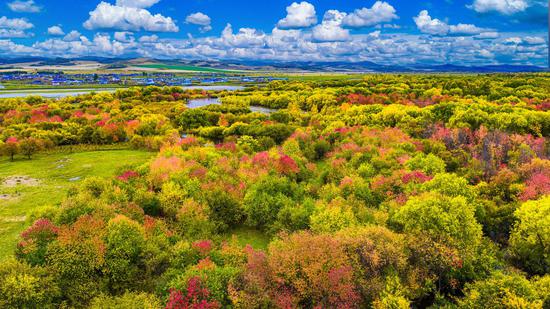
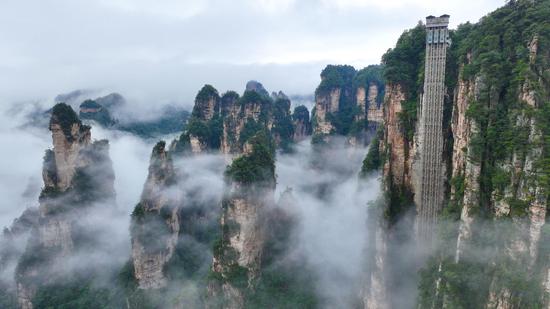
China formally joined the MAB Programme in 1973 and established a national committee for the program five years later. To date, 34 nature reserves in China have been designated as UNESCO biosphere reserves, placing the country first in Asia in terms of total number of such reserves.
"By actively participating in this initiative, we are consistently sharing the philosophy, wisdom and practices of China's ecological civilization development with the international community," He said.
China has been systematically advancing scientific conservation efforts and has achieved significant progress, he noted.
Through the building of the national parksystem and the national botanical gardensystem, and the implementation of wildlife protectionprojects, the country has seen the gradual recovery of key wildlife species such as the giant panda, the Yangtze finless porpoiseand the Tibetan antelope, and the constant improvement of their habitats, he added.
He also said that integrated monitoring systems have been established to track ecosystem and species dynamics nationwide, supporting evidence-based conservation policies. Advanced technologies such as AI identification, satellite remote sensing and drones have been deployed to create a smart "space-air-ground" monitoring system, which has been applied in pilot reserves to improve management and restoration efforts.
Scientific advisory support has also contributed to major national decisions such as the Yangtze fishing ban, national park developmentplans, and the determination of red lines in ecological protection, he added.


































 京公网安备 11010202009201号