


By Lin Zhuowei
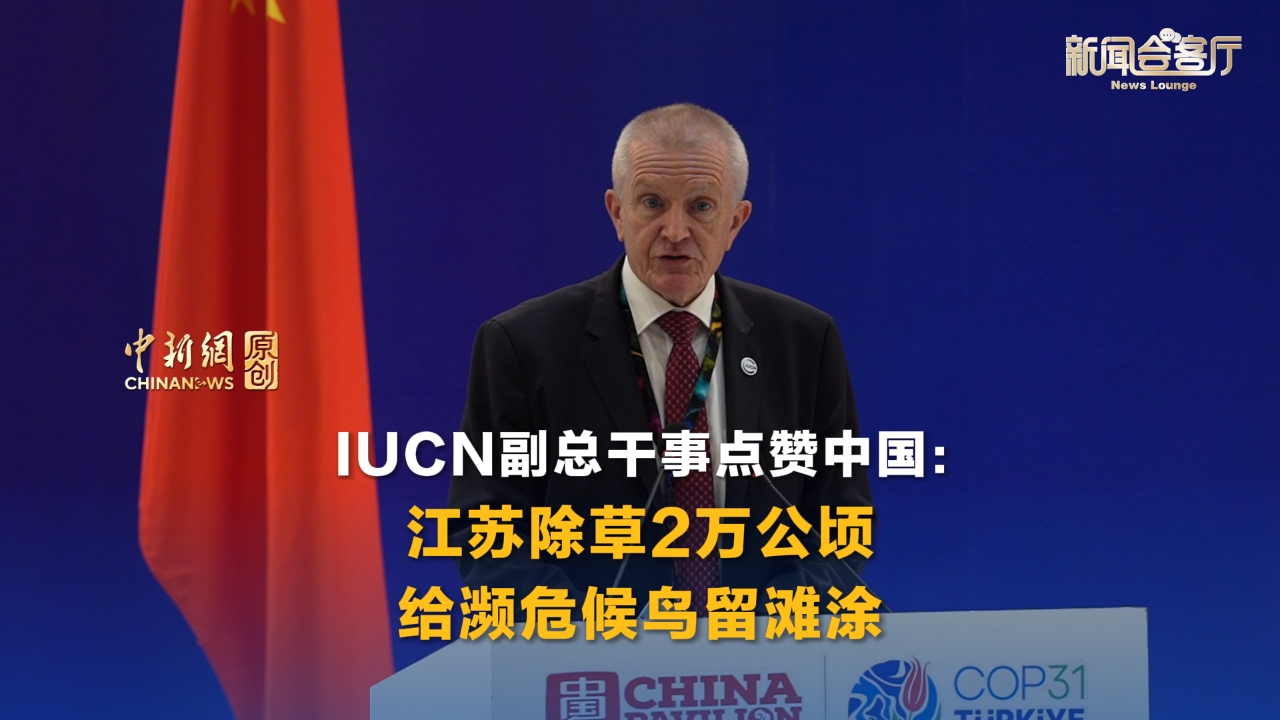
(ECNS) —China's poverty eradication drive laid the groundwork for its vision of a beautiful China, one that cannot be fully realized without shared prosperity, said Stewart Maginnis, deputy director-general of the International Union for Conservation of Nature, as he spoke at a high-profile side event on the sidelines of the 31st UN Climate Change Conference in Antalya, Türkiye.
Maginnis delivered the remarks on November 10 local time at the side event titled "Ecological Civilization and Beautiful China Practices" at the China Pavilion during COP31. Drawing on over two decades of fieldwork and partnerships across China, he outlined his observations on the country's conservation track record.
Hosted by the Research Center for Xi Jinping Thought on Ecological Civilization and China News Service. Co-organizers include the Policy Research Center for Environment and Economy under China's Ministry of Ecology and Environment, and China News Network.
Maginnis pointed to the restoration of coastal wetlands in Yancheng, Jiangsu Province, as a concrete example. There, workers removed invasive species Spartina, restoring 20,000 hectares of carbon-rich tidal wetlands. The work boosted coastal resilience for local communities and recreated habitat for endangered migratory birds.
Projects like this are far from isolated, he said. China hosts 19 natural and mixed World Heritage sites, and 34 protected areas are listed on the IUCN Green List of Protected and Conserved Areas. Both totals lead the world, a record built on decades of local restoration action.
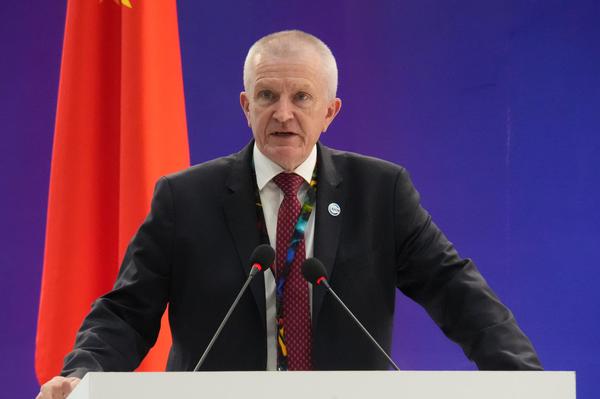
"A society can enjoy material abundance yet still lack clean air, fresh water, biodiversity and ecological resilience," Maginnis said. That is the core strength of China's ecological civilization framework: it is not merely a green policy agenda, but a strategic model for balancing human wellbeing and intact ecosystems. The "two systems theory" frames the approach: environmental protection and economic development do not need to compete.
Maginnis laid out four pillars behind China's conservation progress.
First is consistent top-level political commitment, backed by national legislation and broad, society-wide buy-in.
Second is large-scale, on-the-ground delivery. The restoration of the Min River basin stands out. Authorities removed 340 small hydropower stations to reopen 160 km of free-flowing river. Communities were connected to clean renewable power grids, paired with pollution controls, wastewater treatment, and sustainable farming. Restoration planning covers the whole river basin, not just scattered stretches.
Third is adaptive management and continuous learning. IUCN and the China Renewable Energy Engineering Institute are collaborating to assess hydropower impacts across entire river basins, rather than judging compliance project by project, to refine planning and operation.
Fourth is open international exchange. China has shared its experience, including sponge city design, with practitioners across Asia through the Asia Hub for Nature-based Solutions and regional summer schools.
Turning to marine protection, Maginnis welcomed China's leadership in advancing the regenerative blue economy and implementing the BBNJ agreement, the high seas treaty governing biodiversity in waters beyond national jurisdiction.
"China's achievements offer valuable lessons for conservation worldwide," Maginnis said.




































 京公网安备 11010202009201号