


(ECNS) -- At 4:30 a.m. in Surabaya, a port city in eastern Indonesia, convenience store owner Lina Sari is already checking online orders on her phone.
A reliable internet connection is essential to her business. If a payment fails during the early-morning rush, she says, it can affect sales for the rest of the day.
Maintaining reliable mobile networks while reducing their energy consumption is a challenge in Indonesia, a country made up of thousands of islands.
Chinese telecommunications company ZTE has developed an AI-powered energy-saving system for Indonesian operator XLSMART. According to a case study in a collection published by China’s National Development and Reform Commission, the system reduced energy use by an average of 10.9% at upgraded base stations without compromising network quality.
If deployed across more than 20,000 sites, the system could save an estimated 54 million kilowatt-hours of electricity annually and cut carbon dioxide emissions by more than 40,000 metric tons, according to the case study.
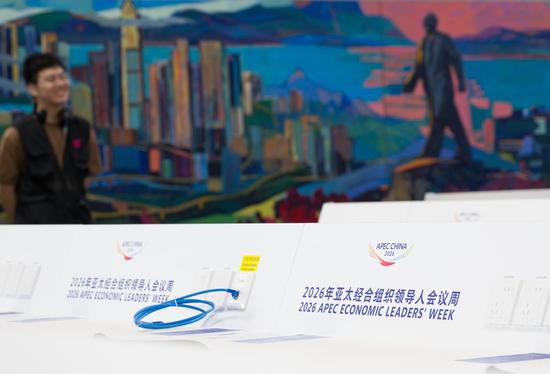
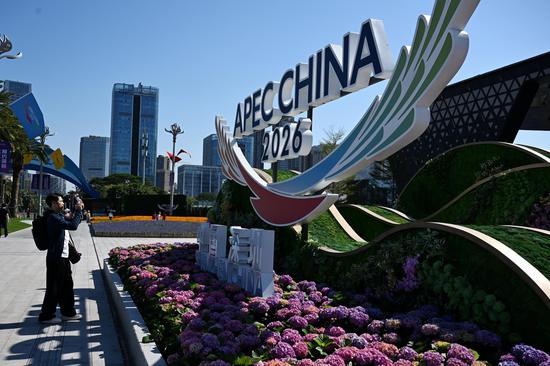
The project illustrates one way AI could deliver practical benefits beyond the technology sector. This is an issue gaining attention as leaders from the 21 member economies of the Asia-Pacific Economic Cooperation (APEC) forum, gather in Shenzhen, a technology hub in southern China, this week.
AI is a major topic at the meetings, with participating economies discussing how to expand access to the technology and promote its responsible use.
But the opportunities are unevenly distributed. Economies with limited digital infrastructure, computing resources and technical expertise face greater obstacles to adopting AI.
Making AI more accessible
Reece Roberts, national president of the Australia China Business Council, told Sanlihe, a news commentary platform affiliated with China News Service, that making AI more inclusive requires lowering costs and improving access.
Open AI models are one possible way to achieve that goal. Unlike proprietary models that generally restrict access to their underlying technology, some open models allow developers to download, modify and deploy the systems to suit their needs.
Chinese AI models have gained considerable traction on OpenRouter, a platform that gives developers access to models from multiple providers.
Models developed by Chinese companies processed about 119.1 trillion tokens[R3.1] through the platform during the week of Nov. 9–15, according to figures based on OpenRouter data. Four of the five most-used models on the platform during that period were Chinese-developed models.
A token is a unit of text processed by an AI model. The figures measure activity on OpenRouter, rather than AI use worldwide.
Alveiro Mateus, co-founder and chief architect of AI company OptimOps.ai, told Sanlihe that open models are becoming more competitive with leading proprietary systems while offering lower costs.
He said the technology could give smaller companies access to AI capabilities previously associated with much larger businesses, allowing them to compete on a more equal footing.
Yet lower costs alone will not ensure that AI becomes widely accessible.
Beyond the technology
Differences in technical standards and regulatory requirements also make it difficult for companies to offer AI services across multiple markets.
Mateus said some economies are developing their own models and setting their own standards, creating the risk of fragmented systems that are difficult to use across borders.
He argued that APEC could help by promoting closer coordination and developing common frameworks that would make it easier for businesses to operate in different markets.
A role for regional cooperation
APEC’s 21 member economies differ widely in their technological capabilities and development needs. No single AI system or approach is likely to meet all those needs.
As the region debates how to govern and deploy AI, the challenge is not simply to develop more powerful models, but to make the technology affordable, accessible and useful in economies at different stages of development.
(By intern Li Ying & Helen Mo)


























 京公网安备 11010202009201号