


By Zhang Dongfang
(ECNS) -- Thirty-seven years after its founding, Asia-Pacific Economic Cooperation (APEC) remains committed to advancing trade and investment liberalization and facilitation, and fostering regional economic growth and shared prosperity.
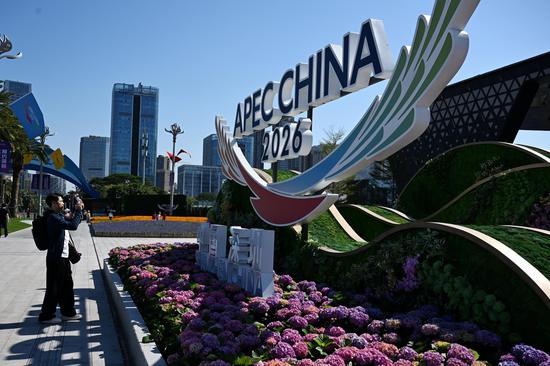
Ahead of the 33rd APEC Economic Leaders' Meeting, which will take place in Shenzhen, Guangdong Province, on Nov. 18–19, foreign business leaders told China News Service that they expect to see stronger policy coordination among APEC economies to promote trade and investment liberalization and facilitation and strengthen cooperation on innovation with the region, while voicing optimism about collaboration with China in clean energy, artificial intelligence and other sectors.

A large delegation of U.S. companies is attending this year's APEC CEO Summit. Sean Stein, president of the U.S.-China Business Council (USCBC), said that many U.S. chief executives hope to see what consensus will be reached across sectors in Shenzhen, which they believe will help them expand the Asia-Pacific market and make cross-border business easier.
What we'll see coming out of APEC are many small, incremental changes and recommendations that add up to a great deal in the aggregate, Stein said.
"Even if it only makes transactions a little tiny bit bigger, think of all the millions of trades and transactions that happen every year across the region," he said.
He described APEC as a vital multilateral platform connecting businesses and governments. Sustained improvements to trade and commercial rules will ease cross-border operations and ultimately benefit consumers throughout the region, he said.
Australia is one of APEC's founding members. Greg Smith, chair of AustCham South China, said Australia "really believes in the community." "Trade within a community is the best way of strengthening understanding and developing commerce and prosperity for all."
Smith hopes APEC members will work together to cut tariffs and further reduce trade restrictions, thus promoting free trade in this area.
Beyond trade facilitation, business leaders are also focused on how Asia-Pacific economies can navigate technological transformation.
Brittany Masalosalo, chief public policy officer at HP Inc, said disruptive technologies are causing governments to rethink how they cooperate, and companies are having to adapt to these challenges as well.
"The Asia Pacific region is one of the most dynamic regions around the world. It's also one of the most diverse regions. Bringing that diversity to bear with the spirit of innovation at this moment is critical. And it's also critical to HP strategy."
For the AI industry, divergent technical standards and governance rules across economies pose hurdles to cross-border collaboration. Alveiro Mateus, co-founder and chief architect of U.S. AI firm OptimOps.ai, said one priority for APEC is to develop standards and governance frameworks that economies can reference and adopt.
Greater alignment on AI safety and reliability, he added, would build trust and unlock more cross-border technology partnerships.
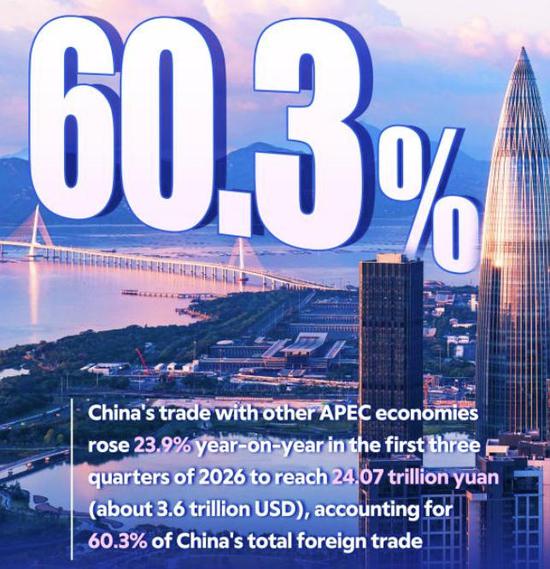
According to China's Ministry of Commerce, China is now the largest trading partner for 13 APEC economies. Expanding economic and trade links between China and its Asia-Pacific counterparts create broader avenues for all parties to share development dividends.
Smith singled out renewable energy and aged care as promising areas for Australia-China collaboration. China's fast-growing electric vehicle and solar panel sectors offer new opportunities for Australian businesses, he said. At the same time, the two sides can "complement each other in responding to population ageing": China brings technological strengths, while Australia boasts a well-established aged-care service system.
Having operated in China for more than four decades, HP continues to find opportunities from China's development.
Masalosalo said China is not only an important part of HP's global manufacturing supply chain but also a major hub for R&D and innovation. Abundant talent from Chinese universities and vibrant local innovators create ample opportunities for partnerships with multinational corporations.
"HP has been proud that we've been able to grow in China, for China, alongside China," she said.
Mateus pointed to complementary strengths in the U.S. and Chinese AI industries, urging stakeholders to explore untapped potential for collaboration.
The U.S. enjoys advantages in R&D and has large models for manufacturing and logistics, while China excels at deploying technology and has strong production capacity, he noted.
Closer collaboration can combine cutting-edge research with large-scale applications in healthcare and manufacturing, delivering more efficient solutions for global markets, he said.



































 京公网安备 11010202009201号