


By Lin Zhuowei
(ECNS) — “Your energy transition is like nowhere else on Earth,” Simon Stiell, executive secretary of the UN Framework Convention on Climate Change, said at a China Pavilion side event on the sidelines of COP31.
Themed “Ecological Civilization and Beautiful China Practices”, the event was held on the morning of November 10 local time, as the 31st UN Climate Change Conference unfolded in Antalya, Türkiye. He praised China’s climate action and urged the international community to sustain multilateral cooperation to deliver a quicker, more equitable shift to clean energy.
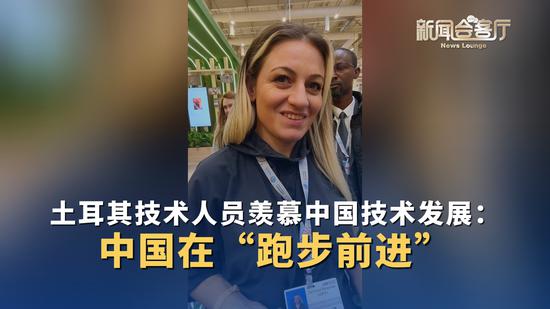
It's the first time that China News Service has recorded its “News Lounge” interviews in Türkiye. The event was hosted by the Research Center for Xi Jinping Thought on Ecological Civilization and China News Service, and co-organized by the Policy Research Center for Environment and Economy of the Ministry of Ecology and Environment and China News Network. Huang Runqiu, China’s Minister of Ecology and Environment, Li Gao, vice minister of Ecology and Environment; Liu Zhenmin, China's special envoy for climate change, and other Chinese and foreign attendees took part in the event.
Stiell opened by thanking China for convening the gathering, which offered a platform for countries to exchange views on climate policy and practice. He said China has long upheld multilateralism and consistently engaged with UN climate frameworks, lending momentum to global climate governance.
“Your energy transition is like nowhere else on Earth,” he reiterated, drawing on his multiple visits to China to back his assessment of the country’s green progress.
China’s South-South climate partnerships have helped many developing nations scale up clean energy and build resilience against climate shocks, he noted. At the same time, the energy shift has created jobs, lifted economic growth, and strengthened energy security domestically, while spurring global innovation and driving down renewable energy costs worldwide.
Stiell highlighted China’s pledge to strive for outcomes beyond its new nationally determined contributions. That commitment, he said, reflected long-term vision. Every advance China makes in its green transition accelerates global clean-energy deployment, bringing benefits both to its own population and the wider world.
Collective international effort has helped pull projected global temperature rise down from well above 4 degrees to around 2.6, he said. Adaptation has moved from the margins to the mainstream of climate negotiations, and a worldwide energy transition is gathering pace.
Even so, Stiell stressed the global clean-energy shift must speed up and be equitable. No single nation can resolve the climate crisis alone. Countries should keep exchanging experience and turn dialogue into tangible, on-the-ground cooperation.
Nations will follow different transition paths suited to their national circumstances, while working toward shared climate goals. In the face of mounting climate risks, global climate action should adhere to the principle of common but differentiated responsibilities and respective capabilities, building greater solidarity rooted in mutual respect and understanding.






















 京公网安备 11010202009201号