



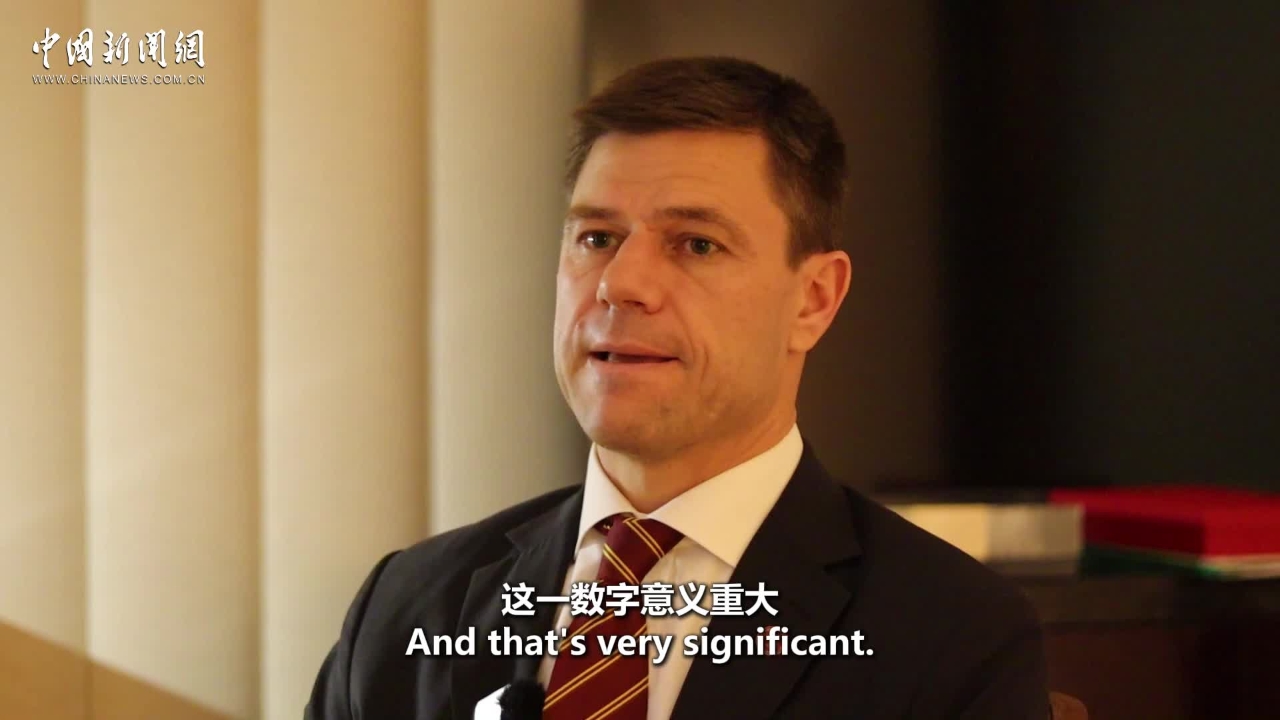
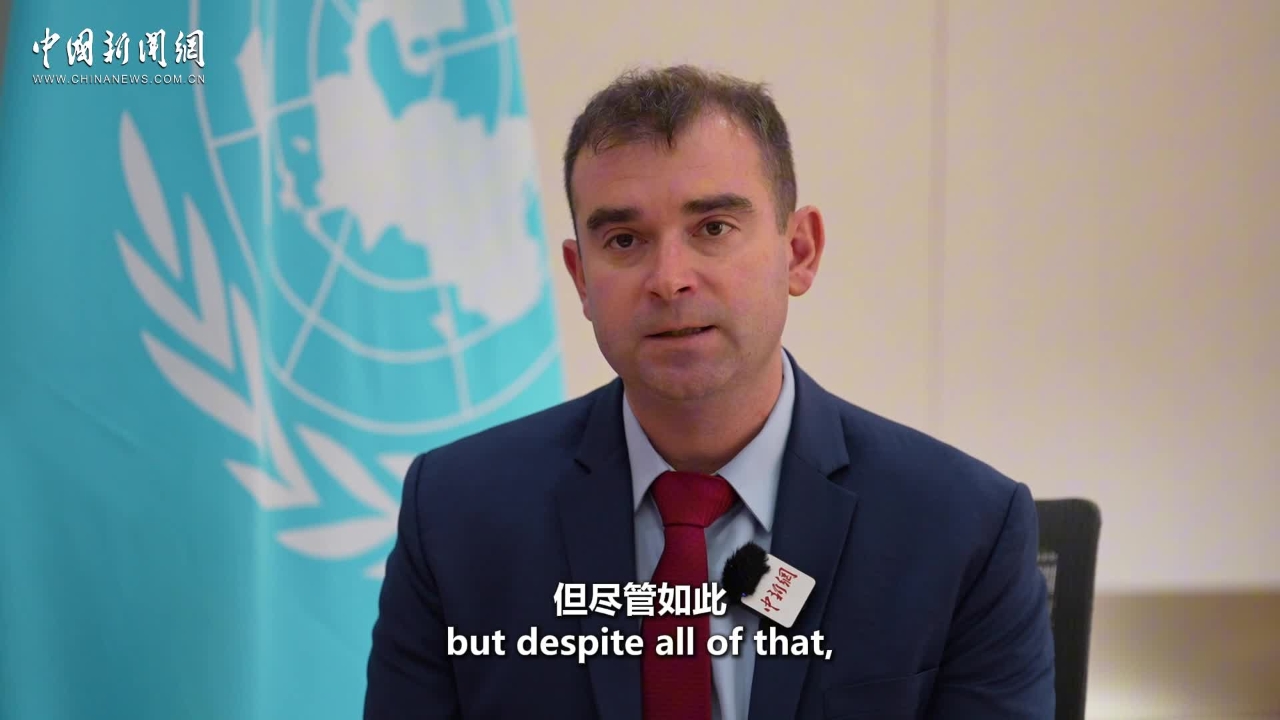
Recently, Sam Daws, Senior Adviser to the Oxford Martin AI Governance Initiative at the University of Oxford and Founding Director of Multilateral AI, visited China to participate in the Mingde Strategic Dialogue event. During the trip, he joined Professor Wang Wen, Dean of Chongyang Institute for Financial Studies and School of Global Leadership at Renmin University of China, to visit Shanghai, Wenzhou and Beijing, gaining a deeper understanding of Chinese culture and thought, and observing China’s development in industrial innovation and artificial intelligence governance. Daws pointed out that the West has grown anxious about China’s development and has imposed restrictions on China for various reasons, stressing that both sides should strengthen mutual trust and avoid “decoupling.”
China’s AI development is exciting
Wang Wen: A few days ago, we visited a “future factory” in Zhejiang, where almost no workers were present and robots completed the full production process. Many of us were amazed by what we saw, including myself, as it was also my first time visiting such a fully automated facility. What was your impression at that moment?
Sam Daws: Yes, I think I felt excitement at seeing it. I also felt the realization that automation and artificial intelligence will also have a lot of implications for jobs, for people — and not just in China, but in Western countries as well. We are going to gain great efficiencies from using automation, and we need to ensure that the benefits are then shared with people. And I think China is focusing on doing that carefully, and I think we need to do the same in the West. But it was very exciting to see what was possible with a modern factory.
“Decoupling” from China would backfire
Wang Wen: In recent years, when Western media report on China’s manufacturing, two terms constantly appear: “Overcapacity” and “De-risk.” How do you view the current evaluations made by some Western media and think tanks regarding China’s manufacturing sector and its economic development?
Sam Daws: I think this was a response in part from the European Union being impacted by tariffs that the United States imposed on Europe. And instead of being able to export as easily to the U.S., there were fears from Europe that China would export overcapacity to the European Union, meaning competitive Chinese products to be redirected to Europe. And in certain areas, like where China has been leading the world, in solar technology, the European Union has put tariffs to prevent that.
Wang Wen: So at some level, we do need more mutual understanding, mutual recognition, and mutual adjustment. Through effective dialogue, both sides can make further policy adjustments. So how do you view today’s overall China–West relations? And how do you see China–U.S. relations?
Sam Daws: Yeah, I think there are different perceptions from a Western policymaker’s view, in the U.S. especially. I think they impose export controls on China because of their anxiety. The United States sees China’s rapid rise, and so they’re framing their export controls in terms of risk mitigation, protecting critical supply chains, or protecting national security. China understandably perceives these policies as forms of containment.
And I think the most constructive approach is to acknowledge both views, to recognize legitimate security concerns while avoiding policies that create permanent decoupling. So practically, that means targeting controls as narrowly as possible and pairing them with confidence-building measures, because otherwise such decoupling can easily become counterproductive.
So in my area, AI, we could work together on public-interest AI to tackle shared challenges like climate change, public health, pandemic prevention, and so on. For Europe, countries like the U.K. and the European Union want to expand trade with China. They also want to maintain strategic autonomy from both China and increasingly from the United States, which has been imposing tariffs on Europe. The world is in a more uncertain place now. In this context, global international cooperation is essential because we live on one planet.
(The viewpoints reflected in this article are exclusively the speaker's own and do not represent any official stance or viewpoint of Ecns.)































 京公网安备 11010202009201号