

China reports breakthrough in yak cloning, genome-based breeding in Xizang
(ECNS) - China has achieved a breakthrough in yak breeding using a combination of whole-genome selection and somatic cell cloning, with cloned calves successfully born and early-stage scaling underway, researchers said on Monday.
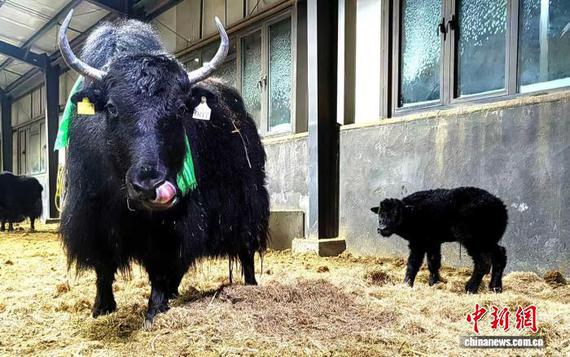
The results were announced in Damxung County in southwest China's Xizang Autonomous Region, where a joint research team said the technology could significantly improve breeding efficiency in a sector long constrained by slow genetic improvement and low reproduction rates, according to media reports.
The project, led by Zhejiang University in collaboration with regional research institutes, analyzed samples from 8,971 yaks across multiple regions of Xizang.
Using genome sequencing, scientists identified animals with desirable traits such as faster growth, stronger disease resistance and better adaptation to high-altitude conditions, before replicating them through somatic cell cloning.
The first cloned yak was born in July 2025, marking what researchers described as a "0-to-1" breakthrough. A second batch of 10 cloned yaks achieved full-term natural births between late March and early April this year, demonstrating early-stage scalability of the method.
Professor Fang Shengguo of Zhejiang University said whole-genome selection allows researchers to "precisely identify superior genetic traits," while cloning enables exact replication. This combination reduces the breeding cycle from around 20 years to less than five.
This marks a significant shift from traditional yak breeding, which relies on a slower, less accurate method of phenotype selection — a factor researchers say has led to declining growth performance.
The cloned calves are healthy and developing normally.
Dang Weidong, head of the Institute of Plateau Biology of the Xizang Autonomous Region, said the technology could help address key bottlenecks in the yak industry while supporting the preservation of genetic resources.
(By Zhang Jiahao)