
Monument to shared anti-fascist memory: the legacy of Langwogou
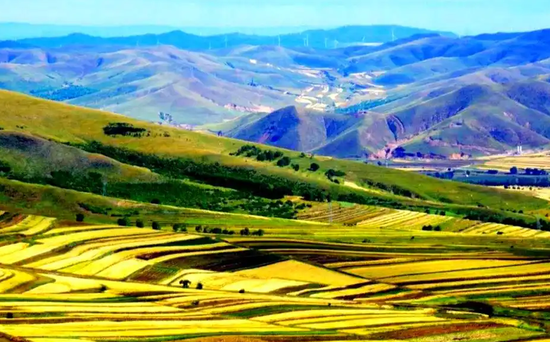
(ECNS) -- In Zhangbei County of China's Hebei Province, a monument stands in tribute to the fallen soldiers of the Soviet Union and Mongolia who fought the Japanese aggressors. It bears witness to a deeply moving chapter in the history of the World Anti-Fascist War, a memory that transcends time and boundaries.
Annihilating the Aggressors in the Chabei Region
During WWII, the Japanese aggressors committed atrocious crimes across the Chabei region in northern China. They spent years constructing extensive military fortifications and blockade trenches, and seizing grain, livestock, and other vital resources on a massive scale while exploiting and enslaving the local population. Civilians were arbitrarily detained and killed, and those suspected of supporting resistance forces were subjected to brutal torture. Countless people were displaced and plunged into dire suffering. Even more heinous, the Japanese army conducted large-scale bacteriological warfare in Zhangbei County and across the Chabei region. They forcibly conscripted locals for live human experimentation and deliberately spread epidemics throughout pastoral areas, inflicting untold misery upon the local population.
In August 1945, the Soviet Union and Mongolia declared war on Japan. Mechanized units of the Soviet and Mongolian forces crossed the border and advanced into the Chabei region to fight the Japanese aggressors. Guerrilla units of the Chinese Eighth Route Army operating behind enemy lines provided support. As a result, the main forces advanced with unstoppable momentum, and liberated multiple counties in the Chabei region. On August 15, Japan announced its unconditional surrender, and Zhangbei County was subsequently liberated.
However, some remnants of the Japanese forces, deeply indoctrinated in militarism and fearing accountability for their grave crimes, defied the surrender order. Relying on treacherous fortifications, they mounted a desperate last stand, looting and brutalizing displaced civilians as they retreated, thus continuing to ravage this long-suffering land.
A Fierce Battle at Langwogou
The Langwogou valley was a vital chokepoint in the region. Because of its perilous terrain—easy to defend and difficult to assault—it was of strategic importance. The Japanese soldiers garrisoned there refused to surrender, entrenching themselves in pillboxes and trenches, attempting to use the natural barrier to obstruct the advent of justice in a desperate act of doomed defiance.
On the evening of August 15, the flames of war lit the valley as the Soviet and Mongolian forces launched an all-out offensive against the entrenched Japanese at Langwogou. A fierce battle was fought near a northern bridge. To avert a complete rout, the Japanese remnants assembled their remaining troops and launched waves of frantic counterattacks. The Soviet and Mongolian soldiers fought with extraordinary valor and tenacity, refusing to yield a single inch of ground. They repelled dozens of enemy charges, holding the vital passageway with their flesh and blood. This staunch defense allowed the mainstay of the Soviet and Mongolian forces to surge forward like a torrent of steel, rapidly encircling the enemies in the valley. On the periphery, the Chinese Eighth Route Army disrupted enemy transportation lines and raided strongholds, severing the enemies' southern escape route. Underground members of the Communist Party of China and local civilians delivered intelligence and information on enemy deployments at immense personal risk, while villagers voluntarily transported supplies and tended the wounded.
Through the concerted efforts of the Chinese, Soviet, and Mongolian soldiers and civilians, the long-fortified Langwogou defense line was finally breached. The Japanese holdouts crumbled, and the remaining forces laid down their arms. The battle yielded significant results: a total of over 860 Japanese troops were neutralized, including more than 200 killed. A Japanese general, 81 officers, and 578 soldiers were captured, along with large quantities of ammunition and materiel. This battle decisively wiped out the last Japanese remnants in the Chabei region, clearing the way for its complete liberation.
A Flower on the Grassland That Never Withers
Victory was achieved with profound sacrifice. In the battle at Langwogou, the Soviet and Mongolian soldiers fought fearlessly with a noble spirit of internationalism. A total of 54 Soviet Red Army and six Mongolian People's Army soldiers fell in the battle and were laid to rest forever in this land. They gave their lives to defeat Japanese aggression and to liberate the persecuted people on the grasslands, cementing the international anti-fascist bond with their blood.
Among the six Mongolian soldiers, Ayuush was the only one whose photograph has survived. He led a bayonet charge in the fighting at the bridge. Though mortally wounded, he fought on with unyielding resolve to secure the bridge until his last breath, dedicating his youth and revolutionary fervor to the liberation of a foreign land. His heroic deeds have been widely commemorated in the region to this day.
From a Simple Stone Memorial to an Immortal Monument
To honor the fallen foreign heroes, the local people spontaneously built with stones and lime a raised platform as a simple memorial on the western hill of Langwogou. This unadorned monument embodied the purest gratitude and remembrance of the local populace and the most fundamental bonds forged in battle.
The simple memorial was damaged during the Chinese People's War of Liberation, yet the memory endured. Following the liberation of Zhangbei County in December 1948, the Chinese People's Liberation Army promptly repaired the structure, re-erecting the monument and ensuring the continuity of this immortal memory.
After the founding of the People's Republic of China in 1949, great importance has been attached to honoring the fallen heroes and preserving their legacy. In 1957, following deliberation by the Hebei Provincial People's Congress and approval by the Ministry of Civil Affairs of China, a new cemetery for the Soviet and Mongolian fallen soldiers was completed. The cemetery, solemn and serene, is the resting place for those heroes and safeguards this precious memory of international anti-fascist struggles.
Looking at this land, which endured so much suffering, one can appreciate how hard it is to secure and safeguard peace. The flames of war at Langwogou have long been extinguished, but the heroic feats of those who crossed borders to render assistance and gave their lives remain deeply moving and deserve to be remembered and honored for generations. It is not only a heartfelt tribute to the heroes, but more importantly, a lesson from history to guide the future. It is imperative for us to safeguard the truth of history, carry forward the spirit of heroes and protect the hard-won peace. It is also important for us to resolutely prevent the tragedy of aggression from ever recurring, and ensure that the spirit of fighting for international justice be passed down from generation to generation.
The author,Dong Shiguo,is an observer of international affairs.