


(ECNS) -- Foreign visitors to Shenzhen can now pay at small shops by scanning a QR code with their home countries' digital wallets, after overseas services such as PayPal and Vietnam's MoMo were linked to WeChat Pay this year, CCTV Finance reported Wednesday.
At a bagel shop in Shenzhen's Shekou district, a Vietnamese tourist completed a purchase within seconds using MoMo, a Vietnamese digital wallet. The shop's American owner, Matt, who has lived in Shenzhen for about 16 years, said mobile payments have made transactions faster and more convenient for foreign visitors.
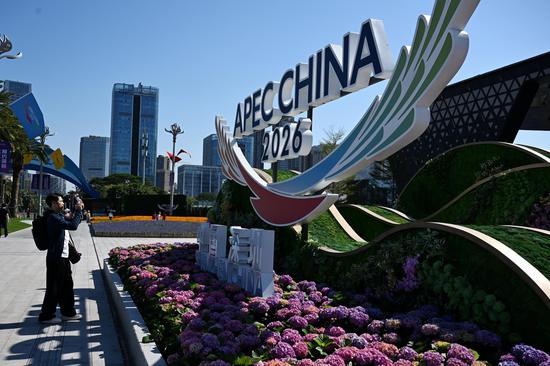
The report said the services help small businesses attract international customers and make trade among Asia-Pacific Economic Cooperation (APEC) economies smoother.
Overseas visitors made 183 million non-cash transactions in Shenzhen worth 26.847 billion yuan in the first 10 months of the year, up 20% in number and 26% in value from a year earlier, according to the Shenzhen branch of the People's Bank of China.
WeChat Pay now supports more than 60 overseas digital wallets across 16 countries and regions. Dai Haiyong, a cross-border product executive at Tencent Financial Technology, said transactions involving foreign visitors at Shenzhen's small and medium-sized merchants have risen more than 60% this year compared with the same period last year.
Meanwhile, UnionPay has expanded cross-border QR payment cooperation, allowing two-way QR code payments between China and Indonesia. Similar projects are advancing in several APEC economies, including Malaysia, Singapore, Thailand, Vietnam, Japan and South Korea. UnionPay QR codes are accepted by more than 53 million merchants outside China, the report said.
China's Cross-Border Interbank Payment System processed transactions worth 162.3 trillion yuan in the first nine months of the year, up about 20% from a year earlier, according to the central bank.
The growing cross-border payment network is reducing transaction costs and improving payment efficiency, providing stronger support for trade and investment across the Asia-Pacific region, the report said.
(By intern Alvin & Helen Mo)































 京公网安备 11010202009201号