



His optimism is based on the city's improving academic credentials.
The QS World University Rankings 2026 placed five Hong Kong institutions in the top 100, led by the University of Hong Kong, which rose to 11th globally — the highest-ever ranking for a Chinese university.
HKU also ranks second in Asia, trailing only the National University of Singapore in eighth place.
Subject rankings reveal strengths across multiple fields — from computer science to business — mirroring the most sought-after U.S. programs and enhancing Hong Kong's appeal to "Harvard refugees".
Opportunities on doorstep
Experts agree Hong Kong's greatest advantage lies in its integration with the mainland's innovation ecosystem — giving it an edge over rivals like Singapore and Germany.
Access to tech hubs, manufacturing bases, and the vast talent networks in the Guangdong-Hong Kong-Macao Greater Bay Area provide graduates with superior career opportunities while accelerating research commercialization.
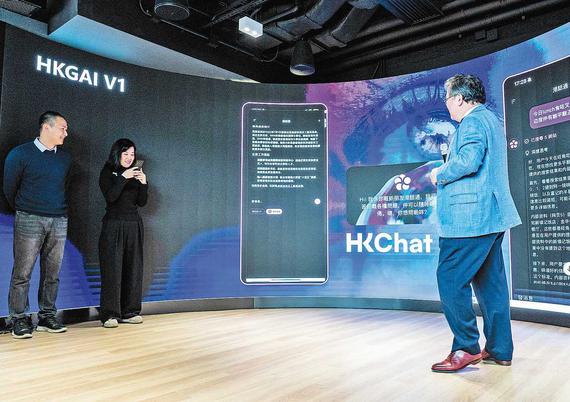
For example, HKUST partners with Chinese tech giants Huawei and Tencent in artificial intelligence and robotics, while CUHK is pioneering cross-border biomedical projects.
These collaborations complement Hong Kong's strengths in finance and legal education, anchored by Hong Kong's global financial center status.
Hu, from New Channel, said this multiuniversity, diversified approach is more adaptable to evolving industry demands than Singapore's reliance on just NUS and Nanyang Technological University. "We offer everything Singapore does, plus what it lacks," Lau said, referring to mainland connectivity.
While Singapore benefited from China-U.S. tensions — attracting students who avoided Hong Kong during the 2019 unrest — analysts say this advantage may be short-lived.
As relations between Beijing and Washington stabilize and Hong Kong's security situation improves, Singapore's window of opportunity could close.
Ng said university rankings alone don't reflect an institution's complete strengths. "While Singapore's (academic) ranking climb shows its success in luring global talent with competitive pay, this metric alone doesn't capture an institution's comprehensive capabilities or necessarily guide students in making the best choice for their education," he said.
Ng added: "Our graduates gain direct access to China's vast economic network — a drawcard even for students from traditional STEM powerhouses like Germany that offer free programs."
While some universities like City University of Hong Kong have let doctoral candidates replace research papers with patents, experts say Hong Kong's academic system still values publications too much, and practical application too little.
Lau pointed out that all eight public universities focus mainly on theoretical research as the key measure of success. This approach, he argues, makes professors less likely to work with industry.
He has called for reforms to give greater weight to patents and applied research in evaluating professors' career prospects — but so far, without success. "The system must reward practical innovation, not just papers," Lau said.
Hu said universities should also value how well professors turn research into profits — which could strengthen universities' real-world impact.
"Once universities produce unicorn startups, their competitiveness will go beyond rankings and solidify their role as true innovation engines," he said.
The Greater Bay Area's booming tech startup scene is ideal for nurturing future leaders, Hu said. To tap into this potential, he suggested changes like letting student entrepreneurs take time off to focus on their businesses, and allowing students to earn academic credits by building startups.
He also proposed using Hong Kong's strong financial system to connect student entrepreneurs with investors, helping turn ideas into businesses.



























 京公网安备 11010202009201号