



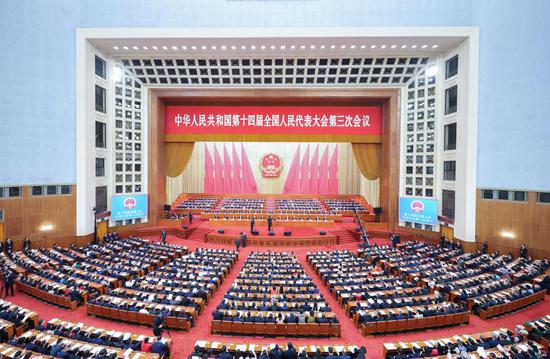
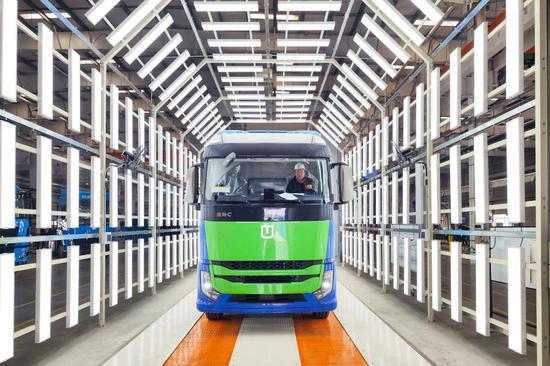
Zhang Li, a deputy to the 14th NPC and president of the China Center for Information Industry Development, said: "Boasting such a strong, complete industrial system, China provides rich application scenarios and enormous market potential for technological innovation, as well as solid support for the development of emerging industries and future industries."
Li said that by combining new ideas and technologies with China's robust manufacturing capabilities and vast market potential, the nation can better harness its strengths.
Industrial innovation must remain rooted in the real economy, emphasizing both the transformation and upgrading of traditional industries and the development of strategic emerging industries and future sectors, Zhang said.
"China's economy has historically relied on the real economy, and it is through this foundation that it will continue to progress," he added.
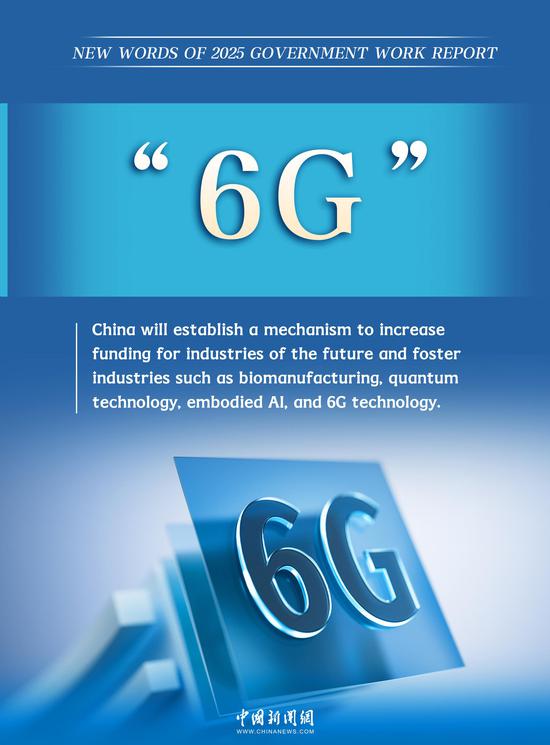
According to the Government Work Report, China "will establish a mechanism to increase funding for industries of the future and foster industries such as biomanufacturing, quantum technology, embodied AI and 6G technology".
Guo Guoping, a deputy to the 14th NPC and deputy director of the Key Lab of Quantum Information at the Chinese Academy of Sciences, said he was deeply impressed by China's emphasis on nurturing strategic future technologies such as quantum computing.
"China has become the third country in the world capable of delivering complete quantum computers, positioning itself in the global first tier of quantum computing research. But challenges remain in some areas," he said.
Guo also stressed the need for increased investment in basic research, which he describes as the foundation of high-level scientific and technological independence. He advocated for leveraging China's unique advantages in mobilizing resources to tackle key core technologies and advance frontier and disruptive technologies.
"We need to build a robust industrial ecosystem that can support the transition from laboratory prototypes to commercial products," he added.
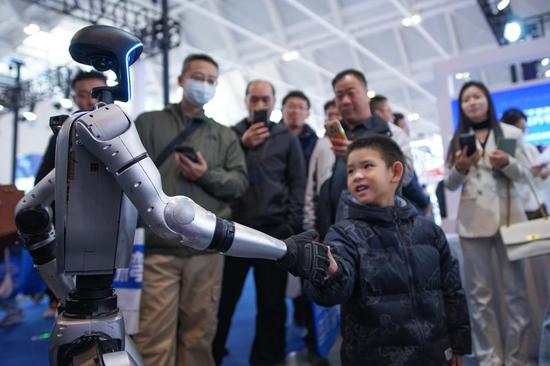
Qiao Hong, a member of the National Committee of CPPCC and an academician at the Chinese Academy of Sciences, said China has made rapid progress in robotics and artificial intelligence.
"Over the past three years, China has accounted for more than half of the global installations of industrial robots, and its lunar exploration robots have successfully returned lunar soil samples," Qiao said.
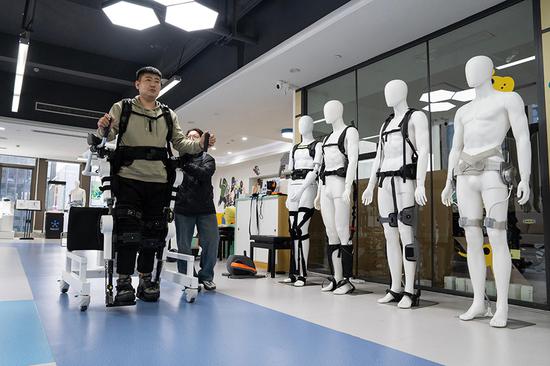
Qiao pointed to the development of humanoid robots as a particularly promising area, with China establishing a core technological foundation for large-scale, cost-effective production of high-performance robotic systems.
Her insights underscore the importance of integrating AI and robotics into traditional industries to enhance efficiency and productivity.
By leveraging digital technologies such as the internet of things, big data and cloud computing, companies like Unitree Robotics are transforming their operations and creating more efficient supply chains. This approach not only improves competitiveness, but also contributes to the broader goal of developing new quality productive forces.
Zhejiang province is a bellwether for China's regional innovation strategies.
As a manufacturing and e-commerce hub, Zhejiang has channeled its entrepreneurial culture into tech innovation, and startups like Deep-Seek exemplify Zhejiang's knack for aligning private-sector agility with national goals, experts said.
Gao Yingzhong, an NPC deputy and head of the department of science and technology of Zhejiang province, said the province added 18 national key labs last year, bringing the total to 38, and it achieved 110 major scientific and technological achievements and received 30 national science and technology awards.
Denis Depoux, global managing director of market consultancy Roland Berger, said China is making a strategic shift toward modern and sustainable economic growth.
"The China stories of the past — low labor costs, relatively few added-value products, massive exports and massive fixed-asset investments in infrastructure building and fueling the economy — are gone," he said. "The new China story relies on factors such as advanced manufacturing, decarbonization, growing innovation prowess and the services economy."



























 京公网安备 11010202009201号