



For generations of Chinese families, "nian gao" has been the most tangible festive expression of hope
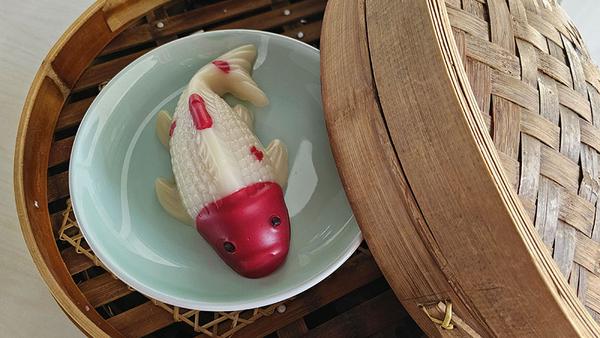
A colorful, festive rice cake. (PHOTO BY GENG FEIFEI/CHINA DAILY)
On festive kitchen counters, fish will flick their tails in mid-motion, gold ingots will sit plump and round, and a square "gold brick" will stand firmly at the center of the plate. These are not ornaments, but nian gao— Chinese New Year rice cakes — arranged like a miniature folk exhibition, each form carrying a carefully coded wish.
For generations of Chinese families, nian gaohas been the most tangible expression of hope for the year ahead. The phrase nian nian gao— rising higher year after year — is not merely spoken, but molded, steamed and shared, transformed into something that can be touched, tasted and remembered.
More than a blend of rice and sugar, nian gaocarries the season's hopes in its taste. Fish-shaped cakes signify abundance, and ingot-shaped ones promise prosperity. Through skilled hands, everyday grains become edible blessings.
The history of nian gaostretches back thousands of years, when sticky grain cakes were prepared as ritual offerings to ancestors and prayers for good harvests. Over time, as the word gao(cake) came to echo gao(high), the rice cake took on its enduring association with progress and aspiration.
From imperial courts to ordinary households, and from northern yellow millet cakes to southern stone-ground rice cakes, techniques and tastes evolved, but the wish for steady advancement and lasting well-being remained unchanged.
What defines nian gaois the chewiness and fragrance, qualities born of patient craftsmanship. Traditional methods require soaking, grinding, kneading and steaming, each step demanding time and care.
In northern China, yellow millet and glutinous rice produce firm cakes that exude a toasted aroma when pan-fried. In the south, pure glutinous rice is stone-ground into a fine paste, yielding snow-white cakes that lend themselves equally to sweet and savory dishes.
Among the many regional styles, hand-pounded nian gaofrom Linhai, a county-level city in Taizhou, Zhejiang province, stands out for its adherence to ancient techniques. It is produced using a dry-grinding method without added water or auxiliary ingredients.
The rice is repeatedly pounded by hand using traditional tools, a process that preserves the grain's natural fragrance while creating resilience and elasticity.
Li Xiaohui, brand director of Qianli Taizhou Yushi restaurant, explained that this method distinguishes Linhai rice cake from its Jiangnan counterparts.
"Each round of pounding is followed by inspection," Li said. "The result is a rice cake that retains the pure aroma of the grain while achieving remarkable chewiness. After steaming, the fragrance of the rice is especially pronounced."
By contrast, the water-ground rice cake in Ningbo, Zhejiang, is softer and smoother, while varieties in Suzhou, Jiangsu province, often incorporate pork lard for a richer flavor. Together, these differences in ingredients and techniques reflect the diversity of Jiangnan food culture.
According to Li, in Linhai, the making of rice cakes has long been a communal ritual. In the past, as Spring Festival approached, neighbors gathered to help one another pound rice cakes, turning food preparation into a shared celebration, she said. While such scenes are less common today, the symbolism of reunion remains deeply rooted.
The local ways of eating hand-pounded rice cake highlight both seasonality and respect for the original flavors. Steamed nian gaopaired with traditional Taizhou handmade brown sugar offers warmth and simplicity. When stir-fried with pickled mustard greens, it is a popular staple, while braised East China Sea yellow croaker served with hand-pounded nian gaoshowcases the region's coastal bounty, with the fish's delicate juices coating the chewy rice cake.
The choice of ingredients still follows the rhythm of the seasons. In winter, pickled greens dominate. Come spring, local seasonal greens known as huacaoappear and are paired with nian gao, bringing a lighter, floral freshness that resonates with seasonal rhythms and modern tastes.
Across China, regional variations continue to flourish. Ningbo's nian gaoremains a New Year essential, Guangdong province's savory radish cake balances chewiness with freshness, and Fujian province's brown sugar nian gao, dark and fragrant, symbolizes a year of thriving fortune.
As lifestyles change, many may choose ready-made options, yet countless families still take part in making nian gaoduring the 12th month of the Chinese calendar. The work is slower, the process familiar, and in kitchens across the country, the practice quietly carries on.



































 京公网安备 11010202009201号