



(ECNS) -- U.S. President Donald Trump said his government's involvement in Venezuela won't cost U.S. a penny because the United States would be reimbursed from the money coming out of the ground, referring to Venezuela's oil reserves.
Trump made the above remarks on the third day of the new year, after the U.S. launched large-scale attacks on Venezuela and forcibly seized Venezuelan President Nicolás Maduro.

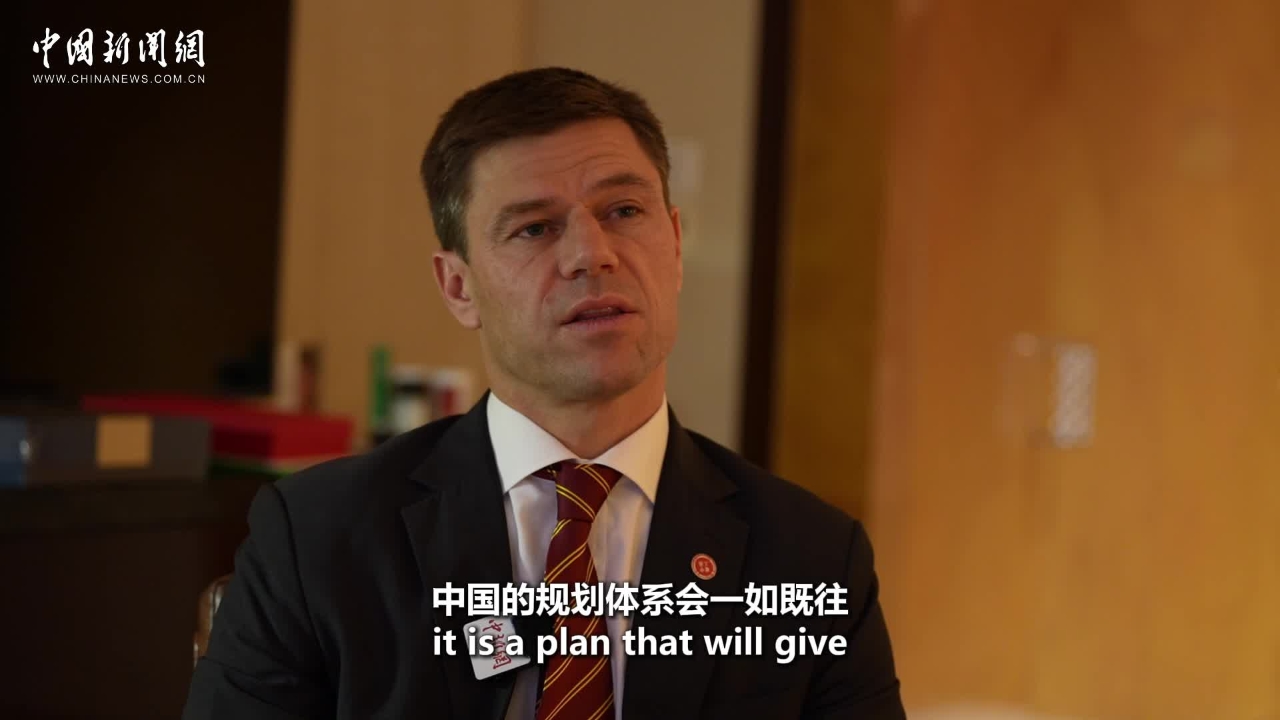
The reasons behind U.S. military action against Venezuela are not difficult to understand, Wang Youming, a researcher at the China Institute of International Studies, told China News Network in an interview.
Wang noted that U.S. companies operating in the country such as ExxonMobil and Chevron had previously suffered losses due to policies adopted by Maduro and former Venezuelan President Hugo Chávez, and that these companies may be linked to the Trump administration.
Venezuela is estimated to have the world's largest proven oil reserves, with more than 303 billion barrels, which represents roughly 17% of the total global oil supply, OPEC data shows. However, due to U.S. sanctions, insufficient investment, and other factors, the country's oil industry has long been characterized by low output.
Wang said the U.S. had previously forced the sale of CITGO, a Houston-based subsidiary of Venezuela's state-owned oil company PDVSA, and seized Venezuelan oil tankers, moves he said underscored Washington's interest in Venezuela's oil resources.
However, the return of U.S. oil companies to Venezuela may not be easy.
Industry insiders point out that the recovery of Venezuela's oil sector would by no means be achieved overnight. Security concerns, aging infrastructure, and long-standing political instability are all challenges that investors must confront.
Following U.S. military operations, damage was reported at Venezuela's Port of La Guaira, with many residents lining up outside grocery stores and gas stations amid concerns about their future livelihoods.
Wang pointed out that oil is not the only reason behind U.S. military action.
Trump has previously made clear his goal of forcing Maduro from power, Wang said, adding that the operation was politically motivated and aimed at regime change in Venezuela. At a deeper level, he said, the objective was to weaken Venezuela as part of a broader effort to reshape the political landscape in Latin America in line with U.S. domestic and foreign strategic priorities.
Commenting on the situation, a Chinese foreign ministry spokesperson said Saturday that such hegemonic acts by the U.S. seriously violate international law and Venezuela's sovereignty, and threaten peace and security in Latin America and the Caribbean region, adding that China firmly opposes it.
In fact, both the blatant use of force against a sovereign state and the rhetoric about using Venezuelan oil to offset the costs of U.S. military action are inherently absurd. Such narratives turn national sovereignty and the international order into mere cost-benefit calculations, elevating "America First" above all established rules.
Such American rhetoric is hardly new.
On the eve of the Iraq war, U.S. officials repeatedly claimed that the costs of the war would largely be covered by Iraqi assets, including oil. However, scholars calculate that over the years, the U.S. itself paid a price of at least $2 trillion—let alone the immense humanitarian catastrophe and long-term regional instability that followed.
In today's America, voters are far more concerned about domestic prices than about foreign policy. After U.S. military strikes on Venezuela, American Democratic Senator Chris Murphy raised a pointed question on social media: "How does going to war in South America help regular Americans who are struggling?"
Oil can be priced; war cannot be balanced on any ledger. When wealth extracted from the ground becomes a driver of conflict, the U.S. risks pushing the international order toward a law-of-the-jungle logic.
History offers a consistent lesson: such calculations never add up, and no country can ultimately afford the cost.
(By Gong Weiwei)


























 京公网安备 11010202009201号