



China has launched a nationwide campaign to fully implement the Eight-Point Decision on improving the conduct of the Communist Party of China (CPC) and the government. Since the 18th CPC National Congress in 2012, the Eight-Point Decision – a set of rules adopted by the Party leadership to address chronic bureaucratic issues, including official privileges and extravagant banquets – has served as a "golden hallmark" of the Party for improving work conduct.
Accountability is vital for good governance
Accountability is the basis of good governance and efficient administration. The Eight-Point Decision, which reflects a call for Party members to act with credibility and integrity and is at the core of the CPC's "institutional constraints and cultural cultivation" governance innovation, has provided important insights into how the CPC has strengthened Party building and enhanced governance.
The Eight-Point Decision builds a solid institutional framework by targeting key areas that impact efficiency and public trust. It curbs official extravagance, streamlines redundant meetings and documents, and standardizes receptions – issues that once hindered the Party's public service.
Rigorous accountability mechanisms ensure implementation. Disciplinary organs conduct regular supervision at all levels, and violations are reported publicly to hold those responsible accountable. The "zero-tolerance" approach closes institutional loopholes, fundamentally shifts work styles, and turns good governance principles into enforceable standards, laying a solid groundwork for effective governance.
Improved work conduct could win more public support
Today, whether analyzing the reasons behind the CPC's effective governance or exploring the logic of the Chinese model of governance, the Eight-Point Decision serves as a key lens of observation.
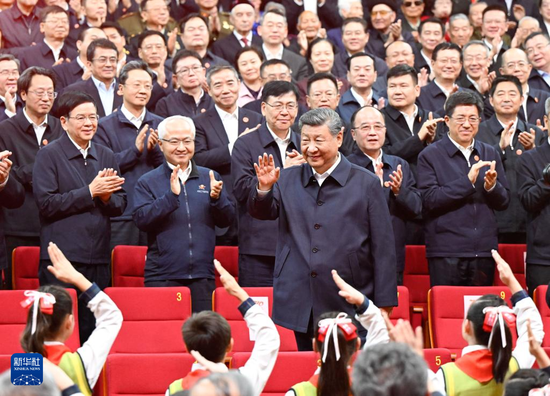
The Eight-Point Decision reshapes Party culture toward frugality, pragmatism and people-centered devotion. Lavish banquets and unnecessary trips are replaced by on-site research, with cadres spending more time listening to people's concerns.
This cultural shift builds deep public trust. Grassroots and primary-level Party organizations hold "on-site office" activities to solve residents' practical problems rather than focusing on formalities. People feel tangible changes – more responsive services, less public resource waste – which strengthens Party unity and solidifies its connection with the public, creating a supportive environment for reform.
Party-to-party exchanges improve global governance cooperation
As the world faces challenges such as political polarization and governance inefficiency, the experience of the Eight-Point Decision offers a compelling alternative paradigm to Western-led models of political accountability, which often rely on external checks from opposition parties and the press instead of internal mechanisms.
For example, Tanzania's ruling party, Chama Cha Mapinduzi (CCM), which maintains closer party-to-party exchanges with the CPC, has taken the Eight-Point Decision as a model and launched a campaign to fight corruption, eliminate conceit and self-satisfaction and improve working efficiency. These measures have helped the CCM strengthen governance and gain broad public support.
For political parties around the world, especially those from the Global South, the Eight-Point Decision has offered valuable experience in Party building and governance reform, representing an important contribution of Chinese governance philosophy to global governance.
The Eight-Point Decision provides political parties worldwide with a reference to enhance their governance capacity and pursue people-centered development – making China's contribution to global governance both practical and far-reaching.




































 京公网安备 11010202009201号