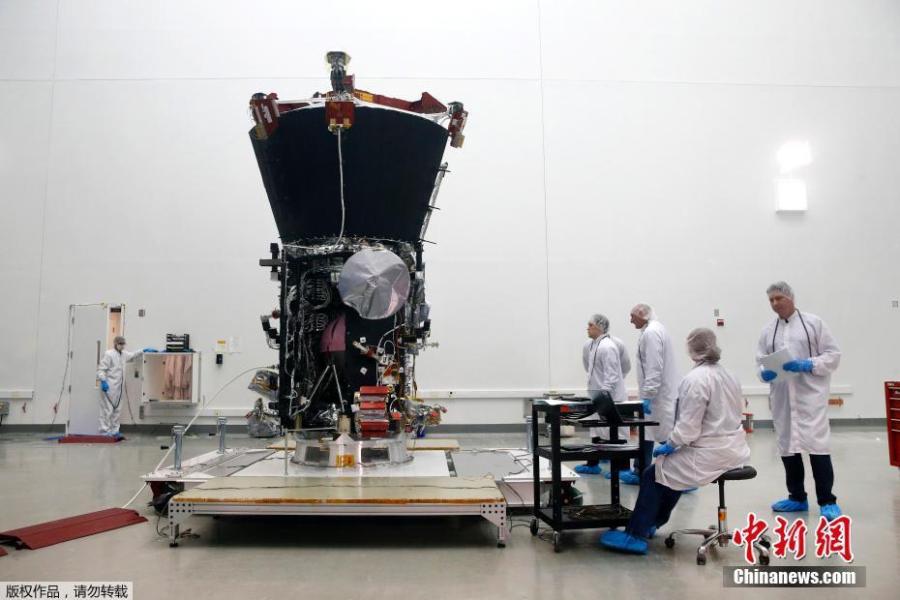
NASA's Parker Solar Probe sits inside a cleanroom at Goddard Space Flight Center, March 28, 2018, in Greenbelt, Maryland, as workers prepare it for launch. The spacecraft, which is scheduled to launch this summer, will travel closer to the Sun than any other spacecraft in history as it attempts to help researchers better understand stars throughout the universe. (Photo/Agencies)
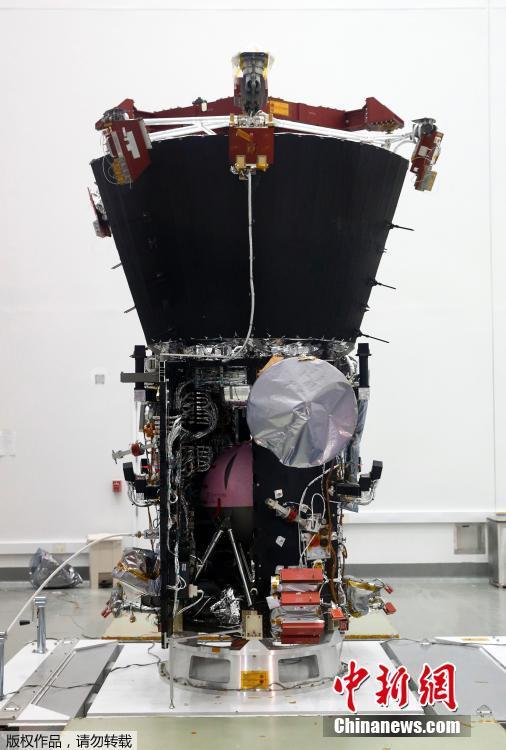
NASA's Parker Solar Probe sits inside a cleanroom at Goddard Space Flight Center, March 28, 2018, in Greenbelt, Maryland, as workers prepare it for launch. The spacecraft, which is scheduled to launch this summer, will travel closer to the Sun than any other spacecraft in history as it attempts to help researchers better understand stars throughout the universe. (Photo/Agencies)
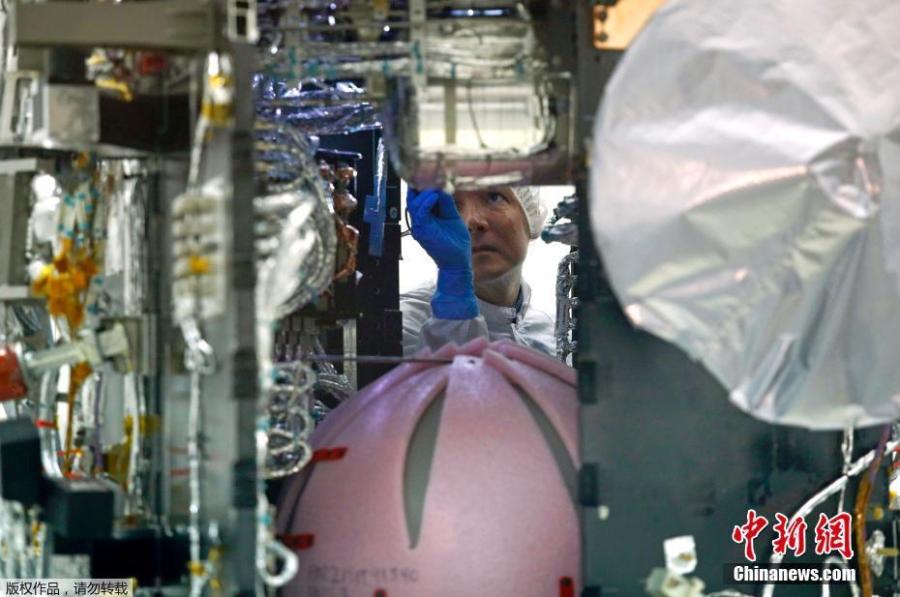
A worker looks inside the Parker Solar Probe in a cleanroom at NASA's Goddard Space Flight Center, March 28, 2018, in Greenbelt, Maryland. The spacecraft, which is scheduled to launch this summer, will travel closer to the Sun than any other spacecraft in history as it attempts to help researchers better understand stars throughout the universe. (Photo/Agencies)
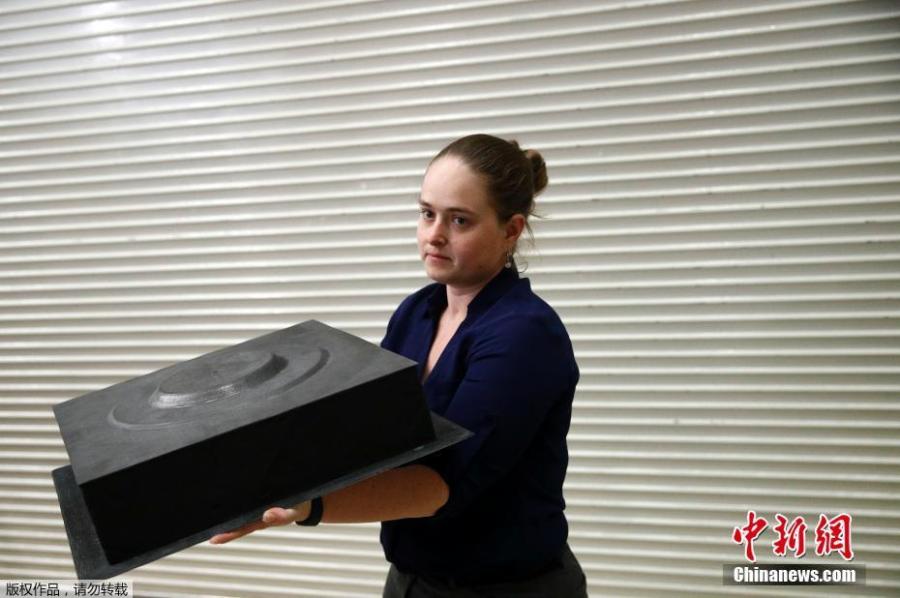
Betsy Congdon, lead engineer for the Parker Solar Probe's thermal protective system, carries a sample of the probe's heat shield at NASA's Goddard Space Flight Center, March 28, 2018, in Greenbelt, Maryland. The spacecraft, which is scheduled to launch this summer, will travel closer to the Sun than any other spacecraft in history as it attempts to help researchers better understand stars throughout the universe. (Photo/Agencies)
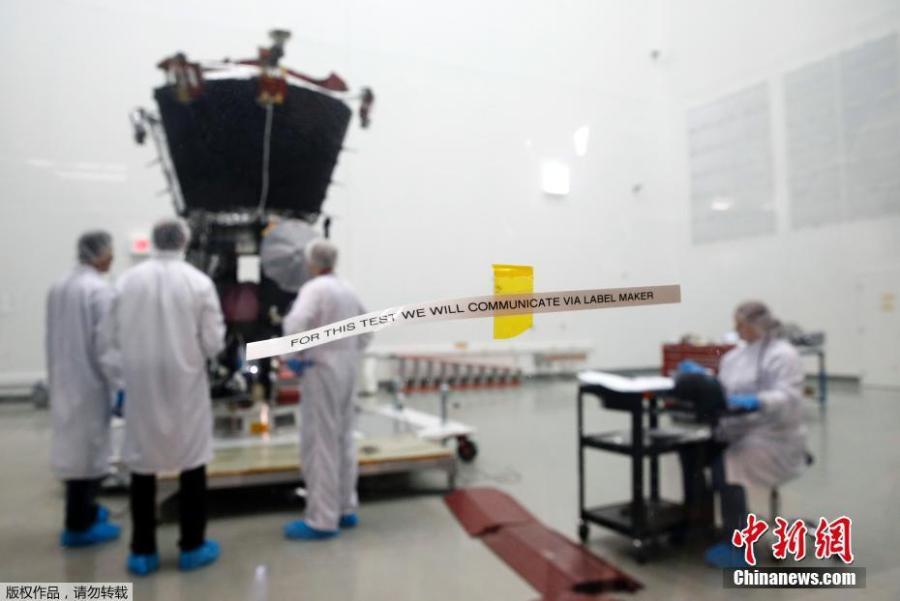
NASA's Parker Solar Probe sits inside a cleanroom at Goddard Space Flight Center, March 28, 2018, in Greenbelt, Maryland, as workers prepare it for launch. The spacecraft, which is scheduled to launch this summer, will travel closer to the Sun than any other spacecraft in history as it attempts to help researchers better understand stars throughout the universe. (Photo/Agencies)