

(Ecns.cn)—Once again, the wealthiest village in China is looking to reach new heights with a comprehensive and ambitious tourism project.
Huaxi, a village in Jiangyin in eastern China's Jiangsu Province, has spent 3 billion yuan ($464 million) on building a 328-meter high-rise hotel, ranked the 8th highest in China and 15th in the world, to boost the village's tourism revenues.
The five-star Longxi International Hotel with a 2,000 square meter shopping area on the 2nd floor, and a garden and a swimming pool on the 61st floor, will open to the public in October for the 50th anniversary of the village, said Zhu Xinmin, deputy manager of the hotel.
"The most impressive part of the hotel is our five lavishly decorated, themed, private clubs," Zhu said. "The themes are metal, wood, water, fire, and earth (the five elements in traditional Chinese culture) and each room is also decorated with one of the five metals, such as gold or silver."
According to Zhu, the golden ox alone, inside the Gold Room, weighs 1 ton and costs the village 300 million yuan ($46.4 million).
Asked whether the building, also called "Huaxi in the Sky," is an extravagant way spending of villagers' money, Wu Renbao, a revered patriarch, said it is part of the village's plan to attract tourists from big cities.
"We want more people to come visit our village," he said.
Villagers seem to not be satisfied with just building a skyscraper and naming it "In the Sky." They are also planning an air tourism project that will cost 90 million yuan ($13.9 million), and will include the purchase of five helicopters and a commercial jet, over the next five years.
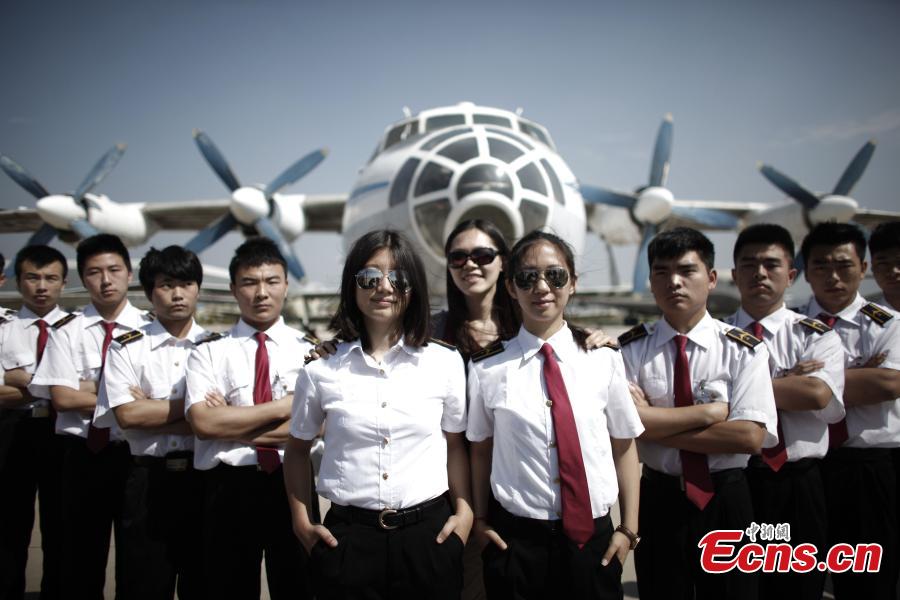
According to Li Qing, deputy Party chief, the village will set up its own airline company within one year if the Civil Aviation Administration of China approves its application. It plans to train 100 pilots and once the airline company is established, tourist flights will be available to the public.
"We are already a cooperative partner with two major aviation schools, and all the pilots will be local," Li said.
About 1,400 villagers have already seen their hometown from the air for free in a trial run.
"Our village's past successes came from the steel mill and heavy industry, which were heavily hit by the 2008 economic crisis," Wu Xie'en, the Party chief of the village said. "So we need transition plans, and I believe tourism is a great way to go."
In 1957, Huaxi was a sleepy village with just 576 residents and assets of about 1,800 yuan ($240). But it has amassed revenues of 229.6 billion yuan in the past five years.
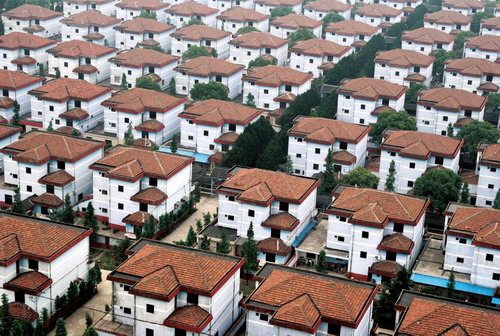
The village, which has a population of 36,000, is hailed as one of China's greatest successes with all residents living in plush villas and enjoying free healthcare and education. In addition, each family in the village has two cars and at least $250,000 in the bank.
While maintaining the development of traditional industries and tourism, the village has strived to develop the tertiary industry, covering areas of tourism, logistics, financial services, import and export trade, ocean shipping, ocean engineering, and aviation. In 2010, the tertiary industry made up 40% of the profits of the village.