


(ECNS) -- With a wide range of goods, convenient services and new experiences on offer, more overseas tourists are not only sightseeing in China but also shopping.
Behind this shopping boom are county-level specialty industries, supported by end-to-end supply chains, large-scale production and ongoing product improvements, according to People’s Daily.
Smart wearables: from Dongguan factory to foreign suitcases
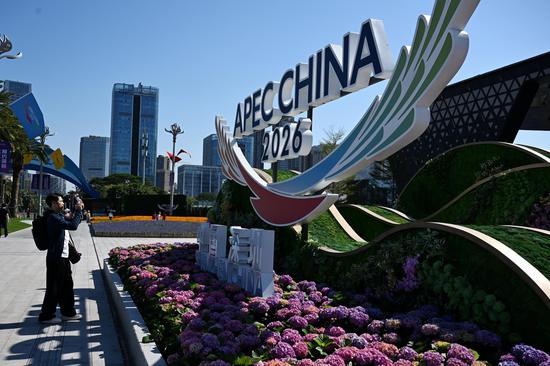
During the APEC meetings, business districts such as Huaqiangbei in Shenzhen, Guangdong, saw a "tech shopping" boom, with foreign buyers arriving with empty suitcases and claiming on-the-spot departure tax refunds.
Many of the gadgets are made in Dongguan, Guangdong, a short distance away.
In Chang'an Town, Dongguan, GDP exceeded 110 billion yuan in 2025, with output from electronics and IT firms above a designated size reaching 228.35 billion yuan.
Zhang Jiawei, CEO of a tech company, said, "We used to take samples to overseas exhibitions. Now foreigners bring their suitcases to us."
Moxibustion: Nanyang's mugwort goes global
Moxibustion is a traditional Chinese therapy that involves burning mugwort (moxa) near the skin to apply heat.
In Beijing, tourism experiences centered on traditional Chinese medicine have become popular among overseas visitors.
Most of the moxa sticks they use come from Nanyang, Henan, where about 49,400 acres are planted with mugwort, supporting a 10-billion-yuan industry spanning cultivation, research, processing, wellness and exports.
Nanyang's moxa products account for over 70% of the national market and are sold in many countries in Europe and Asia.
Liu Bing, a company executive, said many foreign visitors "want to pack up the whole shelf."
With support from a national traditional Chinese medicine (TCM) services export base, Nanyang's TCM exports reached 61.19 million yuan over the past three years.
Eyewear: Danyang glasses draw international shoppers
At Shanghai International Eyewear City, Russian tourist Dmitry had his eyes examined and chose glasses that cost much less than the same pair would in Russia. His lenses were cut and fitted on the spot within minutes. Much of the eyewear sold there comes from Danyang, Jiangsu.
The city of nearly one million people produces about 75% of the country's lenses each year.
Danyang has more than 2,000 manufacturing and trading companies, with nearly 50,000 workers across design, materials, production, testing and logistics.
Its glasses market records nearly 7 billion yuan in annual sales and draws up to 30,000 visitors a day on weekends and holidays.
More vendors are preparing to offer multilingual services and are ready to welcome international customers.
(By Lyu Mufei)




























 京公网安备 11010202009201号