


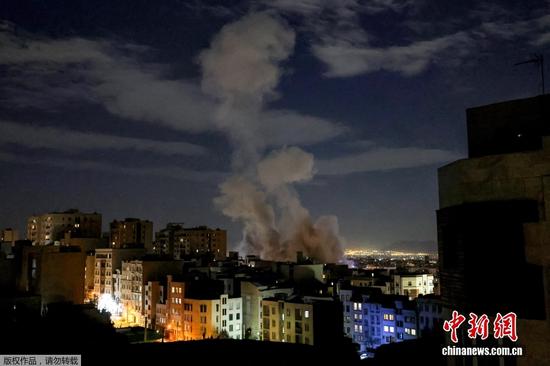
Recently, the global geopolitical landscape has been marked by severe turbulence. In the Middle East, the conflict triggered by the U.S.-Israeli strikes on Iran continues to spill over.
In Latin America, long considered as the U.S. "backyard," the Trump administration, after its brazen military intervention in Venezuela in January, has once again aimed its "crosshairs" of intervention at Cuba, a mere 90 nautical miles from the U.S. mainland. These short 90 nautical miles are evolving into a "hegemonic noose" with which the United States attempts to suffocate Cuban sovereignty.
Donald Trump's repeated hints that the U.S. and Cuba are "negotiating" may seem to leave room for detente, but in reality, they are fraught with danger. With the revelation of the U.S. "ultimatum" demanding the resignation of Cuban President Miguel Díaz-Canel, the true intentions of America's Cuba policy have been completely unmasked. Today, under the combined strain of internal institutional bottlenecks and a six-decade-long external blockade by the United States, Cuba is undergoing its most severe challenge since the collapse of the Soviet Union. Piercing through the narrative fog of Trump's "carrot and stick" approach, it becomes clear that the new dynamics in U.S. policy toward Cuba are not merely a continuation of domestic political calculations, but an aggressive advance in Washington’s broader geopolitical strategy for Latin America under its new National Security Strategy.
Constructing the "Hegemonic Fortress": Trump's Geopolitical Machinations
In the newly released National Security Strategy report by the Trump administration, the Western Hemisphere has been given unprecedented weight. It is no longer viewed as America's "geopolitical backyard," but is explicitly defined as the "Hegemonic Fortress" underpinning U.S. global supremacy. This shift in narrative indicates that Washington's Latin America policy has pivoted from traditional "paternalistic management" to "exclusive defense" based on the logic of great power competition. Against this backdrop, the Trump administration is seeking to eliminate the final strategic fissures within this "fortress" through maximum pressure and violent intervention.
First, seeking exclusive geopolitical control over the Western Hemisphere. The new U.S. National Security Strategy points out that for the United States to remain dominant in "major power competition," it must ensure that no non-Western major power gains any kind of strategic foothold in the Western Hemisphere. For the Trump administration, Cuba, as the only socialist country in the hemisphere, is not merely an ideological dissident, but a geopolitical "nail" that must be removed in the process of consolidating this "Hegemonic Fortress." Since independence, Cuba's insistence on a socialist path and its refusal to compromise with American-style neoliberalism have been viewed as the greatest ideological challenge to the "Monroe Doctrine." Therefore, the Trump administration is attempting, via maximum pressure, to erase this most threatening "institutional rift" in the hemisphere, thereby reconsolidating the absolute dominance of the "Monroe Doctrine" in the region. Trump’s message to Latin America and the wider world is clear: within this "hegemonic fortress", no institutional options that deviate from the U.S. will be tolerated.
Second, the administration is exploiting the "window of opportunity" created by Cuba's livelihood crisis to carry out what amounts to "diplomatic blackmail." Cuba is currently facing one of the harshest survival crises in its modern history. Following the regime crisis in Venezuela in January, Cuba lost a crucial source of oil. Matters worsened when the Trump administration imposed harsh tariff sanctions on countries like Mexico and Brazil that supply oil to Cuba. This "fuel blockade" has led to frequent power outages and even nationwide blackouts in Cuba's power grid, causing an energy shortage and affecting people’s normal lives of the country. The United Nations has warned that this is a man-made humanitarian disaster. The Trump administration has keenly seized upon this "fragile window" in Cuba, utilizing its asymmetric advantage to carry out naked "diplomatic blackmail." Trump publicly declared that Cuba is now an "extremely weakened country" and that he can "do whatever he wants."
Third, precise electoral calculations and extreme mobilization of vote banks based on U.S. domestic politics. In American politics, Florida has always held pivotal importance. The state is home to a massive population of Cuban and Venezuelan Americans — particularly older exiles and their descendants—who possess strong political lobbying power regarding U.S. policy toward leftist Latin American countries and harbor a deep-rooted hostility toward the Cuban regime. For the Trump administration, pushing the demand that Díaz-Canel step down is a political necessity to consolidate this core base and prepare for the midterm congressional elections. By brandishing the stick of regime change, Trump is able to energize conservative voters and ensure the absolute loyalty of his political base. This practice of deeply subjugating highly dangerous diplomatic adventurism to domestic partisan interests is a classic manifestation of U.S. political polarization.
Resilience, Fragility, and Shifting Dynamics: Cuba's Response and Future Trajectory
Faced with the relentless U.S. pressure for "regime change" and extreme economic strangulation, Cuba has not bowed to America's hegemony. Instead, it has mounted a determined bottom-line struggle within an asymmetric structure. Cornered by internal and external difficulties, the Cuban government is relying on its profound institutional resilience, bottom-line political deterrence, and economic self-rescue to wage a deeply tragic asymmetric contest. However, against the extreme geopolitical backdrop of the U.S. military successively sparking conflicts in Venezuela and Iran, the risk of U.S. armed intervention is escalating sharply, and the trajectory of this standoff has slid toward a perilous edge concerning sovereign survival and regional turmoil.
First, the intertwining of Cuba's institutional resilience and the current crisis. Cuba's confidence in resisting hegemony stems from the institutional resilience it has honed over long years. U.S. sanctions on Cuba can be traced back to the partial trade embargo of 1960, followed by the comprehensive embargo imposed in 1962, which has now lasted 64 years. It remains the longest-lasting and most destructive legacy of unilateral sanctions in modern history. This extreme state of survival lasting over half a century allowed Cuba to forge unique institutional resilience during the "Special Period" following the collapse of the Soviet Union. In that "first survival crisis," the Cuban government utilized its strong grassroots mobilization network to transform material scarcity into nationalist consensus. Even when its GDP shrank by more than 30%, it still managed to staunchly defend the equitable baseline of social welfare.
However, the present crisis is shaped not only by the external blockade, but also by internal structural weakness. This fragility lies in the "physical obsolescence" of critical infrastructure. Cuba's infrastructure has long been in service. Its currency reform has exacerbated inflation and caused regulatory failure. The country's talent reserve is also a cause for concern. The acute resonance between this internal structural vulnerability and the external "hegemonic noose" confronts Cuba with unprecedented systemic risks under the U.S.'s "asphyxiating" sanctions.
Second, Cuba's economic "micro-circulation" self-rescue and "refugee leverage" countermeasures. Faced with a state distribution system paralyzed by energy shortages, the Cuban government has begun to forward internal systemic breakthroughs with a more pragmatic posture. Economically, Cuba is accelerating micro-economic deregulation. Policy restrictions have been loosened significantly, allowing thousands of micro, small, and medium-sized enterprises (MSMEs) to develop legally in retail, light industry, and domestic agriculture. Beneath the rigid shell of the planned economy, the Cuban government is attempting to cultivate a market-driven "micro-circulation" system led by the private sector to maintain the flow of basic materials, thereby desperately preventing the total breakdown of the social bedrock.
On the political and security fronts, Cuba firmly grasps the "migration leverage" as a bargaining chip that makes the U.S. hesitate to act rashly. Historical events such as the 1980 "Mariel boatlift" and the 1994 "Balsero (rafter) crisis" have showed that, if Cuba were pushed to the edge of collapse and loosened coastal controls, tens of thousands of refugees will cross the Florida Straits. Because no physical wall can be built across the sea, and because unilateral repatriation would inevitably be resisted by Cuba, such a wave of migration would potentially devastate the U.S. southern border defenses and ignite the political fury of domestic conservative voters, especially in Florida. The social pressure induced by the immigration issue constitutes Cuba's geopolitical deterrence against American "diplomatic blackmail."
Finally, the risk of the extreme U.S. intervention against Cuba is at its highest point since the end of the Cold War.
After successive military attacks against Venezuela and Iran, the Trump administration has thoroughly eroded political and legal constraints on the use of force abroad. From the standpoint of U.S. strategic calculation, "Maximum pressure" has become the central instrument of Cuba policy. In the U.S. decision-making framework, triggering an internal governance crisis in Cuba via energy blockades and financial isolation is viewed as a "low-cost, high-reward" strategic suppression. However, when sanctions enter a stage of diminishing marginal utility and fail to induce the expected collapse of the regime structure, U.S. policy often faces an "escalation trap": that is, to maintain the effectiveness of deterrence, it is forced to evolve toward higher-intensity intervention methods. This policy inertia implies that in the future, the U.S. choice of sanction tools will increasingly trend toward "precision asphyxiation," aiming to keep Cuba's survival pressure hovering near the critical point to extract maximum political blackmail leverage.
Furthermore, Washington’s recent preference for violent intervention in handling the Iran and Venezuela issues has objectively lowered its "psychological threshold" for using force in the Western Hemisphere. Currently, the Trump administration must balance two goals: on the one hand, it seeks to thoroughly eradicate institutional heterogeneity in its "backyard" through military deterrence; on the other hand, it must desperately avoid the massive refugee wave that a total collapse of Cuba would unleash upon its southern border. Therefore, for the Trump administration, adopting a "low-contact, high-destruction" intervention model in the future can both achieve the goal of weakening the regime's foundation and maximize the avoidance of geopolitical blowback caused by large-scale conflicts. Based on this, the future trajectory of U.S. policy may exhibit a type of "oscillating high pressure"—forcing a rupture in Cuban society through continuous, all-encompassing squeezing, while observing internal political dynamics to find a sudden opportunity to achieve its goal of "regime change."
In summary, the current drastic shifts in U.S. policy toward Cuba are the predicable outcome of the Trump administration's strategy to fortify its "Hegemonic Fortress" in the Western Hemisphere. This "hegemonic noose" that stretches across 90 nautical miles, with unprecedented force, is attempting to suffocate the right to survival of a sovereign state, taking the power politics of Cold War thinking to the extreme. However, history has long revealed that hegemonism cannot build genuine geopolitical security on the ruins of another country. The Trump administration's attempt to use Cuba's internal "structural fragility" as a fulcrum to execute "asphyxiating" sanctions with the ultimate goal of "regime change" is not only a blatant trampling of international law norms but also a dangerous gamble with its own geopolitical interests. For the United States, if it remains obsessed with the myth of hegemony and abandons respect for sovereignty, the "fortress" it has built will ultimately collapse under the broader tide of sovereign awakening across the Global South.
The author, Cui Shoujun, is a professor at the School of International Studies and Director of the Institute of International Development, Renmin University of China. His views don't necessarily represent those of ECNS.





















 京公网安备 11010202009201号