


Exclusive interview with Mauro Agnoletti, director of UNESCO Chair for Agricultural Heritage Landscapes, a consultant to UNESCO for the World Heritage List
By Gong Weiwei
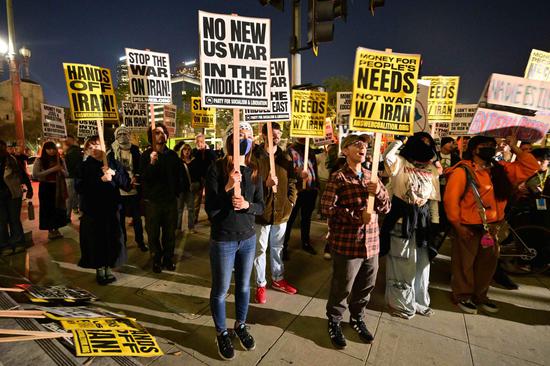
(CNS) -- The third Wuyi Forum, jointly hosted by Renmin University of China and the Nanping Municipal People's Government, will be held from Saturday to next Monday in Nanping, south China's Fujian Province. Mauro Agnoletti, who had originally been invited to attend, was unable to travel due to factors including rising tensions in the Middle East.
Recently, Agnoletti accepted an exclusive email interview with China News Service, sharing key points from his planned speech and expressing concern and condemnation over damage to Iran's world cultural heritage.
The following is an edited transcript of the interview:
China News Service (CNS): You were originally invited to attend the third Wuyi Forum in China. Why did you cancel your trip at the last minute?
Mauro Agnoletti: I must admit that the tensions in the Middle East have affected my travel plans, and my wife and children were a bit worried. My recent health condition has also made traveling more complicated.
If my absence has caused inconvenience to the organizers—especially my colleagues who invited me—I sincerely apologize. I was very much looking forward to visiting Mount Wuyi, a UNESCO World Heritage Site recognized for its exceptional mixed natural and cultural significance.
I was very interested in visiting the Mount Wuyi also for my current role of UNESCO chair holder on agricultural heritage, as well as in the possibility to speak on such an important topic in such an event.
In my lectures, I often highlight China's role and present its "Globally Important Agricultural Heritage Systems" (GIAHS) sites to students, asking them to make comparisons with Italy and the whole Europe. Despite differences, we share more common ground than people usually imagine. Chinese PhD students visiting me often find many Chinese elements in my office, which surprises them—and eventually they end up loving also Italy.
I would surely like to come back again, if there is another chance and if you are still interested in inviting me.
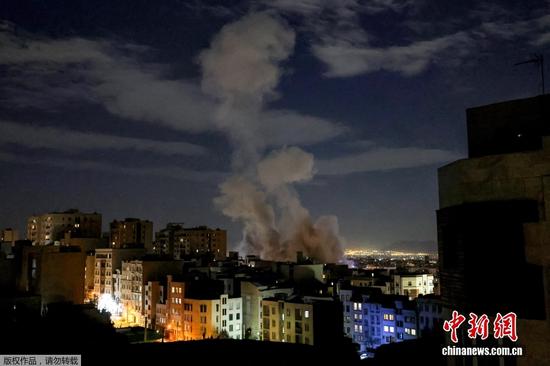
CNS: As a consultant to UNESCO for the World Heritage List, how do you view the damage caused to Iran's world cultural heritage by recent military strikes?
Mauro Agnoletti: Unfortunately, UNESCO has confirmed that at least four of Iran's 29 World Heritage sites have been damaged so far.
For example, the Golestan Palace is an immense place with a rich history and invaluable historical archives, famous for its traditional Persian architecture and Western influences. UNESCO sites are considered "World Heritage" because their importance transcends national borders; they belong to everyone, regardless of location.
It is precisely this global perspective that underpins international conventions such as the 1954 Hague Convention, which classifies the destruction of cultural heritage as a war crime, as it harms the spiritual foundation of the entire international community.
UNESCO, in cooperation with Italy, has also established the "Blue Helmets of Culture," a task force dedicated to protecting and restoring cultural sites damaged by conflicts or disasters. This emergency unit intervenes to secure, inventory, and rehabilitate artifacts and monuments worldwide, with significant projects in Syria, Iraq, Mali, and Ukraine.
Relevant international organizations or even countries can help to restore, nevertheless, such crimes must be prosecuted.

CNS: Mount Wuyi is a World Cultural and Natural Mixed Heritage Site in China. How do you view the relationship between cultural and natural heritage, and how should it be protected today?
Mauro Agnoletti: In general, we may say that the natural environment is the base, the culture is the "agent" and the results is a cultural landscape.
Also, the idea of nature and of preserving nature comes from our culture. Therefore, any kind of conservation, both of natural or cultural heritage, as well of a mixed heritage as Mount Wuyi, requires appropriate strategies and actions requiring to maintain a harmony between the two.
There is no way to go back to "wilderness" as the world today is widely affected by human civilization. If there is a chance to preserve the earth, then we must rely both on nature and culture rather than going back to a time when man was not there.
CNS: As of May 21, 2025, China has 25 GIAHS sites — the highest number across the globe. How do you assess China's work in protecting agricultural heritage?
Mauro Agnoletti: Frankly, I was not surprised to hear this. This confirms how the importance of the agricultural heritage is very much rooted in China's culture.
I believe that currently China is already the main actor at the global level. If the Chinese government would like to invest in this, it would rapidly become not just the country with the most GIAHS sites but the culture promoting a different approach to agriculture and to the safeguard of the world's agricultural heritage.

CNS: Compared with Europe or other regions, what are the unique features of China's agricultural heritage systems?
Mauro Agnoletti: Both European and Chinese farmers had the common goal of surviving by cultivating the land. As occurred in other regions of the world, they had to adapt to very different environmental conditions using their own traditional knowledge, their own culture and their own crops.
Europe is a continent mostly based on wheat while Asia on rice. This is a big difference.
Notably, in the agricultural heritage of Italy, we have mulberry plantation to produce silk, and this tradition came from China, many centuries ago.

CNS: How do agricultural heritage systems contribute to biodiversity conservation?
Mauro Agnoletti: Traditional agriculture systems are characterized by lower energy inputs compared to industrial agriculture and by an extraordinary capacity to adapt to difficult and diverse environmental conditions.
The biodiversity of agriculture is a part of the more general topic of "biocultural diversity". Not all biodiversity is due to natural species, but a great part of it is the result of human influence. Agricultural landscapes maintain habitats for different species that cannot survive in habitats not affected by humans.
CNS: How can economic development be balanced with ecological protection in agricultural heritage conservation?
Mauro Agnoletti: As in Europe, many rural areas in China suffer of economic marginalization, also because they could not adapt to industrial models based on lower production costs and high yield.
However, most of these areas have plenty of historical, cultural, landscape and environmental resources. All together, they can provide an added value that cannot be replicated by a competitor.
There are many development models. In both China and Italy, some agricultural heritage sites have achieved notable success. For example, in China, farmers cultivate rice or tea on terraced fields. The high quality of these products allows them to command premium prices, bringing substantial returns.
In Italy, Tuscany, the region where I live, is the first region of Italy for rural tourism. For the farmers hosting tourists, and this has become a fundamental source of income.
At the same time, governments can introduce subsidy policies to support farmers who protect agricultural heritage. To my knowledge, many farmers are already receiving financial support for such efforts.
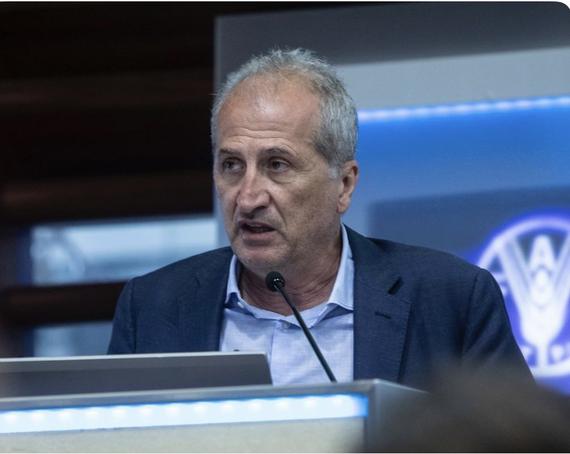
Interviewee Profile:
Mauro Agnoletti is director of the UNESCO Chair for Agricultural Heritage Landscapes, a consultant to UNESCO for the World Heritage List, and professor in the Department of Agriculture, Food, Environment, and Forestry at the University of Florence in Italy. He was chairman of the Scientific Advisory Group of FAO's "Globally Important Agricultural Heritage Systems" (GIAHS) program.
He has extensive experience in the conservation of agricultural heritage. In recognition of his outstanding contributions to this field, he received the Distinguished Service Award from the Interministerial Conference for the Protection of Forests (IUFRO) in 2024.




















 京公网安备 11010202009201号