



(ECNS) -- Northwestern China's Qinghai Province, once strained by heavy human activity, is seeing substantial ecological recovery and positioning itself as a major clean-energy base supporting the country's green transition.

At high elevation and hosting the headwaters of the Yangtze, Yellow, and Lancang (Mekong) rivers, Qinghai's ecosystems are inherently sensitive.
Amid a nationwide push to promote ecological protection and green development, Qinghai has expanded ecosystem restoration programs that integrate protection of water systems, grasslands, forests, and wetlands, while tapping its vast natural resources for green power.
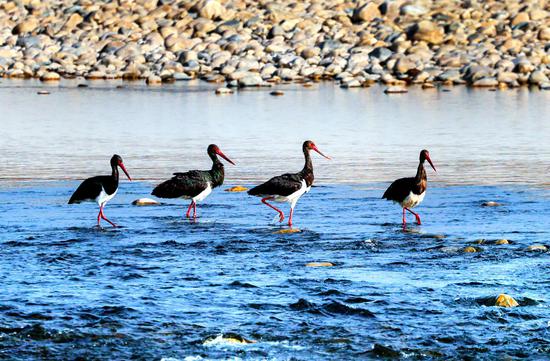
The latest provincial data show that vegetation coverage has risen to over 60% and that wildlife has rebounded. The Tibetan antelope population has increased from roughly 20,000 to more than 70,000, while snow leopard numbers have climbed above 1,200.
Outflow from Qinghai's watershed has remained stable at more than 60 billion cubic meters annually, indicating sustained hydrological health.
The country's first national park pilot was launched in the Sanjiangyuan area in 2016 to strengthen the protection of water-source ecosystems, grasslands and wildlife habitats. The initiative has since expanded monitoring efforts and community participation in conservation.
Meanwhile, stricter ecological laws, larger protected-area networks and long-term monitoring have also been driving the ecological turnaround.
Apart from ecology conservation, Qinghai has become one of China's most important clean-energy bases. By the end of October 2025, Qinghai's clean energy installations exceeded 73 million kilowatts, accounting for about 93.1% of total installed capacity, according to official data. Clean-energy sources generated 90.6% of the region's electricity over the same period.
Qinghai also contributes to China's low-carbon transition by transmitting surplus green electricity nationwide. Through ultra-high-voltage transmission lines built under the "west to east power transmission" program, the province has delivered more than 80 billion kilowatt-hours (kWh) of renewable electricity to other regions over the past five years.
Abundant solar radiation and strong wind resources have supported large-scale renewable projects. Solar and wind installations have also contributed to rural development, with improved vegetation in grazing areas and higher local incomes accompanying the expansion of renewable energy.
Operational and under-construction solar-thermal capacity has reached 2.06 million kilowatts, the highest in China, as Qinghai accelerates its buildout of solar-thermal power.
Provincial officials are further promoting "green computing" and energy-storage integration to increase clean-energy utilization. Qinghai's cool, dry climate offers natural advantages for data centers, potentially reducing cooling energy consumption by around 40% compared with the national average.
Qinghai has demonstrated both long-term ecological recovery and rapid clean-energy development. With improving vegetation, stable water yields, expanded protected areas and dominant renewable output, the province is positioned at the intersection of environmental restoration and low-carbon industrial growth.






































 京公网安备 11010202009201号