


China is pursuing industrial-scale breakthroughs in the hydrogen sector, targeting regional self-sufficiency in renewable and clean low-carbon hydrogen to fuel its broader economic transformation as the nation embarks on its 15th Five-Year Plan (2026-30).
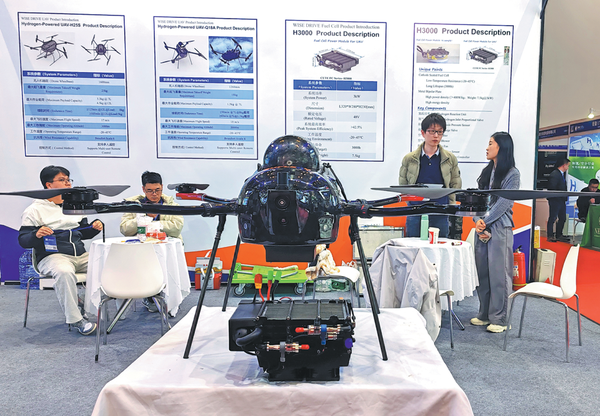
This strategic pivot aims to elevate hydrogen from a niche, policy-driven sector into a robust, market-driven pillar of the economy.
Such a shift is the focal point of the fifth China International Hydrogen Congress and Expo, which opened in Beijing on Wednesday, gathering top government officials, academicians and global energy experts.
Hydrogen is increasingly viewed as a missing link in the energy transition, particularly vital for decarbonizing "hard-to-abate" sectors such as steelmaking, chemical production and heavy-duty transportation, said experts and government officials.
For China, it is an essential tool to realize its dual carbon goals — peaking carbon dioxide emissions before 2030 and ultimately reaching carbon neutrality before 2060, they said.
"As we enter the 15th Five-Year Plan period, our core focus is cultivating hydrogen as a vital future industry, steering it from policy-driven growth toward a robust, market-driven expansion," Bian Guangqi, deputy director-general of the National Energy Administration's science and technology department, said during his keynote address.
To achieve this, the NEA aims to continue integrating hydrogen into national energy planning through large-scale "wind-solar-hydrogen-ammonia-alcohol" bases, accelerating technological innovation, building a comprehensive standard and regulatory system and expanding high-level global cooperation.
Such a blueprint, Bian said, builds directly upon the solid foundation established during the 14th Five-Year Plan (2021-25), which he described as "a crucial stage for China's hydrogen industry to advance from pilot exploration to large-scale breakthroughs".
The Energy Law implemented last year officially included hydrogen in China's energy management framework, highlighting the chemical element's huge development potential and scalable application scenarios.
Furthermore, this year's Government Work Report formally proposed cultivating new growth drivers such as hydrogen energy and green fuels.
Global consultancy Rystad Energy emphasized that green hydrogen — alongside solar, wind and biomass — will play a pivotal role in shifting China from a coal-reliant nation to a global clean energy powerhouse.
Guided by its long-term development plans, China has already cemented its status as the world's largest hydrogen producer and consumer.
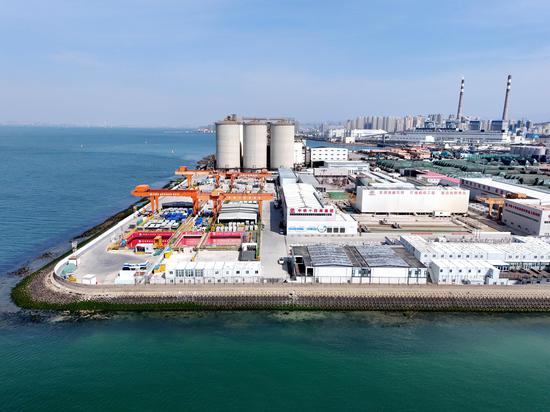
According to the NEA, the country's renewable hydrogen production capacity has surged from 23,000 metric tons to 250,000 tons per year over the past five years, aided by mega-projects in regions like Northwest China's Xinjiang Uygur autonomous region.
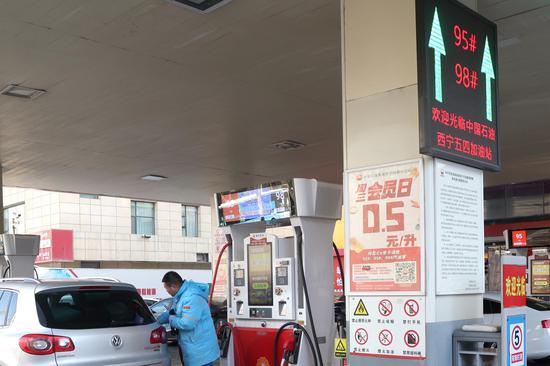
The nation also successfully deployed more than 30,000 fuel cell vehicles and established a world-leading network of over 590 hydrogen refueling stations. Concurrently, Chinese enterprises exported advanced core technologies, such as electrolyzers, to more than 30 countries and co-constructed 17 international green shipping corridors.
Despite the domestic growth, green hydrogen — produced using renewable electricity — accounted for less than 1 percent of global hydrogen production in 2025, according to the International Energy Agency.
This highlights massive untapped potential on a global scale, Vineet Bhatia, senior advisor to UNDP China, said at the conference.
"China places green development and renewable energy at the very heart of national progress. There remains immense potential to scale up green hydrogen solutions, and China, as a global leader in hydrogen technology, can continue to pave the way."
Bhatia highlighted the upcoming initiation of the Ordos UNDP green hydrogen sustainable development demonstration project. Located in Inner Mongolia autonomous region, the collaboration aims to integrate green hydrogen into energy, transport and industrial systems, serving as a replicable model both domestically and globally.
While acknowledging remaining hurdles such as high application costs and the need for stronger industry synergy, China remains optimistic.
"Developing the hydrogen energy future industry is a strategic choice to grasp the opportunities of the new scientific and technological revolution," Bian said.


























 京公网安备 11010202009201号