



China has recently revised the code of practice for city examination and evaluation in spatial planning, introducing more assessable and quantifiable indicators aimed at enhancing the well-being and security of residents, a senior official said at a news conference in Beijing on Friday.
"The amendment plays a critical role in dynamically improving the adaptability of spatial planning and promoting resident-centered urban development," said Li Liang, deputy director of the territorial space planning bureau of the Ministry of Natural Resources. Li said the primary goal behind the introduction of the code in 2021 was to foster regular assessments of city planning and its implementation, and fulfill people's desire for a better life.
The evaluation of the "15-minute living circle" has been elevated to a mandatory criterion for all cities, with specific indicators established to assess the accessibility of key living amenities within a five-minute or 15-minute walking distance. These amenities include primary and secondary schools, eldercare facilities, cultural and sports venues, healthcare services, supermarkets and soccer pitches.
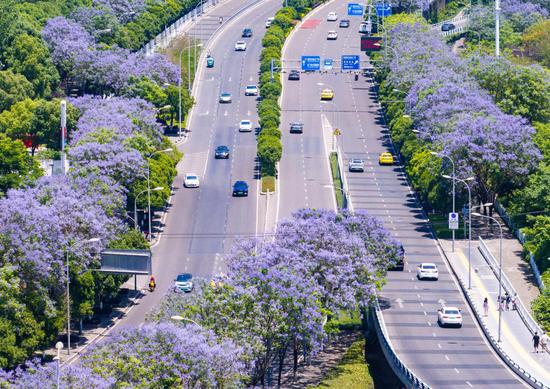
It also mandates regular checkups on factors such as commuting times, per capita green park spaces, and the number of natural and cultural heritage sites.
"These evaluations help cities promptly identify and rectify deficiencies, enhance the comprehensive use and optimal arrangement of diverse facilities, and advance the establishment of a conducive environment for work, residence, recreation and tourism," Li said.
Drawing lessons from the frequent occurrence of major natural disasters and safety incidents in recent years, Li said the revised code has placed greater emphasis on the safety resilience of cities.
The deputy director pointed to the addition of the new indicator, "flood retention areas overlapping with urban development boundaries", aimed at guiding scientific urban planning and mitigating disaster losses. Another indicator, focusing on "agricultural land areas within urban areas and within a 20-kilometer vicinity", seeks to encourage the establishment of agricultural bases near urban areas to enhance food self-sufficiency during extreme conditions such as pandemics.
In addition, the introduction of the "number of water sources" indicator aims to push cities toward securing multiple water sources and improving their ability to address water source pollution incidents.
To address potential risks associated with the aging gas pipeline network, tailored indicators have been introduced to monitor the progress of its renovation and ensure safe distances between pipelines. The importance of providing parking spaces for electric vehicles and bicycles — as well as facilities for waste disposal and treatment — has also been underscored.
Li added that starting from this year, annual city examination and evaluation results will be gradually tied to the compilation of the comprehensive land supply plans and the designation of natural resources pilot sites, aimed at strengthening the monitoring and implementation of city planning.


























 京公网安备 11010202009201号