



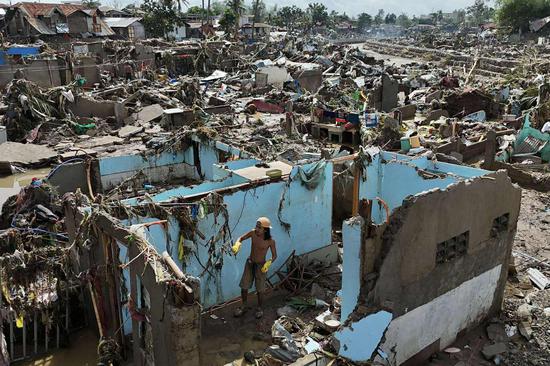
The Belem Climate Summit concluded on November 7, with leaders from 43 countries and the European Union endorsing the Belem Declaration on Hunger, Poverty and People-Centered Climate Action. The declaration stresses that climate change, environmental degradation and biodiversity loss are worsening hunger, poverty and food insecurity, disproportionately affecting vulnerable populations.
The declaration calls for continued investment in mitigation and adaptation, emphasizing human-centered measures such as social protection and crop insurance to build community resilience. It urges climate finance to prioritize projects that generate opportunities and livelihoods for smallholder farmers, traditional communities and forest peoples, promoting a just energy transition.
As the first major event ahead of COP30 in Belem, Brazil, the summit set a people-centered tone for upcoming global negotiations. The declaration also aligns with the new collective climate finance goal agreed at COP29, urging developed countries to mobilize $300 billion annually before 2035, and to expand climate finance for developing nations to at least $1.3 trillion per year from all sources.
China's participation and new commitments have drawn global attention. Ahead of COP30, China announced its 2035 Nationally Determined Contributions (NDCs) – the country's first to set an absolute economy-wide greenhouse gas reduction target, pledging a 7-10 percent cut below peak emissions. Officials said China aims to achieve significant reductions within about five years after peaking, far faster than most developed countries.
China's Minister of Ecology and Environment Huang Runqiu noted that this transformation represents one of the most ambitious and technically challenging transitions in the world. A new white paper on low carbon developmentwas released on November 8, outlining the country's achievements in clean energy, low-carbon industries and international cooperation.
Global observers highlighted China's growing role in climate governance. The BASIC group – Brazil, South Africa, India and China – is seen as a key driver of developing-country cooperation. Experts said China's bilateral climate agreements with partners such as the EU, the UK and Brazil have become cornerstones of multilateral climate action, helping to sustain momentum as the U.S. retreats from the Paris Agreement.
As the world faces another record-hot year, the Belem Declaration, along with China's enhanced commitments, underscores a shared resolve to ensure that climate action remains both fair and people-centered.






























 京公网安备 11010202009201号