


By Zhang Weiran, Jia Jingfeng, Zhang Ziyang, An Yingzhao and Bo Wenwen
(CNS) -- In recent years, Australia-China relations have continued to improve and develop, with trade and people-to-people exchanges giving important impetus to the development of bilateral relations. Yet challenges remain to deepening cooperation, including geopolitical tensions, differences in strategic perceptions and issues surrounding research collaboration.
How can the two countries enhance mutual understanding, expand common ground and manage differences to translate their complementary strengths into further tangible outcomes?
In a recent interview with China News Service's “W.E. Talk”, Australian economist James Laurenceson, Director of the Australia-China Relations Institute at the University of Technology Sydney, highlighted the deep complementarities between the two countries. “We have to remain as deeply connected to China as we possibly can,” he said, stressing that Australia needs to engage and cooperate with China to the maximum extent possible and do “whatever we can to be part of China’s development.”
Here are excerpts from the interview:
CNS: In recent years, the Australia-China relationship has returned to a track of steady improvement and development. How do you view the underlying drivers and the future prospects of this relationship?
James Laurenceson: I’m cautiously optimistic. I don't think either side wants to return to the dysfunctional state of the Australia-China relationship between 2020 and 2022.
I also think the approach to the relationship is quite positive and very realistic. Former Chinese ambassador to Australia Xiao Qian was here for four and a half years. He has only just recently returned to Beijing. He often used to say in public that we have differences and we even have disputes. I did not interpret that as a negative. I thought it was positive that he was just being very frank. And he would quickly go on to say that both sides do not want those disputes and differences to spill over to damage areas of mutual cooperation.
Both sides recognize that for all the differences, which are real, we have enormous mutual benefits as well. Trade is the obvious one, but not just in trade. When I think about multilateral organizations, for example, both Canberra and Beijing are big supporters of the World Trade Organization and the two sides continue to cooperate. I look forward to seeing further progress in Australia-China cooperation.
CNS: Since its inception in 2014, the Australia-China Relations Institute at the University of Technology Sydney has maintained very active engagement with Chinese universities and think tanks. In your opinion, what role do people-to-people exchanges, particularly think tank exchanges, play in fostering bilateral relations?
James Laurenceson: People-to-people exchanges, especially think tank exchanges, play an important role, and there are bright spots. Scholars and experts meeting at the track two level are able to have more frank discussions. The Australia-China Relations Institute remains very keen on engaging with Chinese delegations coming to Australia. And many of our staff, including me, are often in China too.
We need to do that because, as much goodwill as there is in the bilateral relationship, misconceptions can arise. For example, one of the views I often encounter in China is that Australia always automatically follows the United States. When I go to China, I can provide examples of many areas where Australia takes a completely different view from that of Washington. I think that different perspective is good for both sides.
Trade is the obvious one. Last year, when Donald Trump returned to office, there were some comments coming out of Washington that Washington would prefer that Australia limited or curtailed its trade relationship with China.
The response of Australia's trade minister was to say: “We don’t want to do less business with China; we want to do more business with China. We’ll make decisions about how we continue to engage with China based on our national interests and not on what the Americans may or may not want.” This is a very bold statement from an Australian minister to be making.
Another example would be technology issues. Australia is very welcoming and completely open to Chinese electric vehicles, batteries and solar products, with zero tariffs on these products. In fact, just this year, China overtook Japan to become Australia's largest supplier of cars, and that was a position that Japan held for nearly three decades. Now our biggest source is China.
Similarly, it works in reverse. When Chinese colleagues come to Australia, they can bring views to Australian audiences that those audiences may not have heard before. So it's positive.
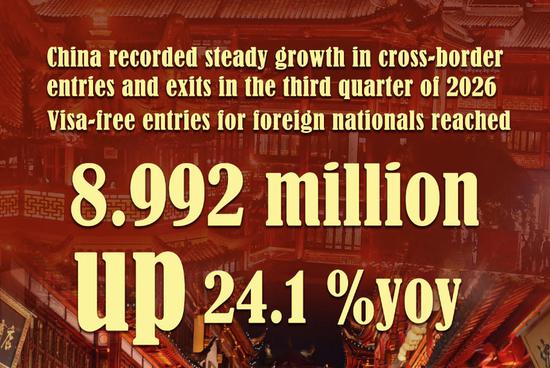
I would give China some credit for taking steps on the visa-free policy. It's good for Australians traveling to China, obviously, and it's really good for China too. More Australians get to see China firsthand, and that's a good thing.
I wish the Australian government would adopt a reciprocal approach, but it has not done so yet.
CNS: We noted that in your recent article, you pointed out that Australia risks missing out on access to world-class science and technology by taking an overly restrictive approach to research collaborations with China. How do you assess the importance of maintaining open sci-tech cooperation between the two nations?
James Laurenceson: Open sci-tech cooperation is critical. It's actually more important for Australia than it is for China. China is a large country that has a lot of human talent. To be frank, if Australia does not collaborate with China, China will be fine.
China has an enormous domestic pool of human capital right now. Australia is a country with a small population and limited scale, and has always relied more on international collaboration.
If you look at the highest quality Australian scientific publications, about 80% of those involve international collaboration. The only way that a country of Australia's size and resources can stay at that international technology frontier is by collaborating internationally.
The other side of that is that China’s own innovation systems and talent pool have developed enormously over the last decade. If we cut ourselves off from the world's leading source of global innovation and talent, then that's going to come at a big cost to Australia. That's my concern.
CNS: The Australian Foreign Minister asked the Australian National University (ANU) and the University of Queensland (UQ) to terminate their collaboration with Shandong University and the Chinese Academy of Sciences, respectively. What's your perspective on this development?
James Laurenceson: I've been watching those two news stories very closely. There may well be relevant information behind the decision-making that I am not privy to, but I can make two points.
First of all, at least on the surface, they don't seem to be particularly risky deals. For example, the deal between Shandong University and the Australian National University was mostly about undergraduate teaching. There wasn't even a research component. So it's not at all clear to me how that threatened Australia's interests or national security.
And similarly, the deal with UQ wasn't a particularly risky deal either. So I think it's generated a lot of confusion.
Secondly, the impact of that will be that many other universities and academics will be looking at what's happened and just coming to their own assessments of what went wrong. They will be reluctant to forge new collaborative agreements with China because they're worried that if they put in all this work and engage with the Chinese partner with goodwill and in good faith, and then the deal gets cancelled, the Australian university will be left in a big mess, and so will the Chinese partner. The two sides probably won't even try. I think that's the risk.
CNS: How do you view the opportunities for Australia-China cooperation in the green sector, particularly in clean energy and new energy vehicles? How can both countries join forces to advance the green economy and strengthen green cooperation?
James Laurenceson: As in so many other areas of the Australia-China economic relationship, the two countries just have deep complementarities. This is why Australia and China's economic and trade engagement is so strong.
Just to give a few examples from the green space: Australia is a major global supplier of lithium, and China is its largest export market for lithium ore. Chinese electric vehicles are very popular in Australia, as are home battery systems and solar panels.
There are things that both sides could do to take it to an even higher level. If I were advising the Australian government, I would urge it to be more open towards Chinese investment in Australia, particularly in the renewable energy space.
Over the last five years, the Australian government has taken a stricter approach towards Chinese investment, particularly in certain sectors like critical minerals. I can't think of one investment in that sector that has been approved over the last five years. I think that's a mistake. That's going too far in the security direction, and it could potentially bring significant economic costs.
Australia can get investment capital from many countries. It's not hard, but Chinese companies these days are often the world's technology leaders as well. And that's the thing about foreign investment: it's not just the dollars; it's also the technology that often comes bundled with that foreign investment. I think it would be very unfortunate for Australia's interests if we blocked Chinese investment outright.
There is also a question of whether Beijing would allow a Chinese company to take its best technology to a place like Australia. We know these sorts of technology exports are scrutinised much more closely than in the past as economic exchanges have become more securitised.
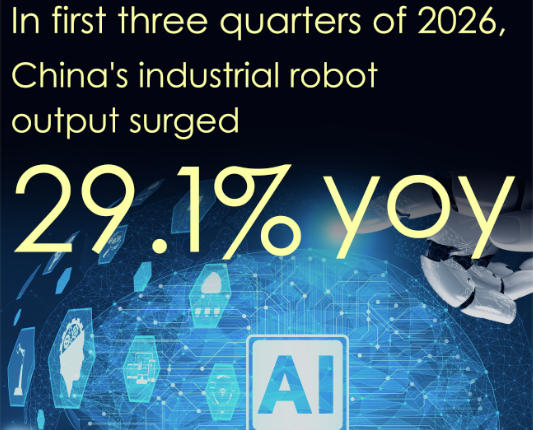
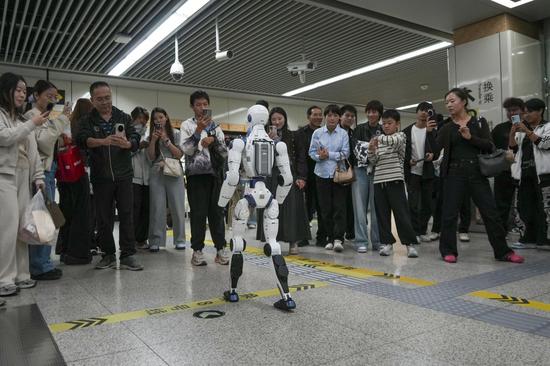
In fact, China is ahead of Australia in areas such as artificial intelligence and robotics. And even in fundamental scientific research, China now produces more of the world’s best fundamental scientific publications than the US. It’s very impressive.
As an Australian, I do my best to raise awareness in Australia about the reality of the world in 2026. If Australia wants to stay at that technology frontier, we have to remain as deeply connected to China as we possibly can. I understand that every country has to protect its national security, but my view is that Australia needs to be engaged with China to the maximum extent possible.
CNS: The upcoming APEC Economic Leaders' Meeting will be held in Shenzhen, China, and Australian Prime Minister Albanese will travel to China to attend. How do you view the opportunities for cooperation within the APEC framework?
James Laurenceson: The good thing about Australia and China is that when it comes to trade, which is primarily what APEC is about in terms of broader economic cooperation, the two countries are actually quite aligned. More trade and more economic integration aren't just good for prosperity; they're good for stability and security too. So that's a great starting point.
If a majority of APEC members take the opportunity at the November meeting in Shenzhen to simply signal that they remain committed to open and free global markets, I think that's a positive outcome.

Biography
Professor James Laurenceson is an economist, educator, analyst and researcher. He is Director of the Australia-China Relations Institute at the University of Technology Sydney.
Professor Laurenceson conducts research that seeks to inform Australia’s engagement with China. His research has been published in leading scholarly journals including China Economic Review, China Economic Journal, Journal of Contemporary China and Australian Journal of International Affairs.
Professor Laurenceson also provides regular commentary on contemporary developments in China’s economy and the Australia-China relationship. His opinion articles have appeared in The Australian Financial Review, The Australian, The Sydney Morning Herald, South China Morning Post, among many other publications.
He has previously held academic appointments at the University of Queensland (Australia), Shandong University (China).


























 京公网安备 11010202009201号