


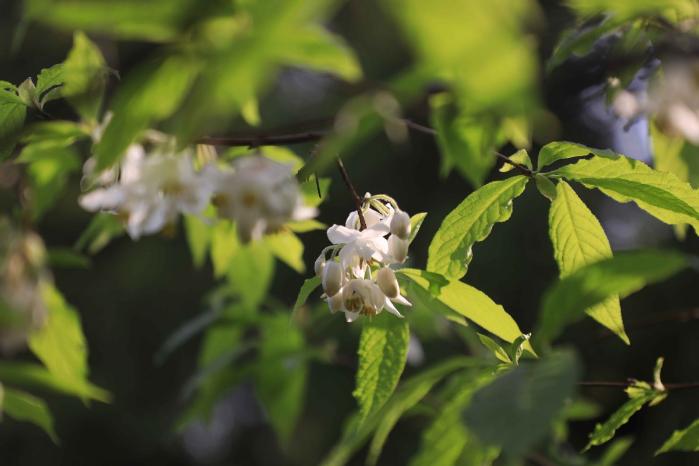
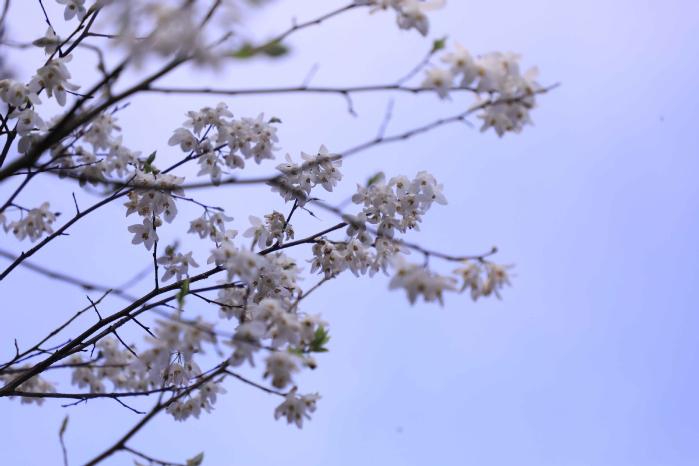
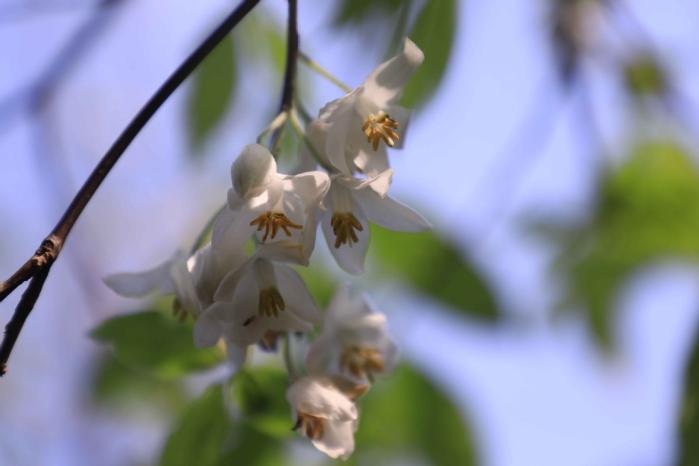
During last weekend's Qingming Festival holiday, visitors to the Hunan Botanical Garden in Changsha, Hunan province, witnessed a rare botanical milestone. After more than three decades of dedicated conservation efforts, the Sinojackia dolichocarpa — a tree species rarer than the giant panda — produced a full bloom for the first time.
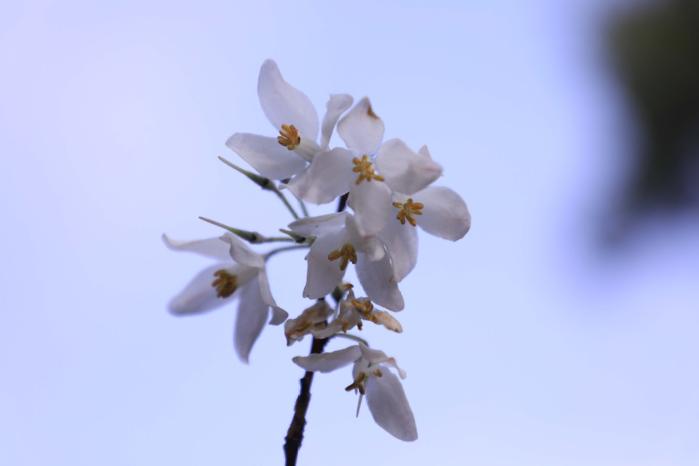
Clusters of white, bell-shaped flowers adorned the branches, swaying gently in the breeze and exuding a subtle, elegant fragrance. The spectacle became one of the garden's most exceptional seasonal attractions.
According to the garden, this unique Chinese species, classified as a national second-class protected wild plant, belongs to the Styracaceae family. Regarded as a "living fossil", it is found only in the narrow mountainous border region between Hunan and Hubei provinces, with fewer than 120 individuals remaining in the wild.
The plant has an extremely low natural germination rate of less than 2 percent, and its seeds can remain dormant for one to two years. Its narrow distribution range and specific habitat requirements have made natural regeneration exceedingly difficult, researchers at the garden explained.
Discovered in 1981 in Huping Mountain, Shimen county of Hunan province, the species was later classified into its own genus, meaning it has no close relatives anywhere else in the world. This unique evolutionary status makes it invaluable for scientific research, serving as a key to understanding the phylogenetic development of the Styracaceae family.
Recognizing its precarious existence, the Hunan Botanical Garden initiated conservation efforts in 1990. For decades, researchers tackled various technical challenges and endured multiple failed attempts.
In 2018, with support from Botanic Gardens Conservation International — the world's largest plant conservation network — researchers introduced 50 wild plants from Badagong Mountain in Zhangjiajie, Hunan. Based on the introduced plants, a dedicated conservation community was established at the garden.
Last week, the rare trees finally reached full bloom.
"Scattered flowers had appeared before, and we had collected a few shriveled fruits that could not germinate," said Lyu Hao, a senior researcher at the garden's conservation institute. "Full flowering is the true sign that the species has adapted to its new environment and entered a stable reproductive stage."
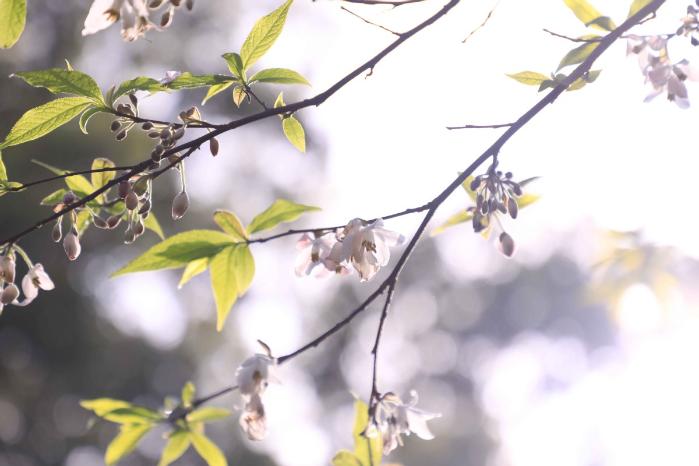
This breakthrough opens the door to large-scale seed collection, offering hope for reintroducing the species into the wild and rebuilding its natural population, Lyu added.


































 京公网安备 11010202009201号