



Corruption at the grassroots level often hits people where it matters most, affecting pensions, subsidies and public services. China is intensifying oversight and cracking down on misconduct and corruption that directly affect citizens, according to key policy documents adopted this year.
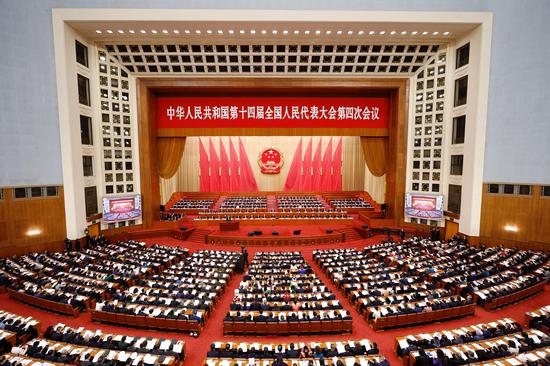
The outline of the 15th Five-Year Plan (2026-30) for national economic and social development, along with this year's Government Work Report adopted at the fourth session of the 14th National People's Congress, the country's top legislature, emphasized the need to strengthen supervision over the allocation and exercise of power and to continue rooting out misconduct and corruption that affect daily life.
The issue was also highlighted in a communique adopted at the fifth plenary session of the 20th Central Commission for Discipline Inspection in January, which called for deeper action against misconduct and corruption that harm public interests.
The communique outlined key areas for continued oversight, including rural collective funds, assets and resources, medical insurance funds, elderly care services, and high-standard farmland construction. It also stressed tackling irregular cross-regional and profit-driven law enforcement and promoting long-term governance mechanisms.
Since 2024, the CCDI and the National Commission of Supervision have conducted a nationwide campaign targeting misconduct and corruption affecting the public, with a focus on petty graft and other abuses. The issue was prioritized at both the fourth and fifth plenary sessions of the 20th CCDI.
Official data highlights the campaign's grassroots focus. In 2025, authorities investigated more than 290,000 cases involving violations of the central Party leadership's eight-point decision on improving Party and government conduct. More than 94 percent of these cases involved township-level officials or lower.
On Jan 26, the CCDI and the NCS held a meeting to review campaign progress and to set priorities for 2026. Liu Jinguo, deputy secretary of the CCDI, said the campaign had achieved results, but warned that challenges remain. He called for stronger coordination among local governments and departments, clearer accountability, and sustained enforcement pressure.
Liu urged tougher action against grassroots corruption, stressing that illicitly extorted or misappropriated assets should be returned to the public promptly. He also called for reinforcing weak links, strengthening supervision, consolidating grassroots foundations, and promoting long-term governance.
A case involving pension fraud in Longlin county, Guangxi Zhuang autonomous region, illustrates both the risks of weak oversight and the direction of reform. Two officials exploited loopholes in the local social insurance system from 2007 to 2013, diverting more than 3 million yuan ($435,900) in pension funds, including payments intended for relatives. In 2025, both were sentenced to lengthy prison terms, fined, and ordered to return the stolen funds. Local authorities also held supervisors accountable and issued recommendations to close systemic gaps.
Ji Yaping, dean of the school of administrative law at Northwest University of Political Science and Law, said corruption affecting ordinary people may be smaller in scale than high-profile cases, but it is often the kind of corruption that citizens feel most acutely.
"Fighting this kind of corruption strengthens people's sense of gain, happiness, and security, and reflects the Party's people-centered approach," he said.
Ji noted that misconduct and corruption are closely linked. Misconduct includes unhealthy tendencies within the Party and government bodies, as well as the erosion of social values and public ethics.
"If unhealthy trends are left unchecked, they create fertile ground for corruption, which in turn undermines the social and political environment. That is why misconduct and corruption must be addressed together," he said.
On petty corruption, Ji recommended combining punishment with prevention. Authorities should intensify crackdowns to raise the cost of corruption while also closing governance loopholes and promoting discipline, ethics, and public morality. "The goal is to ensure officials do not have the audacity, opportunity, or desire to become corrupt," he said.
Looking ahead, the CCDI and the NCS plan to deepen oversight in key livelihood sectors, expand investigations into improper law enforcement practices, and build long-term mechanisms for routine supervision. County-level governance will remain a main battleground, with increased public participation and stronger grassroots oversight.
Authorities are also encouraging public supervision, including household visits, engagement with citizens, and participation of local community and oversight representatives in inspections. Feedback mechanisms such as public disclosure and citizen-led reporting are being formalized to ensure accountability.
Recent policy moves reinforce this approach. The General Office of the Communist Party of China Central Committee issued guidelines to strengthen village inspections, focusing on integrity risks in key areas such as food security, agricultural subsidies and public services. Inspectors will also examine compliance with the central Party leadership's eight-point decision and oppose undesirable work styles.


































 京公网安备 11010202009201号