



“China has changed from a big producer of low-level trade to a top producer. This was totally unexpected by all non-Chinese observers.”In a recent event of the Mingde Strategic Dialogue, Romano Prodi, former President of the European Commission and Prime Minister of Italy shared his insights and observations:
“Cooperation between Europe and China is absolutely indispensable”
I have ten minutes to talk about modernizaiton and the new drivers for globalization. I will start with the new drivers. I don't call it for globalization, but for de-globalization. If we look at the past, we see that because of globalization, you could have such a “global” development in the world, and even more, the Chinese development. You know better than me. For many years, China had an increasing productivity of about seven percent. This is something you cannot achieve without the expansion of the market. The economies of scale are totally different from the past, and it totally changed the environment.
And now, this is over—not only because of customs, but because of separation and all those political issues. We have trade with obstacles; the organization of cooperation is decreasing. So the problem we are entering in a new phase is: how can you modernize it in this new phase? This is the challenge, not only for the Chinese.
First of all, I do think we have to create a market as big as we can, otherwise we can not have it as a global one. China can be global, but we have to approach more global markets as we can. I firmly believe that the role of cooperation between Europe and China is absolutely indispensable. It is not easy; we have tried in so many cases. Our systems are completely different, but I don't think that China or Europe can go alone to substitute for the globalization that we had all these years.
I also don’t think—even if China is a country much closer to global trade than any other—is enough, though China’s progress is among the best ones. Twenty years ago, about 150 countries would have traded more with the United States than China; Now, about 150 countries trade more with China than with the United States. The situation has been totally reversed. But I don't think that globalization can be done by one country only—not only in terms of dimension but also because of the political risk. So, I do think that cooperation is an economic must as well as a political must.
China’s progress in modernization unexpected by the West
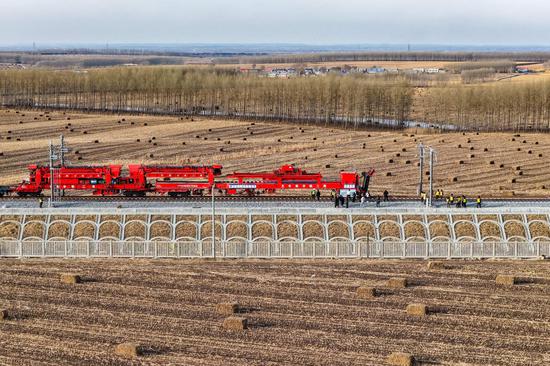
The second part of my short message concerns China's modernization. China’s development was different from any other country, different because of the dimension of China, and even more different given the short time in which this process occurred. I always say that the first time I came to China, I needed five and a half hours from Beijing to Tianjin. Now, 28 minutes.
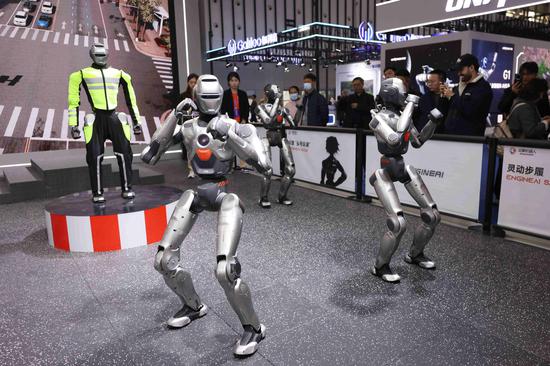
There are great changes: China has changed from a big producer of low-level trade to a top producer. This was totally unexpected by all non-Chinese observers. The project “Made in China 2025” has a clear goal to become the leader in the industry. Another interesting point is that the U.S., in contrast, is moving to the service sector, while China keeps sticking on the industry of all types, from low-level technology but with high productivity to very top technology. This is the unique characteristic of China, different from any other country.
The sectors included in the "Made in China 2025" industrial strategy includes semi-conductor, technical materials, and many others. It aims to transform China into a technical leader, pushing Chinese companies to become world industrial leaders. But now, it is more difficult because of a lot of political obstacles.
The West falls 15 years behind China in complicated machinery
But the third point was to be a leader in new sectors: solar, wind, electric cars. All of these sectors are with big economic scales and dimension. In this case, to arrive first in these areas means a lot, allowing China to reach economies of scale that others cannot reach. This was a very simple strategy, but instruments, including financial support, are needed to realize it. One to two percent of China's GDP was supporting this; it was a priority. Tax breaks and cheap credit successfully yielded results, both for consumer and investment goods.
The reason for this success, in my opinion, is, first of all, infrastructure—not only roads, but also internet and all other connections that make the country into a network and decrease local disparities. So the movement could benefit above 90% of its people.
And also, we need the “software”, which is the people. Strong private companies faced difficulties in becoming very multinational, but the new class of product entrepreneurs, managers, technicians, and workers are operating with precise targets and innovation, and upgrading old production. This is the difference between, on the one hand, China, and on the other, the European and American industries. In the middle-level technology, American innovation is very slow. It is quite strange how they are top in some specific sectors, but they are, let's say, fifteen years behind in complicated machinery or this type of products. China’s leadership has been created not by a single entity only, but by the distribution and contribution of millions of people.
My final message is this: the great countries have made progress not when they have great “singers”, but when they are able to “sing together in a choir”. And this is the Chinese characteristics that I have found in the many decades in which I was familiar with China, and this is the top asset China has.

































 京公网安备 11010202009201号