
EconoScope | Takaichi's Taiwan remarks fuel Japanese market turmoil
(ECNS) -- Japanese Prime Minister Sanae Takaichi's recent comments on Taiwan have intensified diplomatic tensions with China and triggered sharp volatility across Japan's financial markets.
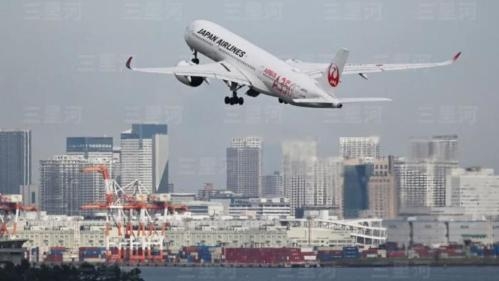
Beijing issued consecutive travel and study advisories in response to the remarks, amplifying public anger and anti-China sentiment in Japan. Fearing a steep drop in Chinese visitors, investors quickly dumped tourism and consumer stocks, sending shares of companies such as Shiseido and Mitsukoshi Isetan down around 10% on Monday. Japan Airlines also plunged more than 5.8% at one point.

Nomura Research Institute estimates that China's travel advisory could slash Japan's tourism revenue by about 2.2 trillion yen (about $18.4 billion).
If Japan-China relations deteriorate, it will be the Japanese people who suffer, warned Takakage Fujita, secretary-general of the Association for Inheriting and Propagating the Murayama Statement, adding that Takaichi will bear responsibility for the consequences.
Moreover, Japan's economy is in no shape to withstand further shocks. Its economy contracted an annualized real 1.8 percent in the third quarter of 2025, marking the first contraction in six quarters, preliminary government data showed Monday.
The shrinkage in GDP was widely expected, as the Japanese economy grappled with sticky inflation, sluggish private spending and higher U.S. tariffs.
Exports decreased 1.2% from April-June while imports were down 0.1 percent. As a result, external demand, or exports minus imports, subtracted 0.2 percentage points from the GDP, accounting for half the decline.
Japan's auto industry has been hit particularly hard. Starting in April, the U.S. government's tariff hikes on automobiles and "reciprocal tariffs" dealt a blow to manufacturers, which send about 30 percent of their total exports to the United States. To maintain market share, many automakers delayed raising prices, cutting deeply into profits. Japan's seven major carmakers — including Toyota, Honda and Nissan — all reported profit declines in the first half of fiscal 2025 (April–September), according to the Japan Automobile Manufacturers Association.
Japan's economy remains heavily export-oriented, and rising uncertainty over tariffs is affecting investment and other key areas, Wu Yingjie, a researcher at the Japan Research Center of the University of International Business and Economics, told China News Service.
A senior economist at Moody's Analytics in Tokyo warned that as Japanese companies, particularly automakers, shift toward cost-cutting strategies, weakening exports could trigger broader ripple effects across the economy, adding that Japan may struggle to find a way out.
Japan's technological competitiveness has declined in recent years, and its position in global industrial and supply chains has weakened, Guo Rui, director of the Department of International Politics at the School of Administration, Jilin University, told China News Network. At the same time, Japan is also grappling with labor shortages, inflation, and other structural challenges.
Japan also faces deeper structural challenges. Its technological competitiveness has weakened in recent years, and its position in global supply chains has eroded, said Guo. At the same time, labor shortages, inflation and other long-standing issues continue to weigh on growth.
Guo noted that since the Takaichi administration took office, it has prioritized politics and security while sidelining economic and livelihood concerns. With markets already reacting and key indicators pointing to rising risks, analysts warn that political adventurism will only further erode confidence in Japan's economic prospects.
(By Gong Weiwei)