
EconoScope | Yangtze River Delta builds momentum with rapid airport development
(ECNS) -- In 2025, new airports across the Yangtze River Delta — one of China’s most economically dynamic regions — are opening in quick succession. The facilities have evolved beyond transportation hubs, becoming major engines for regional economic growth.
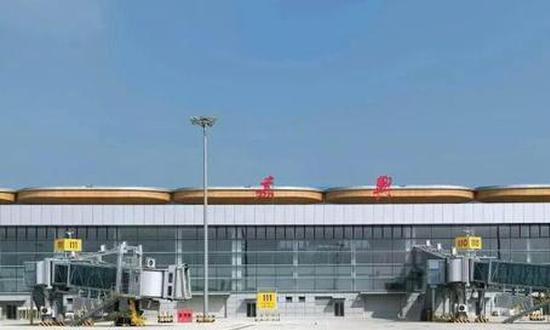
Jiaxing Nanhu Airport received its transport-use license on Monday, becoming the ninth licensed airport in Zhejiang Province and the 268th in China. Classified as a 4E airport—just one level below the highest 4F grade—it is the first dedicated air cargo hub in the Yangtze River Delta and the second of its kind nationwide, while also serving regional passenger routes.
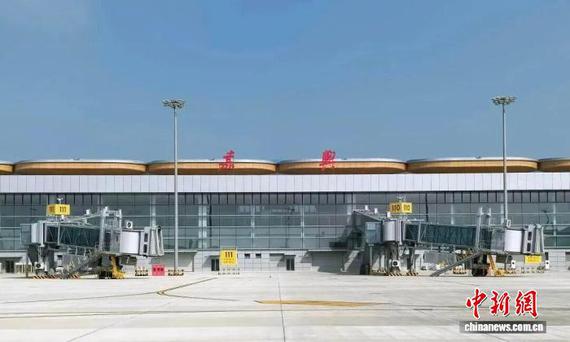
For Suzhou City, the new airport just a few dozen kilometers away places an additional aviation gateway at its doorstep, offering residents one more travel option. With Wuxi Sunan International Airport to the northwest and Shanghai’s Hongqiao and Pudong international airports to the east, the airport adds a major southern link for the city.
According to relevant Yangtze River Delta aviation development policies, released in 2021, the region aims to complete the basic framework of a world-class airport cluster by 2025.
2025 has seen rapid airport expansion in the region.
In July, Lishui Airport in Zhejiang Province opened to traffic, connecting the coastal area south of the Yangtze River to China’s national air network.
In November, Bozhou Airport in Anhui Province began operations, with an annual passenger capacity of 1 million and direct flights to 35 domestic cities.
With new airports coming online in quick succession, the region’s aerial corridors are becoming increasingly dense.
According to the Civil Aviation Administration of China, airports in the Yangtze River Delta handled over 280 million passengers in 2024, far surpassing the Beijing–Tianjin–Hebei cluster, Guangdong–Hong Kong–Macao Greater Bay Area, and Chengdu–Chongqing cluster.
Airports across the Yangtze River Delta are evolving from simple transportation nodes into powerful engines of regional economic growth. Airport-adjacent zones, such as logistics parks and high-tech industrial clusters, are becoming new drivers of urban development.
For example, Bozhou Airport has created an air corridor linking the “World Capital of Traditional Chinese Medicine,” with major cities across China and beyond.
As spatial distances within the Yangtze River Delta city cluster are steadily shrinking, industrial cooperation and resource sharing among cities are becoming more convenient, further enhancing the region’s overall competitiveness.
(By Gong Weiwei)