
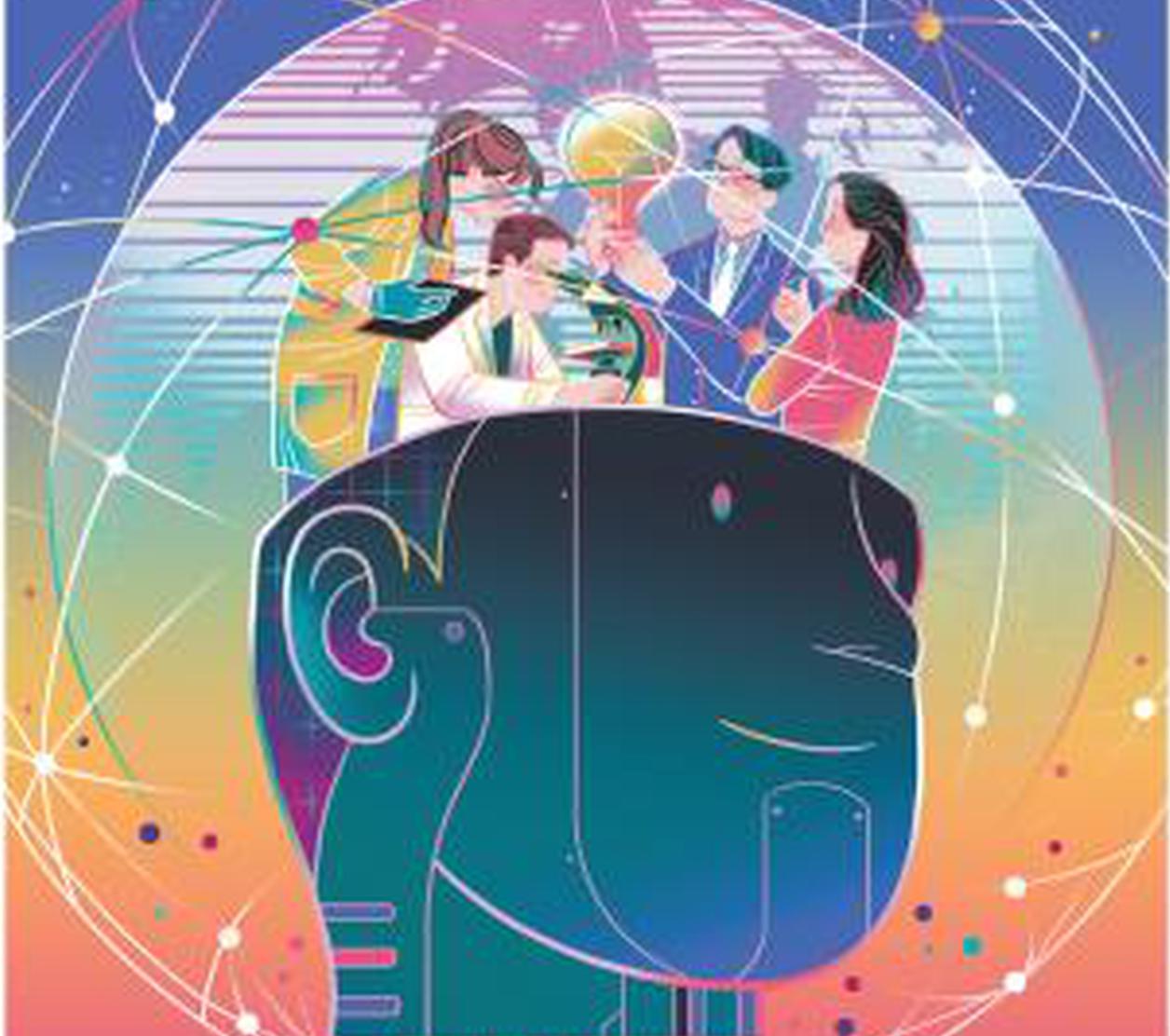
Five continents, five rhythms in 2025

The year 2025 made it clear that the planet no longer moves in a single rhythm. Each continent lives its own historical tempo, creating a global mismatch — accelerated time in the Global South, regressive time in the Global North, suspended time in Europe, futuristic time in Asia and a state of maximum alert in the Pacific. Five clocks, five pulses and five simultaneous futures.
This asymmetry of time is the clearest portrait of contemporary international disorder. The world has stopped functioning as a synchronized mechanism. It is now a mosaic of incompatible historical speeds. Understanding this mismatch may be the key not only to interpret what 2025 meant but also to anticipate what 2026 could demand.
No part of the world lived 2025 with the same intensity as Latin America. Here the clock runs faster, as if history has decided to compress decades into months, and months into weeks. The United States'"Southern Spear" operation -the largest military mobilization in the hemisphere in decades -reopened long-standing wounds of intervention, tutelage and imperial violence. Venezuela returned to the center of the global dispute over oil, and the Caribbean became the stage of a strategic confrontation between Washington and other international actors.
Yet while war advanced by sea and air, another process unfolded: Brazil emerged as a diplomatic and climate leader. Hosting COP30 in Belém placed the country at the forefront of global climate and environmental governance, drawing dozens of heads of state, multilateral organizations and the international press to the Amazon region. Brazil also chaired both BRICS+ and the G20, projecting itself as a builder of consensus in a fragmented global system.
While Latin America rushed forward, the US moved backward. The US has not lost economic or military capacity, but it has entered a political cycle that seems intent on undoing much of what it built over the past 80 years. In 2025, the US administration deepened three trends: unilateral militarization, ideological neo-McCarthyism and institutional erosion. The military escalation in the Caribbean exposed a strategy that bypasses multilateral institutions and sidelines traditional allies. And the machinery of government -from the State Department to the Environmental Protection Agency — showed visible signs of deterioration.
The US is most out of step with global trends. While the world pursues climate cooperation and energy integration, Washington moves toward isolation and confrontation. Time here moves backward — and its impact reverberates across the world.
On the other hand, Europe lives in a time so slow it sometimes feels still. In 2025, the continent experienced yet another year of economic stagnation, internal division, and difficulty in articulating a common post-Brexit, post-energy-crisis, post-globalization project.
European elections saw gains for far-right parties, but not enough to establish a coherent governing bloc capable of addressing the continent's intertwined migration, climate, and industrial challenges. Europe is aging -demographically, economically and politically. The European Union debates climate goals but struggles to implement them. It calls for strategic autonomy yet depends on the US for security and on China for essential supply chains.
Europe lives in suspended time — not moving forward, not collapsing, not rebuilding. This suspended condition best describes its role in 2025: a continent that observes, reacts, but no longer sets the global pace.
Asia, meanwhile, is living in another century. China consolidated its technological and climate leadership, deepening its cooperation in Africa, South America and Southeast Asia. India advanced in innovation, infrastructure and diplomacy, competing for regional and global space. Southeast Asia became the world's fastest-growing economic engine, combining political stability with rapid industrialization. The Republic of Korea and Japan strengthened their technological ecosystems amid regional tensions.
Asia lives in the future because its rhythm is shaped by innovation, digitalization, infrastructure and trade. Green technologies, 5G and 6G networks, industrial standards, logistics corridors, alternative currencies and new multilateral arrangements are defined here. The 21st century first happened in Asia, and was later exported to the rest of the world.
Meanwhile, Oceania is in survival mode. The Pacific has become the front line of climate collapse. Entire islands are being swallowed by rising seas. Thousands were displaced during 2025. New Zealand and Australia navigate ambitious climate policies while facing geopolitical pressure in the Asia-Pacific.
Time here is urgent — the time of immediate response, of unfolding disaster, of unavoidable adaptation. It is the clock that most clearly represents the dystopian future the world seeks to avoid and the reminder of what is at stake.
The central question for 2026 is simple and stark: how can the planet synchronize itself when each continent lives in a different time? Perhaps the answer lies where few expected: in the Global South. In Brazil's climate and BRICS+ leadership. In Africa's demographic dynamism and growing political voice. In Asia's innovation rhythm. In a Latin America that has, between war and hope, become the center of global attention.
The challenge is not merely to align clocks but to imagine a shared time, a time of cooperation, a time that allows the planet to survive. If 2025 exposed a world of incompatible tempos, 2026 may be the year to build the bridge between them.
The author is an economist, a retired professor of the University of Brasília and a member of The Brazilian Association for Economists for Democracy.