(W.E.Talk) What Does the "Confluence of Islam and Confucianism" Reveal about the Exchange and Mutual Appreciation between Eastern and Western Civilizations?
2022-08-28 Ecns.cn Editor:Xue Lingqiao
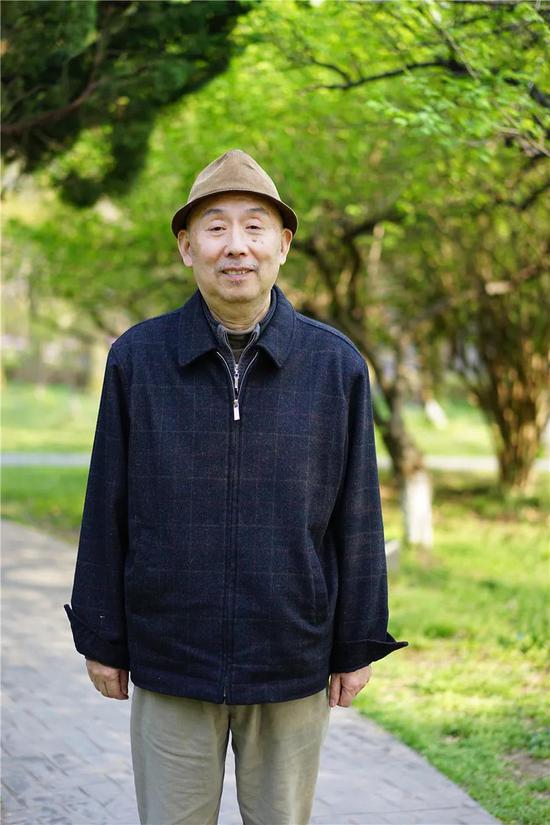
By JI Fangtong (JI Fangtong, professor and doctoral supervisor at the School of Public Affairs, Nanjing University of Science and Technology)
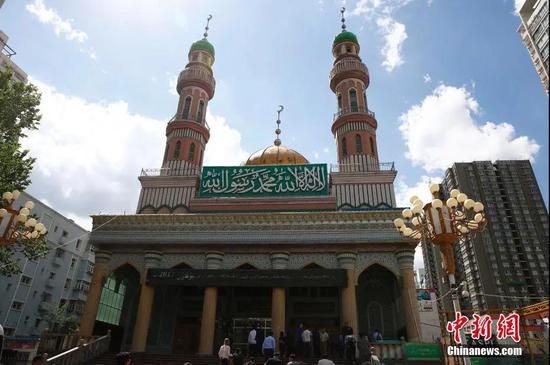
(CNS) -- From the Ming and Qing dynasties to the early Republic of China, Chinese Muslim sages brought together foreign Islamic culture and the central plain culture based on Confucianism to realize the Sinicization of Islam. Known as the “confluence of Islam and Confucianism,” the integration is regarded as an important link in the history of exchange and mutual appreciation between Chinese civilization and others. What are the characteristics of the integration and its implications for East-West communication today?
What is the “confluence of Islam and Confucianism”?
As a historical event, the “confluence of Islam and Confucianism” refers specifically to the culture-conscious activity of Chinese Muslim sages from the Ming and Qing dynasties to the early Republic of China. It was characterized by the translation of Islamic writings into Chinese and the integration of foreign Islamic culture with the native culture, mainly Confucianism.
The confluence set a path for the development of Islam and Muslims in China. It is not only considered an episode of history but is also seen as a direction for the present and future work of cultural exchange.
Wang Daiyu, a Muslim scholar in Jinling (now Nanjing), a the pioneer of the confluence. He published the first Chinese book on Islam, Zhengjiao Zhenquan (The True Explanation of Islam). Ma Zhu and Ma Dexin, who were in Yunnan, promoted the event. Their books, including Qingzhen Zhinan (Halal Guide) and Dahua Zonggui (General Introduction to Dahua), greatly advanced their breadth and depth. Liu Zhi, who was in Jinling, and his book Tianfang Xingli represent its highest achievement.
This group of Muslim scholars had studied or discussed Confucianism, Buddhism, Taoism and Islamic classics. For example, Liu Zhi said he spent eight years reading Confucian classics, historical works, philosophical works, and literary works; six years on Islamic works; three years on Buddhist classics, and one year on Taoist classics, as well as reading 137 Western books. Although the time Wang Daiyu spent on reading and his reading order was slightly different, he also studied the works of Islam, Confucianism, Taoism and Buddhism and had a thorough knowledge of the four religions. Both their academic experiences and their academic achievements are proof of these scholars’ mastery of the four religions instead of two. These integrated viewpoints and achievements of the four religions may be found in Wang Daiyu’s three works and Liu Zhis’s representative works.
It may be said that “the integration of Confucianism and Islam” literally refers to the integration of the two religions, but in its essence, it includes the integration of all four. The integration involves three aspects: integration of doctrines of Islam and Confucianism; integration of Islamic Sufi practice with Taoist and Buddhist practices; and integration of the Islamic canon with Confucian Li. In other words, the integration happened in these three areas, in which the achievements are concentrated. This integration lasted for about 300 years, and it is hard to tell these figures’ achievements in just a few words. The biggest accomplishment is the construction of the Chinese Islamic system, which has set not only the framework but also a series of concepts and categories, laying a solid theoretical foundation for the localization of Islam in China.
Is Islam still the same Islam after the confluence?
Communication among different cultures, whether they be Confucian, Buddhist, Christian or Islamic, is the general trend of world cultural development, with no exception. Only by constantly communicating and integrating with other cultures can a culture develop better and push its development to a new peak. This is the basic fact and trend in the development of world cultural history.
The culture of Islam is a universal one, and although it originated in Arabia, it was bound to go global and inevitably converge with Persian, Indian and even Chinese cultures in the East --- a trend not subject to human will. Some people are concerned that once this is done, will Islam still be Islamic? In fact, such fears are unnecessary. In the case of Persian culture in Iran, for example, when Islamic culture converges with Persian, does the Persian Islamic culture that emerges not a part of Islamic culture? No one in history has ever been concerned about the “the confluence of Islam and Persianism,” so why should people be bothered about its confluence with Chinese culture?
As a historical movement, the “confluence of Islam and Confucianism” has its starting and ending points, but the significance and impact of the movement go beyond the specific historical periods, being lasting or eternal. As is well known, the “confluence of Islam and Confucianism” played an important and fundamental role in promoting the Sinicization of Islam. After the establishment of New China, and especially after the reform and opening up of the country, the integration developed and was popularized, although its Sinicization was uneven. In Xinjiang, for example, Islam uses the Uyghur language. The process of Sinicization was hindered due to the writing language issue as the works of the “confluence of Islam and Confucianism” were largely in Chinese writing system. To change this situation, it is suggested that the national language be promoted in Xinjiang to help people understand traditional Chinese culture to accelerate the process, though the process takes time. Learning from and absorbing the results of the “confluence of Islam and Confucianism” is an option, but not the only one. In other words, the integration is not exclusive of other options.
Practically, the achievements of the confluence include both the fundamental content of Islam and the fruits of excellent traditional Chinese culture. The same is true for Islamic Sharia, worship and code. All these factors help accelerate the Sinicization of Islam. Currently, the theoretical construction of the Sinicization is in progress, with the construction of the Confucian system of Islam in China as an important part. In fact, the construction of the Confucian system of Islam in China can succeed only by forging ahead on predecessors’ achievements without being overly ambitious or supporting historical nihilism. Therefore, it is essential to pass on the theoretical achievements of the confluence, or to make further construction and improvement on the original basis and to learn from the achievements of Islamic Confucian in the world. The confluence of Islam and Confucianism theory has influenced the Sinicization of Islam, not only in the past, but also at present and even in the future.
What does the confluence imply for mutual learning between Eastern and Western civilizations?
The confluence of Islam and Confucianism requires both mutual assimilation and learning, and criticism for improvement. Praise alone does not contribute to any academic development, for only when people see both the advantages and disadvantages of other cultures can they learn from each other. Therefore, in the works of scholars who advocate the confluence of Islam and Confucianism, criticism of some views of Confucianism, Buddhism and Taoism can be found. For example, according to Confucianism, having no heir is considered the most unfilial behavior. Wang Daiyu points out that filial piety is an ethical issue, and whether or not to have children is a physiological issue, so it is a logical mistake to equate a physiological issue with an ethical one. It should be noted that this criticism is very accurate. But why have the Confucian, Taoist and Buddhist scholars living in the Chinese social environment not found or pointed out this issue? It may be the result of stereotypical thinking, or not thinking about or analyzing conventional ideas.
Once there is an exchange and mutual appreciation of different cultures as well as other opinions or criticisms, it will, of course, have positive significance for the improvement of Confucianism. The confluence of Islam and Confucianism is also applicable to the mutual appreciation of Eastern and Western civilizations, which should learn from each other, but not to the exclusion of criticism. Only in this way can both sides find out the shortcomings, promote introspection and development, and ultimately achieve the purpose of mutual appreciation.
From a microscopic point of view, the mutual appreciation of Eastern and Western civilizations cannot be separated from the translation of works, especially classics. Most representative scholars of “the confluence of Islam and Confucianism” have learned the four, and three of them (Confucianism, Taoism, and Buddhism), which are essential to the traditional Chinese culture. In other words, the representatives all have a solid background in Chinese traditional culture before translating and interpreting the classics, thus obtaining outstanding achievements. Since the 1980s, many translators thought they only needed to be familiar with Western classics when doing translation, neglecting the essence of their own culture, taking for granted that they were naturally familiar with traditional Chinese culture. As a result, the poor translation made the works translated works unintelligible. The quality of a number of classics translated are far inferior to their originals due to the translators’ unfamiliarity with traditional Chinese culture. This experience and lessons from both sides have indicated that the works of mutual appreciation and systematic study of both eastern and western civilizations rather than only one civilization are important. As a Chinese, if you are not familiar with Eastern civilization, it is quite likely that you are unfamiliar with Western culture. In that case, how can we talk about mutual appreciation?
(Translated by ZHANG Zhiling, FAN Jiali, ZHANG Ziyun, YUAN Lishuo, WANG Yele)