盲人摸象(máng rén mō xiàng): take a part for the whole—like the blind men trying to size up the elephant
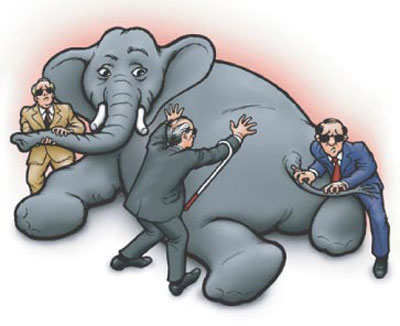
Once upon a time, there were four blind men who very much wished to know what an elephant looked like, but, being blind, could do nothing but feel it with their hands. The fat blind man, reaching out with his hand, first felt the elephant's tusk, and said, "I got it, the elephant is like a great, thick, smooth radish." The tall blind man's hand first touched the elephant's ear, and he shouted, "No, no, the elephant is clearly like a great fan!" "The elephant is just a big pillar," said the short blind man, as he felt the elephant's leg. But the old blind man said, "Huh? The elephant is not so big, because, it's nothing more than a length of rope." The four blind men quarreled without end, all insisting that the part they had felt was the true shape of an elephant. But in reality? None of them were right.
The moral of the story of "盲人摸象" is that one must not only see a part of something, but must take in the entirety of a situation in order to understand it truly and completely. The allegory mocks shortsighted people who mistake a part for the whole.
从前,有四个盲人很想知道大象是什么样子,可他们看不见,只好用手摸.胖盲人先摸到了大象的牙齿.他就说:"我知道了,大象就像一个又大、又粗、又光滑的大萝卜."高个子盲人摸到的是大象的耳朵."不对,不对,大象明明是一把大扇子!"他大叫起来."大象只是根大柱子."矮个子盲人摸着大象的腿说道.那位年老的盲人却说:"唉,大象哪有那么大,它只不过是一根绳子."四个盲人不断争吵,都说自己摸到的才是真正大象的样子.而实际上呢?他们一个也没说对.
盲人摸象:"盲人摸象"的寓意是不能只看到事物的一部分,而应看全局才能了解事物的全面和真实情况.寓言讽刺目光短浅、以偏概全的人.
盲人:(máng rén) n.: blind person
大象:(dàxiàng) n.: elephant
摸:(mō) v.: touch; feel out
扇子:(shàn zi) n.: fan
不断:(búduàn) adv.: ceaselessly
争吵:(zhēng chǎo) v.: quarrel
柱子:(zhùzi) n.: pillar
绳子:(sheng zi) n.: rope

Copyright ©1999-2011 Chinanews.com. All rights reserved.
Reproduction in whole or in part without permission is prohibited.