Tighter currency controls won't affect international strategies
Chinese companies will continue their efforts to go global in 2017, despite hurdles such as the government's tightened grip over foreign exchange, several industry players told the Global Times on Wednesday.
State-owned equipment manufacturer Liugong Machinery Co, which is based in South China's Guangxi Zhuang Autonomous Region, is stepping up efforts to "cultivate close ties with its foreign market" and also "actively considering new mergers and strategic alliances in international markets along the 'One Belt, One Road' (B&R) initiative" this year, Hou Yubo, vice president of the firm's Poland subsidiary, Liugong Dressta Machinery Sp, told the Global Times on Wednesday.
About 30 percent of the company's sales come from overseas markets.
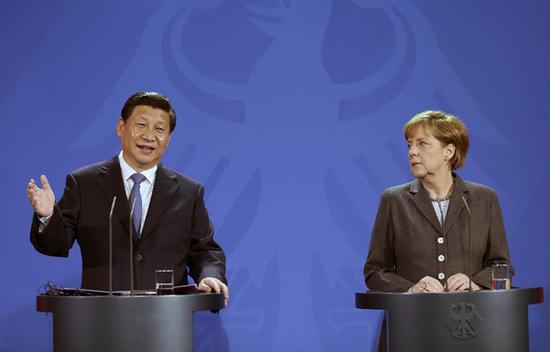
In line with a cooperation framework signed between the company and the National Center for Research and Development in Poland during Chinese President Xi Jinping's visit to Poland in June 2016, Liugong will invest over $26 million in the next five to 10 years to build a European research center that will focus on the development of advanced engineering machines, Hou said.
The desire for technological innovation is a big factor in the company's ongoing global expansion, said a statement the company sent to the Global Times on Wednesday.
Liugong Chairman Zeng Guang'an was quoted in the statement as saying that the march into Europe represents "pragmatic cooperation," where the company can combine its technology with that available in Europe to "increase product competitiveness."
Similarly, State-owned China COSCO Shipping Corp told the Global Times Wednesday that it will beef up investment in Piraeus Port, the largest port in Greece, in the next few years, after acquiring 67 percent of the port stakes in July 2016.
COSCO plans to upgrade the port's container terminal facilities to further expand its annual throughput to 10 million 20-foot equivalent units and build it into one of the largest container ports in Europe.
Private healthcare product maker Shandong Dong-E E-Jiao Co will pursue a "globalization strategy by focusing on the North American and Southeast Asian markets," the company told the Global Times.
He Weiwen, an executive council member at the China Society for the WTO, predicted that domestic companies' investment in foreign markets will see double-digit growth in 2017, "but it is likely to be milder compared with the peak period in 2015 and 2016."
Aspirations to go global may be mitigated by "tougher restrictions Chinese regulators imposed on foreign exchange outflows, which are aimed at clamping down on speculation as the US dollar has been strengthening against the yuan," He told the Global Times Wednesday.
China has released new rules to restrict individuals' foreign exchange purchases, raising concerns over a possible curb on domestic companies' outbound investment.
But the companies that the Global Times interviewed said their "go global" strategy will not be affected by uncertainties of foreign exchange policy. Liugong said it can adjust plans and coordinate resources based on its overseas headquarters.
Measures covering outbound foreign direct investment only aim to crack down on speculative purchases and irrational expansion, or on investments that are not connected to a company's core business, noted He.