
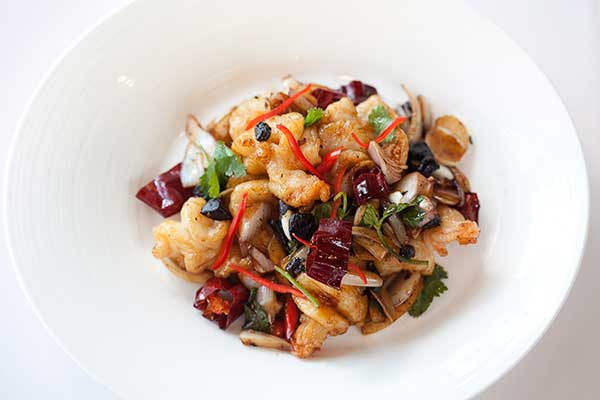
Habanero chicken at QMex features one of the hottest chilies available; wokfried prawns with dried chilies pack some heat at Lung King Heen in Hong Kong's Four Seasons Hotel.(Photo provided to China Daily)
Lu and his team studied 487,375 participants aged from 30 to 79 enrolled in the China Kadoorie Biobank from 2004 to 2008. Each person filled out a questionnaire that asked about overall health, physical measurements, and eating habits pertaining to spicy food, red meat, vegetable and alcohol intake.
The researchers followed up about seven years later, taking into account factors such as age, marital status, education level and physical activity and excluding those with a history of cancer, heart disease and stroke.
An analysis of the data showed that people who ate spicy foods at least once or twice a week had a 10 percent reduced risk of death compared to those who consumed spicy foods less than once a week. Those who ate spicy foods almost every day had a 14 percent lower risk of death.
Lu, an associate professor of medicine at Harvard Medical School, says that doesn't mean everyone should pile on the spices at dinner time to improve their health and increase their longevity.
"For those who are affected by digestive disorders such as a stomach ulcer, I would be cautious about eating spicy foods," Lu told CBS News recently.
In fact, a number of research projects have identified a correlation between spicy food and certain diseases. Research published in 1994 indicated that frequently eating spicy food may increase the risk of contracting stomach cancer, while research conducted in 2006 suggested that regular ingestion of capsaicin may accelerate the migration of breast cancer cells to other parts of the body.
Generally, however, the indications are positive.
"Chili pepper - or even spicy food - consumption may become a dietary recommendation and/or fuel further research in the form of clinical trials," says Mustafa Chopan, coauthor of the most recent study.