RIGHT BG

When Zeng Yuan (pseudonym), 25, from Anhui Province, was detained by police in Wuxi, Jiangsu Province, for drug abuse, she didn't know that the websites which she used to communicate with other drug users had attracted the police's attention and led to her downfall.
"After I registered on these websites, I found there were lots of drug addicts shooting up in front of their video cameras. When they asked me to join in, I accepted," Zeng said, according to a recent report by the Beijing Times.
Zeng was far from the only one to be caught in this way. Across the nation, as many as 2,120 people were arrested during a campaign targeted at online drug crimes earlier this year.
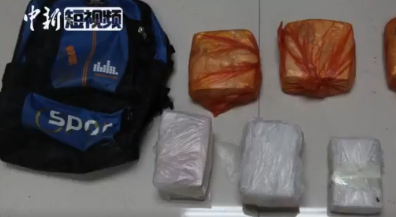
The campaign netted 268 kilograms of drugs, 7.93 tons of raw materials, 22 guns and 719 bullets across 30 provinces, autonomous regions and municipalities, as well as shutting down 11 drug making facilities, according to a statement released by the Ministry of Public Security on September 2.
Despite this success, due to the boom of web users, Chinese police admit that it is getting more difficult to track down drug crimes than before. The Internet has become a "class" for the training of drug addicts or a "market" for drug dealers to sell their wares, evidenced by a significant increase of online drug crimes in recent years, the statement said.
Hidden in the Dark Web
In comparison to normal portals, these illegal websites cannot be found on popular online engines, such as Google and Baidu. They are mostly run by those who have wide acquaintances among drug users, and only invite insiders to join to avoid police snooping.
In Western countries, these hidden websites are part of what has become known as the Dark Web, referring to networks using non-standard protocols and ports, where connections are made only between trusted peers. Just like in China, the Dark Web is also often associated with illegal activities, mostly drug trafficking as well as more horrific activities such as weapons sales or the distribution of child pornography.
According to Zeng Yuan, a Chinese online drug dealer would set up a chat group at first to attract known addicts. When more insiders, whose identities were confirmed, were brought into the group, the webmaster would post a link to a Dark Web address.
For drug addicts, those websites are easy to register on.
"I have seen one of these websites before. It was free to sign up. All I needed to do was to record myself using drugs to show them that I was one of them. If I did so, I might get permission to stay there," Wang Xiaoling (pseudonym), who was introduced to this website by a friend, told the Global Times on Friday.
He was kicked out after the webmaster found that he joined the club merely because of curiosity but didn't intend to really use drugs.
"They were very alert. Maybe they feared that I was a cop or someone like that," Wang said.
The atmosphere in these websites is always noisy, with exciting music thumping in the background. When someone enters the room, a video of a young lady taking drugs appears as a welcome screen to lure young men in.
"While older drug addicts, like those over 40, prefer using traditional drugs alone or with only a few peers, including heroin and morphine, young people, normally aged from 17 to 30, are more likely to try new chemical drugs, which give exhilarating highs. That is why people using new drugs tend to get together," Ma Zheding, director of Shanghai No.5 Compulsory Isolation and Detoxification Center, told the Global Times on Thursday, adding that the Internet has provided a convenient cyberspace to share the highs, making the Dark Web grow dramatically in recent years.
"Compared with the strong addiction of traditional drugs, which are processed by natural materials, the new chemical drugs have less addictive symptoms. They are more likely to be popular among young people," Shi Jianchun, vice deputy director of Volunteers of Beijing Narcotics Control Association, told the Global Times on Thursday.
"Despite that, the health risks caused by the new drugs is no less than what heroin causes. They can cause hallucinations and lead to severe brain damage," Shi noted.
Copyright ©1999-2018
Chinanews.com. All rights reserved.
Reproduction in whole or in part without permission is prohibited.